The 956 Radical Library: Reclaiming Lost Stories in the RGV
Story by Melissa Cortes Santiago
Edited by Abigail Vela
- June 19, 2025
At a time when our communities here in the Rio Grande Valley are being faced with backwards legislation and public policy, such as immigration raids, environmental exploitation, and book bans, a small but growing community library tucked inside an art studio in downtown Brownsville is offering something rare: a place to breathe and connect with our community and its history.
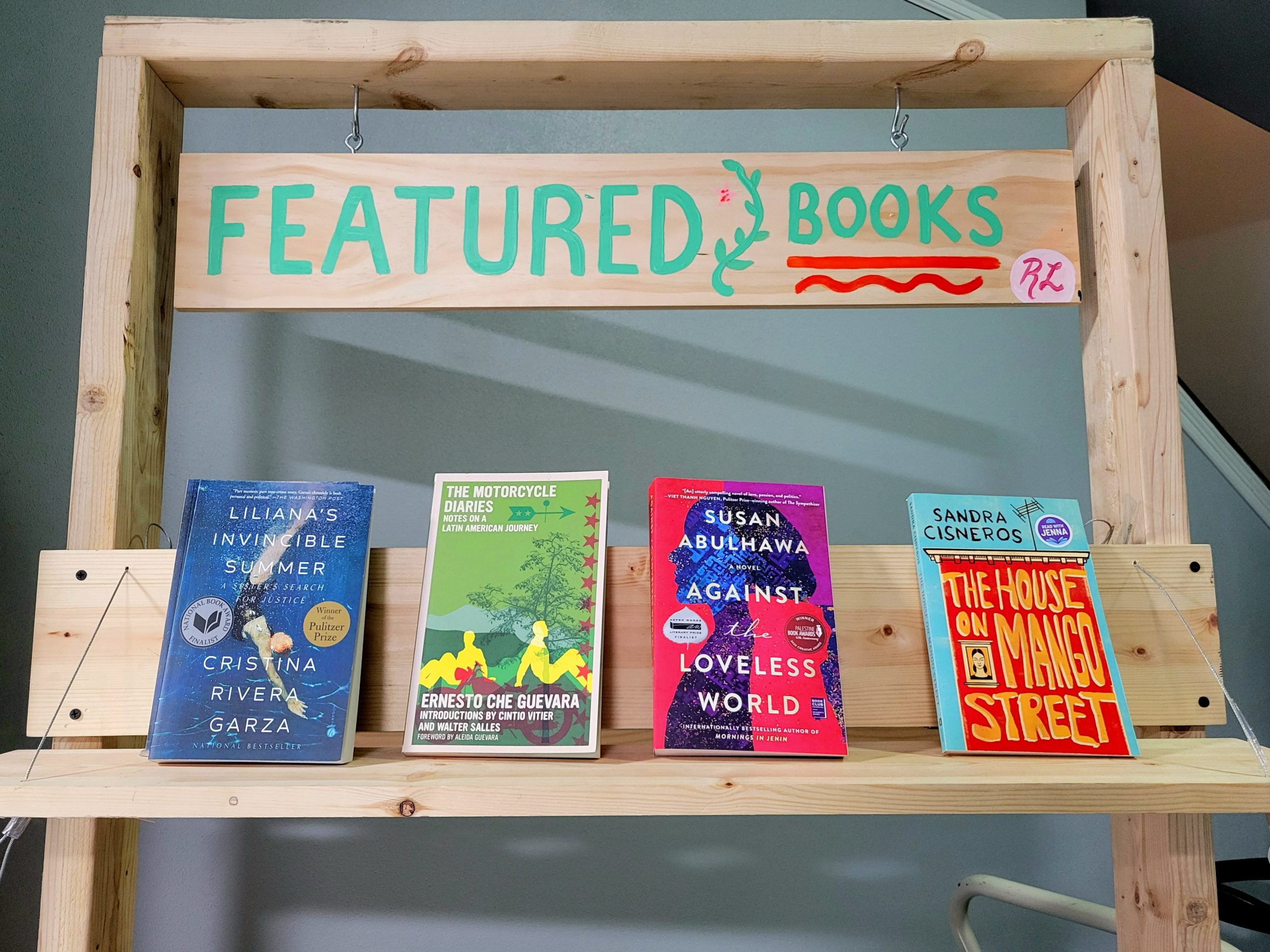
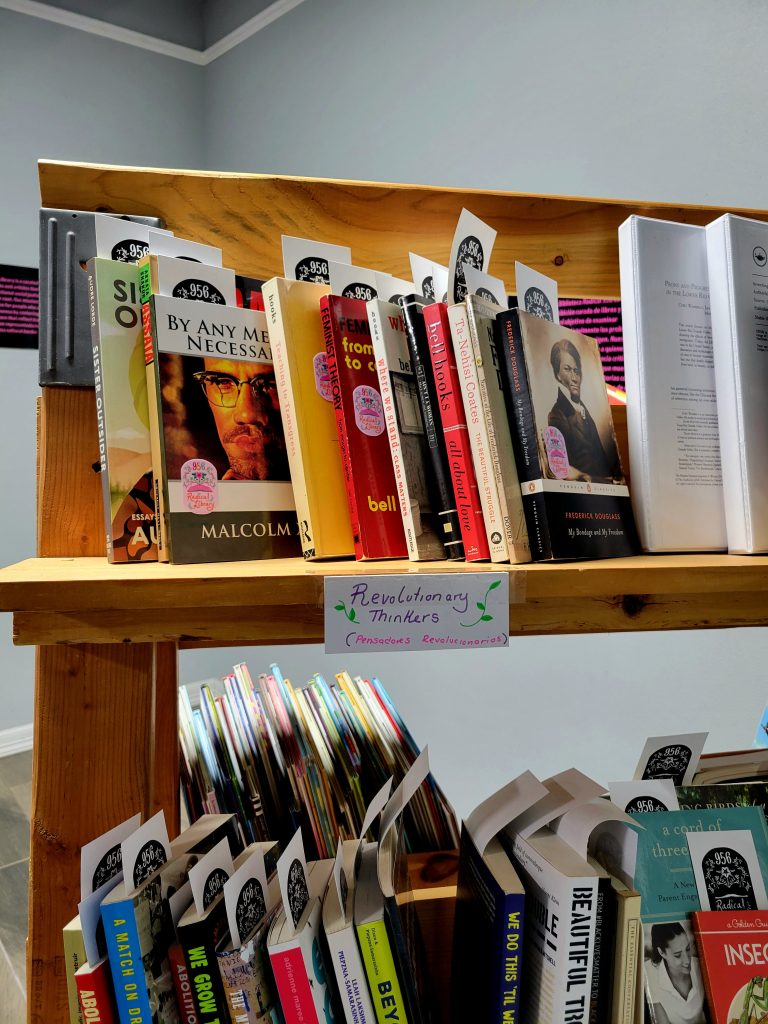
The 956 Radical Library began as a mobile pop-up at the Brownsville Farmer’s Market during the early days of the pandemic. Now, with a more permanent location downtown and a small collection housed at the Museo 956, the space offers free access to books by queer, Indigenous, and Mexican-American authors, whose voices are often excluded from public education.
For founders Xandra Treviño (she/they) and Nansi Guevara (she/her), establishing the library was more than just about having a place to read. It was about reclaiming the narratives that shape the RGV and helping the community gain access to parts of our history that are not taught in our schools and often overlooked.
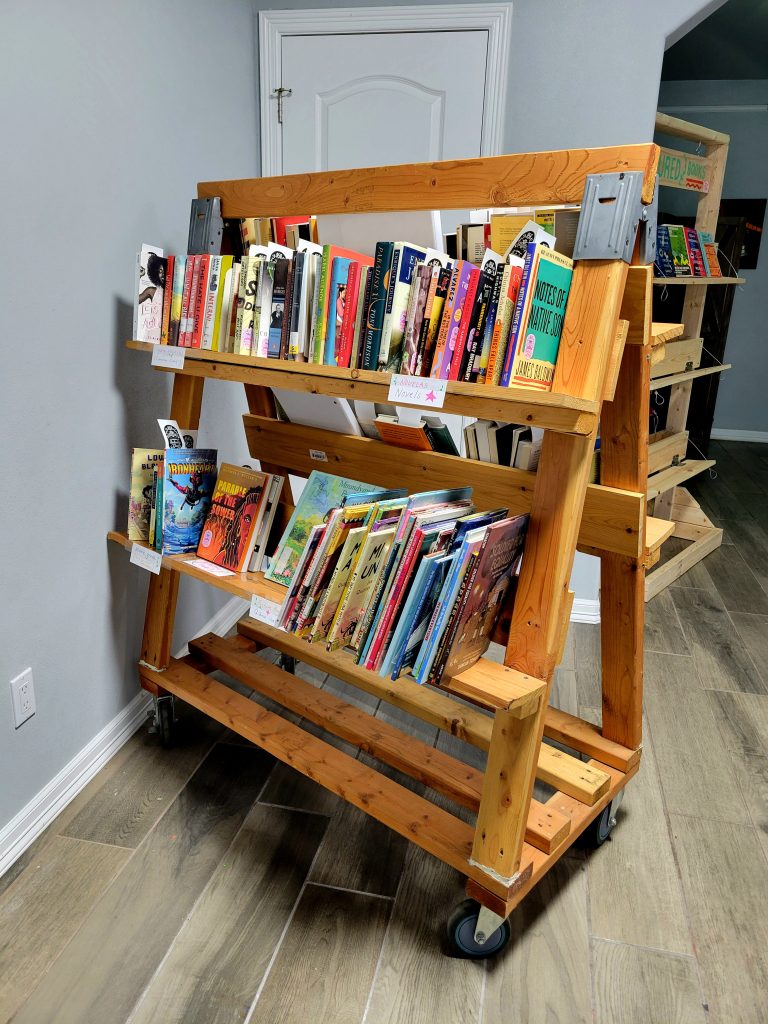
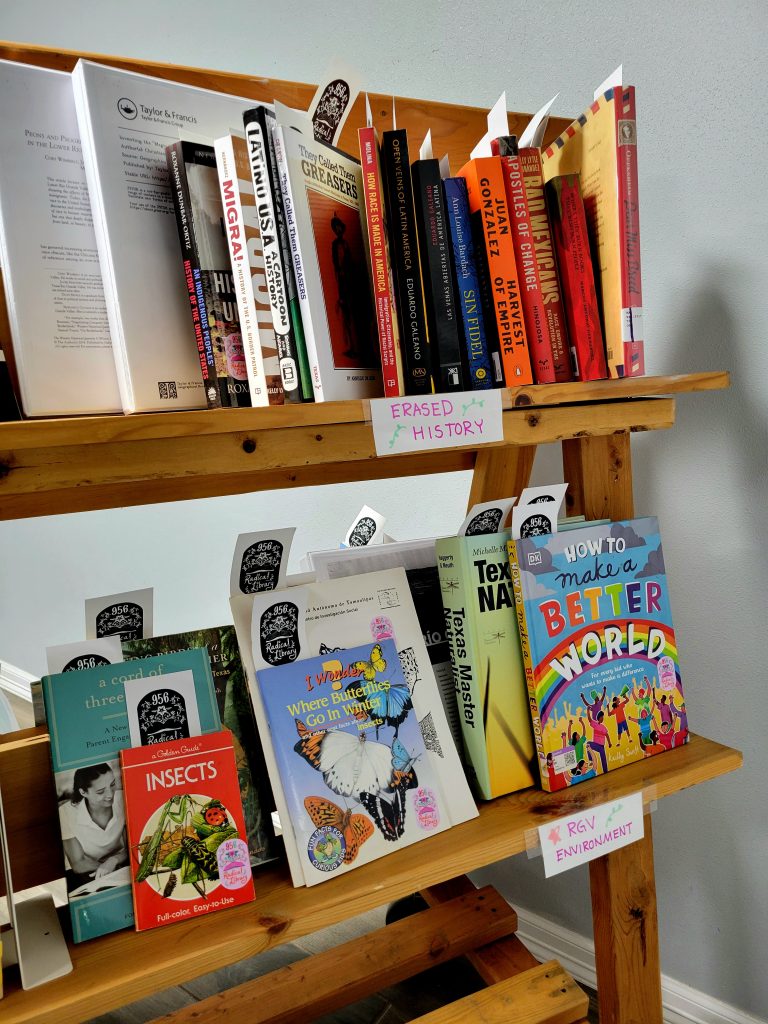
Reclaiming Our History in the RGV
“We both felt the need to have accessible, public information and resources available,” Guevara recalled. “So we started with a cart, some yoga mats, and a bunch of children’s books donated through the Texas Book Festival.”
The project was, in part, inspired by national movements such as Librotraficante and LibroMobile, which were created in response to state-level book bans across the country. The 956 Radical Library focuses on providing the community with information about issues that have long plagued Brownsville and the rest of the RGV, such as corporate land grabs and environmental degradation.
In Texas, where state leaders have targeted “divisive concepts” in classrooms and threatened to defund libraries offering books by LGBTQIA+ and BIPOC authors, projects like this don’t just fill a gap; they help us resist erasure.
“We want to include books that really analyze these issues from their root, not just surface level,” Guevara said. “Whether it’s immigration, class struggles, or the environment.”
Some of the books in their collection include “Open Veins of Latin America” by Eduardo Galeano, “Harvest of Empire” by Juan Gonzales, and “Borderlands” by RGV native Gloria Anzaldúa. Many of these books have been excluded from public school curricula or are currently being challenged for their content.
“We want to make sure the books we have on our shelves tell the actual history,” Treviño said. “Not the whitewashed version we got in school.”
Both Treviño and Guevara see that historical context as essential to understanding the legacy of settler colonialism and violence our region is still experiencing today.
“I think it’s so important to know about all the violence that happened here with the Texas Rangers, and how they worked with Anglo merchants to commit mass killings,” Guevara said. “It’s not something we should be kept from.”

Preserving RGV History in a Community Centered Space
With the Radical Library, Guevara and Treviño are doing more than collecting much-needed books; they are slowly developing a community. Since establishing their more permanent location at La Chicharra Studio in Downtown Brownsville, they have hosted poetry nights, writing workshops, and a book club.
“You’re not expected to consume or buy anything. We’re not asking people to spend their money,” Guevara said. “We are a space that just encourages browsing, researching, reading, and maybe even having a conversation with us about the books that are there.”
One of their events, Poets Against Walls, invited attendees to write their poems on the spot, and several shared what they’d written a couple of minutes later.
“That was my favorite thing I’ve seen at one of our events,” said Treviño. “You don’t need to be like a capital A Author to write your own stories and share them with the people around you.”
The workshops they curate are about creating conversations around lived experiences, and that there is power in self-expression and sharing our stories. The 956 Radical Library offers our community a space to slow down, connect, and reckon with our shared past and history. That historical awareness, they believe, can lead to resistance and even healing. Guevara is also involved in land and water protection efforts across the Valley; for her, it’s all tied together.
“I always wonder, what would it look like if more of us knew our history?” Guevara said. “Because when you understand what’s been done to your community, from Texas Ranger violence to environmental destruction, you start to see the patterns. Maybe there would be more of us who are land and water protectors if we knew our histories,” she says.
Their vision for the library is long-term involvement in the community. Even though they’re currently operating out of a shared space, Guevara and Treviño hope the Radical Library becomes a lasting archive in the Valley.
“Whether it’s us or someone else,” Treviño adds, “I want to see the Radical Library live on. We need to preserve these books. We need to preserve these memories and experiences, no matter what legislation passes.”