Fighting for Period Justice in the RGV
Story by Melissa Cortes Santiago
Edited by Abigail Vela
There are life experiences that are virtually universal, like experiencing love or getting your first job. These can sometimes shape our lives and help us form a sense of community. However, not all experiences are as wholesome.
If you’re a person who menstruates, there is a particular situation that we’ve all been in that involves getting your period at a really inconvenient time, not having access to pads, tampons, or any kind of period product, and inevitably ruining one of your favorite pair of jeans! Not being able to access menstrual products during such a crucial time is such a common experience that most of us don’t find that strange. But that really shouldn’t be the case.
Period poverty is having insufficient access to menstrual products, education about menstruation, or sanitation facilities. It’s an issue that affects two in five people who menstruate. Here in the Rio Grande Valley, where over 20 percent of our community lives below the poverty line, affording period products can be difficult for many people. This lack of access can lead to embarrassment, stigma, and missed opportunities, especially for those still in school.
In our community, we already face systemic barriers, and the inability to afford basic menstrual supplies is another layer of inequity. Thankfully, grassroots organizations are aiming to dismantle that and showcase a system where access to basic necessities like menstrual products is the norm.
Student Activists Take on Period Poverty
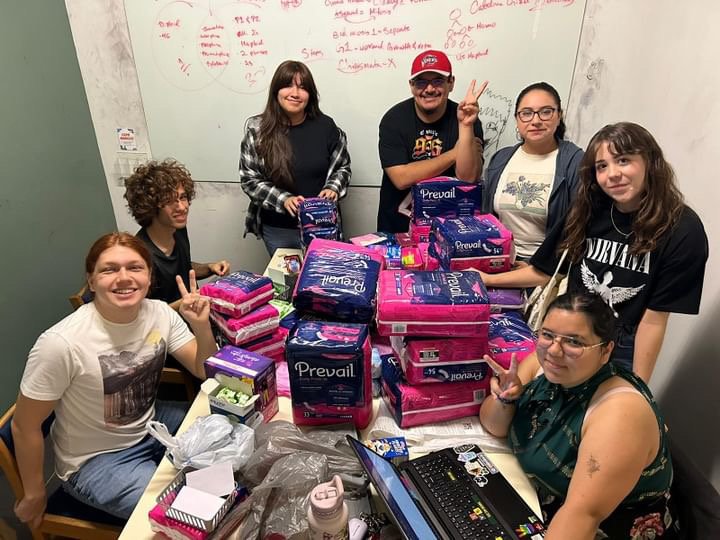
Student-run organizations at UTRGV have decided to take action to address the issue head-on. The Intersectional Feminists Student Organization (IFSO) and the Young Democratic Socialists of America (YDSA) have partnered up to create the End the Period Poverty Project on campus. The project aims to provide free menstrual products to students.
“It’s a project born out of rage,” said Shary Rojas (she/her), secretary at YDSA. “It’s a project born out of feeling like the body you were born into is a punishment when it shouldn’t be, but the world and the stigma around it have made you feel like it’s your fault that you’re menstruating, and it’s solely your responsibility now.”
Shary, who has PCOS, which causes irregular periods, has experienced first-hand what it’s like not to have access to menstrual products in the middle of the school day. After unexpectedly getting her period and being unable to find pads in any of the school restrooms, she was forced to buy a very small box of tampons being sold at the student union for $10.
“The campus is our second home; we are here all day, and to not have the products that we need in our second home is just mind-boggling,” said Kylie Torres (she/they), chief of staff at IFSO.
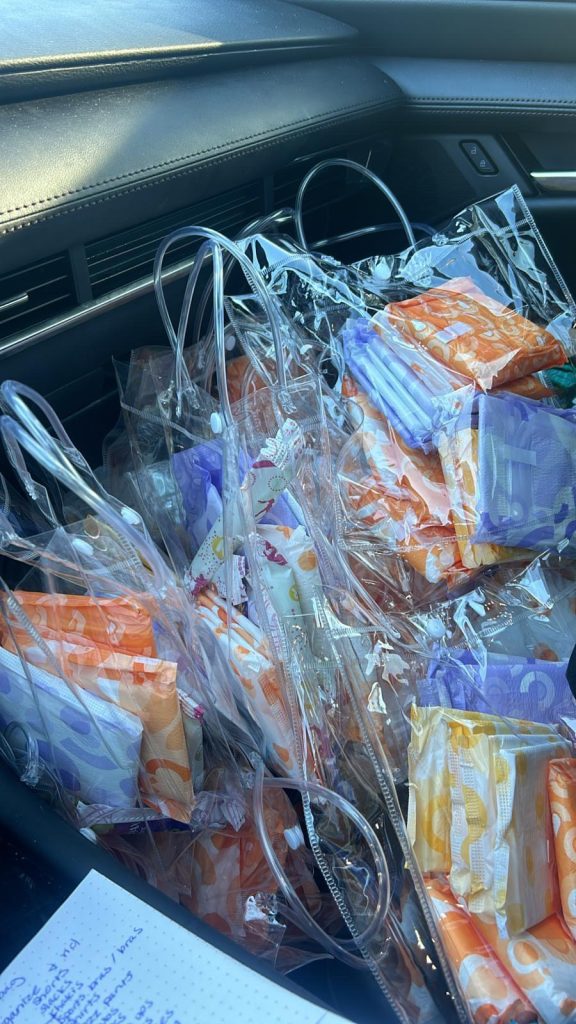
Their shared experiences, as well as the university’s lack of initiative, inspired them to start the End Period Poverty Project to ensure that other students would have access to such a basic necessity. They distribute waterproof bags with pads and tampons around all the bathrooms on both the Edinburg and Brownsville campuses. The bags are kept stocked to ensure that students always have free access to period products.
In spite of some pushback from school officials, the project has flourished and opened the door for students to share their experiences with the lack of access to menstrual products on campus. By challenging the existing stigma around periods, the project fosters a sense of solidarity.
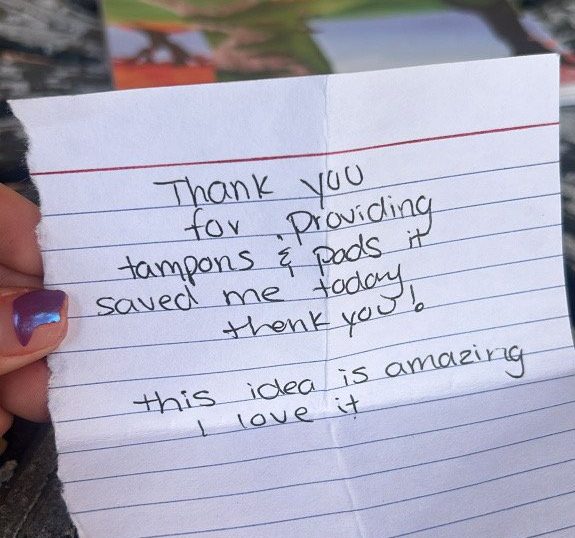
“It has turned into a movement where other menstruators are refilling the bags because they understand how important it is,” said Kylie. “That’s how I know it is being accepted in the community, and it gives me a good feeling knowing that the project is working.”
The students behind the project know that to establish permanence and ensure that it remains free, the university needs to take on part of the responsibility of providing menstrual products. They are currently advocating to get their project into the official 2025 UTRGV budget so that even after they graduate, the project can remain.
Challenging the Status Quo
“Even though it’s an issue affecting people who menstruate everybody can actually chime in, everybody can volunteer, everybody can help no matter what your current situation is,” said IFSO president Cindy Ruiz (she/they).
The End the Period Poverty Project is more than an initiative—it’s a testament to the power of grassroots activism to address systemic inequities. Access to menstrual products isn’t a luxury, it’s a necessity. Period poverty isn’t just about access to products; it’s about dignity, equity, and the right to exist in public spaces without shame or barriers. By providing free menstrual products and pushing for university support, these activists are setting a powerful example for other campuses to follow and paving the way for lasting change in our community.