An Exercise of Will: Discussing the Creative Process with Filmmaker Everardo Gonzalez
Story by Michael Flanagan
Edited by Abigail Vela
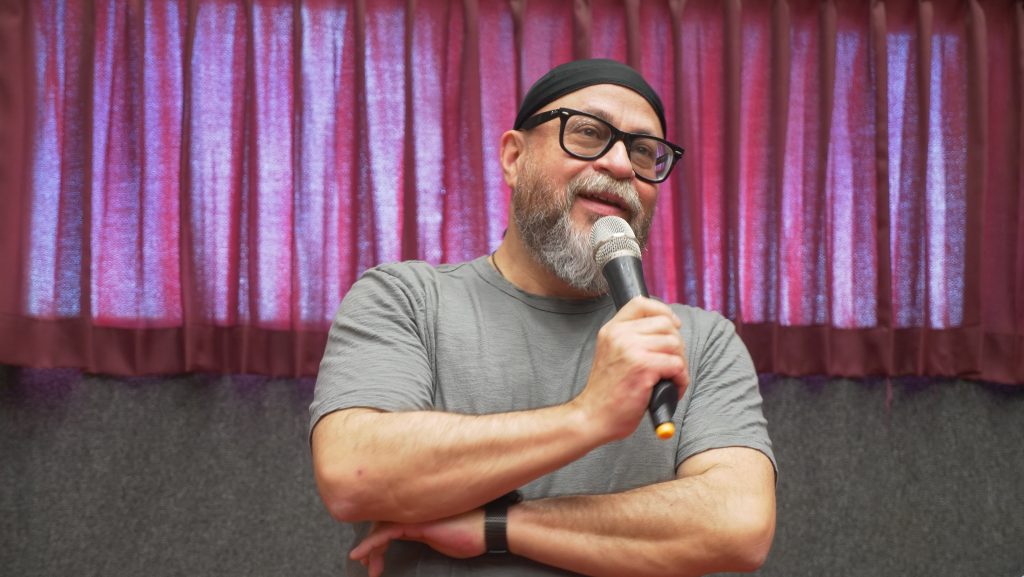
Filmmaker Everardo Gonzalez was born to Mexican parents in Fort Collins, Colorado, where his father studied veterinary medicine. Moving back to Mexico early in his youth, Gonzalez became interested in journalism and photography, eventually working as an assistant to several important photographers, including Eniac Martínez, Francisco Mata Rosas, and Joel-Peter Witkin. Encouraged to study film by the acclaimed filmmaker Carlos Carrera while interviewing him for a university assignment, Gonzalez has since developed into what Film Independent calls “one of the most solid voices of Mexican Documentary.” His films have screened in more than 40 countries and festivals, with Gonzalez winning three Ariel Awards—Mexico’s equivalent to the Oscars—for Best Documentary Film. In 2018, he directed “A 3 Minute Hug,” the first documentary film produced by Netflix in Latin America and later collaborated with The New York Times’ Op-docs section on 2019’s Emmy-nominated short, “Children from the Narcozone.”
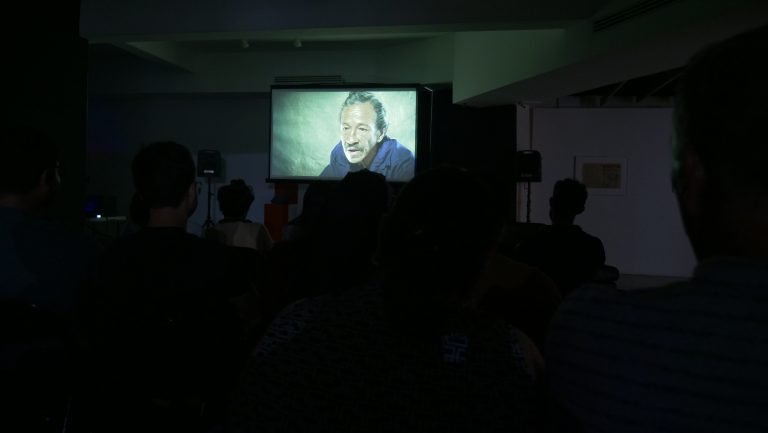
Gonzalez visited the Contemporary Arts Museum of Tamaulipas in Matamoros in August 2024 for a series of film screenings and discussions organized by the museum’s curator, Javier Dragustanovis. The screenings included “Los Ladrones Viejos (2007),” “Cuates de Australia (2011),” and “Una jauría llamada Ernesto (2023),” films by Gonzalez covering a variety of subjects from a group of burglars that robbed Mexican President Luis Echeverría’s home in 1972, to a multi-year portrait of an isolated rural community in Northern Mexico, and an unflinching look at the lives of young Mexican gang members in the present-day.
This interview with Gonzalez took place in the days after his visit to Matamoros and features the filmmaker discussing his thoughts on the “overly hygienic” state of contemporary cinema, cultural subtlety in the United States and Mexico, and the perils of interacting with dangerous criminals during the production of his films, among much more.
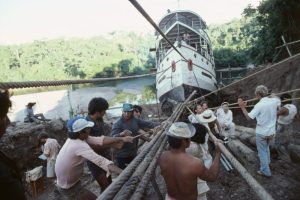
Michael Flanagan (MF): During a Q&A after the recent screening of “Los Ladrones Viejos,” you were asked for a book recommendation by a young filmmaker. Instead, you recommended “Burden of Dreams,” Les Blank’s documentary chronicling the production of Werner Herzog’s “Fitzcarraldo”—the legendary film in which Klaus Kinski portrays the eponymous character who endeavors to move a 320-ton steamship over a steep hill in the Amazon in his quest to build an opera house in the middle of the jungle. What do you find valuable about “Burden of Dreams” for those interested in making films?
Everardo Gonzalez (EG): “Burden of Dreams” is an exercise in what it means to make films when everything is in opposition. It shows how we have to break many of the rules that have been established by the major studios to be able to fulfill the dreams of making a movie. It’s a film in the middle of a hyperviolent situation—the hyperviolence of the environment, of being a foreigner in a place, of not understanding the environment in which you film, and having to form an army in order to make a film.
Today, those armies have too laborious a structure. Although I understand that structures can be important, they do not always meet the needs that cinema requires. Cinema requires more than contractual commitments. It requires the breaking of norms, including social norms. “Burden of Dreams” is a very motivating film because, independent of Herzog’s work, cinema is an exercise of will. When you’re young, you need a lot of willpower to make a film.
Our creative processes have become overly hygienic due to being concerned with a commitment to the major studios and the widest possible audiences—it makes cinema very sterile.
MF: What is your perspective on American culture and the relationship between Mexico and the United States?
EG: Thinking about the United States as a monolith is a mistake. For example, the culture and life of border cities in Texas are very different from that of border cities in California or Arizona. Texas is particularly distinct in its shared history with Mexico as part of Coahuila y Tejas. What happens in Texas has nothing to do with what happens in Virginia. And what happens in Virginia has nothing to do with what life is like in New York or Florida with all the Caribbean migration there.
I think the media has given us this homogenous way of thinking about these places because it benefits them in selling us a product. The same thing happens with Mexico—the indigenous world of southern Mexico has nothing to do with the northern Creole world. They are completely different countries and realities. Southern Mexico is more like Guatemala—it looks more like Central America or Mesoamerica.
Documentary is so valuable because it has an obligation to expose the peculiarities of a place. The idea of universality is a mistake. There is more value when the public who appreciates art has to make an effort to recognize itself in the other. This is in opposition to the imposition of mass media representations in which everyone is immediately recognizable. Netflix is not showing us the diversity of the world, only the things in which we are equal or the same. We don’t have the same dreams all over the world. We don’t have the same needs. We don’t have the same problems. But the mainstream tells us that we all share the same worries—that the Western idea of society in Los Angeles is just like Mexico City, Buenos Aires and Madrid. We’re not focusing on the fact that what happens in small cities in Wyoming also looks like what happens in small cities in Coahuila or Nuevo León. We’ve sold ourselves the idea of Manhattan, Chicago, Mexico City, etc.
We see it now in Mexico City that teenagers want to follow the models of life that they learned in “Euphoria” on HBO. I think that true wealth can be found in turning around to see how life is lived in small towns. In Wyoming, in Colorado, in New Mexico, or in Texas itself. That’s why I go back to “Burden of Dreams”—a German filmmaker with an Austrian team, planted in the Amazon, having to collaborate with the Amazonian communities while facing a war of opposition.
MF: Speaking of Netflix—you worked with them on the 2018 film “A 3 Minute Hug.” What was that experience like?
EG: It was a very pleasant experience because it was among the first experiments that Netflix undertook in producing documentaries in Latin America, and there was plenty of space for freedom. That has changed over time, especially since the beginning of the pandemic, as the ways in which people consume cinema have been affected. As the power of the streamer grew, we’ve seen the same problem of mainstream North American production models being adapted to the realities of other countries. What comes out of that is a complex crisis.
For example, it’s not the same to work on documentaries about true crime in Mexico as it is to work on them in the United States. Working on true crime documentaries in Mexico is a direct affront to the cartels. It’s not in the universe of fiction. It’s a reality of concrete and immediate problems that this country lives in. There is a culture clash between executives of the large corporate apparatus imposing their production models on creators in very high-risk conditions. Although my experience working with them has been pleasant, these paradoxes do not cease to exist.
MF: Going back to the idea of contemporary cinema being “overly hygienic,” who are some examples of filmmakers that defy this trend?
EG: Joshua Oppenheimer works very much on the edge of ethics. He takes great risks in the ethical relationships in his documentaries, and he undertakes very interesting performative exercises.
Watch: The Act of Killing (dir. Joshua Oppenheimer) – Official Trailer
Rithy Panh is a great historian of the Khmer Rouge in Cambodia. He gives voice to the tortured victims of the genocide perpetrated by the extreme left and the communists there. He creates a powerful portrait of communism’s other face. He also engages in very interesting formal exercises—filming in places of torture and stories that are told with constructed models and small figurines to help resolve their narratives.
Watch: The Missing Picture (dir. Rithy Panh) – Official Trailer
Miguel Gomes is a Portuguese filmmaker who originally worked as a film critic and author of film theory. I appreciate the crudeness with which he films and the distance he maintains from formalism. He created raw portraits of adolescents that don’t sanitize their reality. His work is also very critical of colonialism in Mozambique, for example. He explores these kinds of issues.
Watch: Tabu (dir. Miguel Gomez) – Official Trailer
Lav Diaz creates police thrillers that move at a very slow pace. It’s actually the antithesis of the police thriller. He works with a lot of freedom—his films can be very difficult and last up to eight hours.
Watch:Norte, the End of History (dir. Lav Diaz) – Official Trailer
MF: What role do you think artists play in influencing society?
EG: Society is very complex. Inequality, corruption, violent crime, poverty, marginalization, integration into the world—there are many problems. What can art do? At least leave a testimony of these problems. And for those who create the art, their lives can be transformed and improved. For the viewer, I don’t know. I’m not sure that someone can be profoundly transformed after viewing the “Mona Lisa.” I don’t know that someone would change their life after watching a film.
The line between art and entertainment is currently very vague. Entertainment is escape, not confrontation. These problems we have—inequality, the poverty of nations, corruption and violence—can only be resolved if the structures that cause them are modified. Art testifies to the reality of these structures, but I don’t think it changes them. Art changes the lives of those of us who create it, and it helps sensitize others, but changing structures happens through political and economic intention, social revolutions and armed struggles.
Unfortunately, I don’t think art changes reality more than weapons. Art doesn’t end wars; conflicts do. Picasso was not able to stop the Spanish Civil War, but “Guernica” is an important testimony of what that war was. I don’t think there is a film that will end the Russia-Ukraine conflict or that Netanyahu will be moved to change Israel’s geopolitical position after witnessing a theatrical performance. It’s highly doubtful that Nicolás Maduro will hear a song that causes him to realize that tyranny is not the right solution.
Of course, art can be a great influence. […] Art is not necessarily something good. It is created by men, and men are not necessarily good.
Artegios Provides a Place for Confrontational Cinema to Thrive
Gonzalez’s latest film, “Una jauría llamada Ernesto (2023),” explores the ease with which violent organizations target young people in Mexico through a uniquely intimate first-person perspective and is streaming now.
Additional films by Everardo Gonzalez are available through Artegios, a production and distribution company he founded in 2007 that specializes in the documentary film genre. In addition to Gonzalez’s work, Artegios also represents many other internationally recognized films, including Oscar nominees “For Sama (2019)” and “Of Fathers and Sons (2017).” Learn more at artegios.com.