Shifting Legacies: BMFA’s Impact on the Local Art Scene
Story by Josue Ramirez
Edited by Abigail Vela
Creativity is our right, but as the Brownsville Museum of Fine Arts (BMFA) closes temporarily the residents and creatives of Brownsville are left to share their thoughts on the state of the city’s arts and culture.
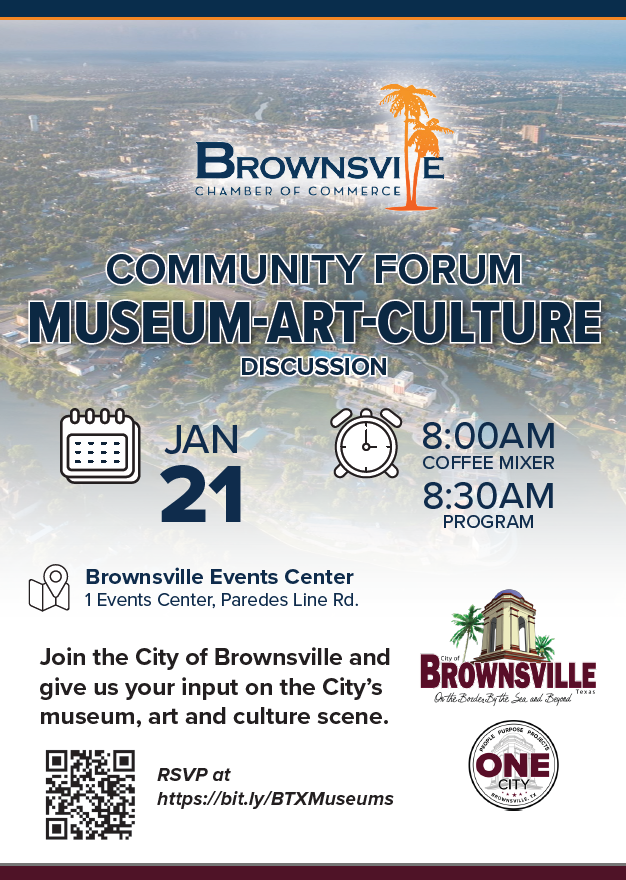
A public meeting on the arts was held on a cold and rainy Thursday at 8 a.m. at the Brownsville Convention Center. During this transition period of the City of Brownsville (COB) creative institutions, it is critical to understand the BMFA’s impact on the city and the region’s art history to advocate for its successes and future improvements.
“You don’t know what you got till it’s gone.”
-Joni Mitchell
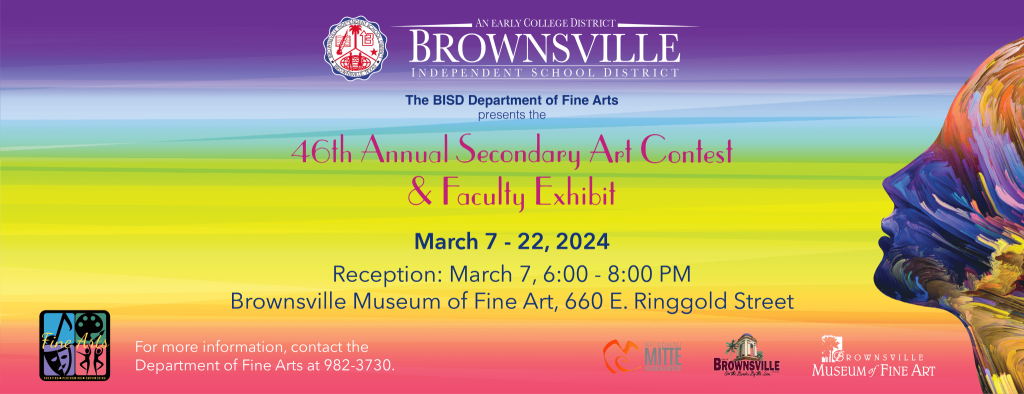
The BMFA’s legacy of service is applaudable for its impact on the arts education and its role as an introductory point for fine art to the city and the southern frontera. Many Brownsville and Cameron County locals’ first impression of fine art was at the museum via school field trips or extracurricular activities. The BMFA and the Brownsville Independent School District (BISD)’s relationship strengthened thanks to art educators who served as BMFA board members and through the annual Student and Art Staff Exhibitions.
Hometown artist Clarissa Martinez attended the BMFA in middle and high school. The BISD show was memorable to her because it was one of the only times some students displayed in a museum space. Later, as a university art student, Martinez visited for class or fun. She participated in the Juried International Art Exhibition and once won People’s Choice. She considers the City lucky to have housed one of the few fine arts museums regionally.
“A lot of people share that same experience of having the museum there for the local art community,” Martinez mentions.
That accessibility informed many of what “fine art” is, which, of course, is subjective to those in authority.
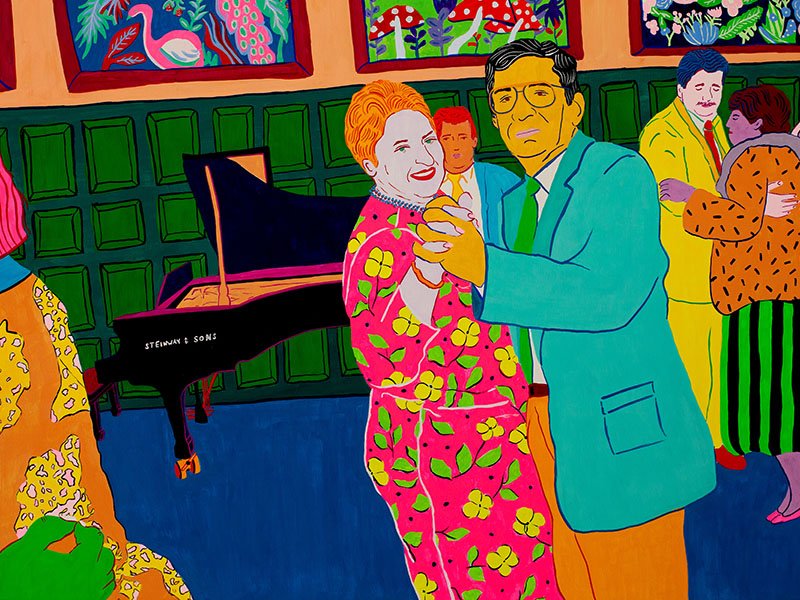
The history of the Brownsville Art League (BAL), the BMFA’s precursor, was the butt of valid critiques regarding the art it promoted. Carlos G. Gomez, a respected artist and local professor, described the BAL as “often emphasizing the work of older Anglo women.” Gomez believed the region’s conservative leaning to “promote artwork of flowers, birds, animals, and old buildings” was done “at the expense of social, political, and aggressive artwork, discouraging artistic imagination.” As the BAL became the BMFA, it opened its doors at 660 E. Ringgold St., carrying some of those vestiges. But, as the region changed, the museum’s demographics shifted too.
The BMFA’s 2006 inaugural exhibition, “Painting as a Territory” by Ray Smith, curated by Omar Pascual Castillo, was a fresh start regarding lauded contemporary artwork by people with South Texas ties. Smith, a renowned international and self-described “trans-border artist,” has lived in New York City and Cuernavaca, Mexico, for over three decades. He exhibited in the 1989 Whitney Biennial, and his artwork was acquired by institutions including the Metropolitan Museum of Art in New York City. Smith is also related to the Yturria family of the Yturria Ranch. His aunt, Mary Yturria, was a major patron in the BMFA’s development and an advisory member of the museum.
The exhibition was a step towards a more Latino contemporary art focus that carried forward certain historical and sociopolitical baggage and connections to the region. Other Latino solo exhibitions during the museum’s beginnings included Cande Aguilar’s iconic “Vivo Màs! (2008).” Group shows featured the annual members exhibition, the student and art staff shows, as well as open calls like “200 Years of Life and Color” (2010), and for fundraisers, like the 2007 show, “My Cup of Tea.”
Growing Pressures
While the facade of the new building painted a nice picture of the museum, internal issues became public. In 2009, Marilynn Brown, a BMFA member-instructor, posted a blog outlining concerns, including a catering kitchen not in use, the closure of the gift shop, no loading dock for large artwork, and no space for working artists. Brown urged, “Beware art organizations. Don’t dream so big that your dreams become nightmares!”
Cultural worker Monica Sosa grew up with the museum and became an archival intern at the BMFA in 2009 under Curator Jennifer Cahn. Sosa helped catalog the museum’s original work and prepare for exhibitions and events, including the tragic Anniversary Gala, the day of BMFA Director Barry Horne’s murder. She left the next year and cited many internal shifts.
Since then, Sosa gained experience in the arts field, having served the National Association of Latino Arts and Culture (NALAC) as a Program Manager. During her short BMFA internship, Sosa described an emphasis on the external and few community events that centered the region’s lived history. “The desire to uplift not just all arts and culture fields but really rooting in the Latino history was always a challenge that the BMFA never took on,” Sosa states.
The directors’ death shook the organization for years, with the BMFA reporting negative income from 2011-2013, then again from 2016 to 2022. Programming was impacted. To diversify income, the organization sought new partnerships, rented the museum for private events, and rented the kitchen space to a restaurant. They even went to the Brownsville Community Improvements Corporation and City Hall for assistance, which made it the subject of many politically motivated criticisms.

Other pressures came from the community. In 2017, Mark Clark, a gallery owner and past board member, exhibited “Mexica: Paintings by Mark Clark,” showcasing brightly colored pre-Hispanic codices. Artists Nansi Guevara and Celeste De Luna published an open letter denouncing Clark’s cultural appropriation, stating, “it becomes deeply problematic and dangerous when someone who is not native starts painting native imagery and claims it as his or her own.” They requested that the BMFA be more critical of such issues.
In 2020, the BMFA premiered “Boca Chica to Mars,” pro-SpaceX propaganda for SpaceX’s city takeover in exhibition form. The photographic and miniature model show, sponsored by the Brownsville Community Improvement Corporation, detailed the region’s Space Industry development. The politically motivated exhibition was questionable given the company’s negative regional impacts.
In 2022, an International Women’s Day Art Exhibit was sponsored by Planned Parenthood, called “Marches that Move Us.” Curated by Carla Hughes and Josie Del Castillo, the exhibit was shifted from the BMFA to the Carlotta K. Petrina Cultural Center. Miscommunication between the parties is one of the reasons given for the last-minute change. Yet, ultimately, the exhibition featuring a radical feminist perspective was stopped from showing at the museum.
Despite concerns, the BMFA continued. Exhibitions stand outs include “Remembrance, Resilience and Resistance” and “Still Life” by Ana Hernandez in 2018. “Texas, We’re Listening” featuring Cody Arnall, Joe Harjo, and Alejandro Macias, ranked first in Glasstire Top Five events in September 2019. New open calls and group exhibitions like “By the Sea, Coastal Art Journey” and their Annual Resaca Exhibitions teetered between the BAL’s affinity to traditional art and the community’s interests.
“It really took a younger generation and most recently you’ve seen some of that evolution,” Sosa mentioned. In the last years there was more inclination to feature local Latinx artists like Cande Aguilar’s, “Ni de Qui y Ni de Alla” (2020), “Camino de Milagros” by Teodoro Garcia Estrada (2021), the Smithsonian’s traveling exhibit, “DOLORES HUERTA: Revolution in the Fields / Revolución en los Campos” (2022), “Campos de Esperanza” by Jessie Burciaga (2023), Alexandria Canchola’s “Memories Blurred with Fiction” in 2024, and “Brick By Brick” featuring artists from the Flowershop Residency. Despite the museum’s last momentum to support regional contemporary Latinx fine art it was too late.



Clarissa Martinez is encouraged by the community turnout and engagement at the latest public forum on the city’s museums, art, and culture. Despite the early start and chilly weather, she attended to speak in support of BAL staff inclusion in the museum’s future planning and on the gap Brownsville’s young artists will face due to the lack of exhibition space for students.
More public meetings are to be held, and a report by Dr. Candace Tangorra Matelic, the consultant hired, will be published in May to June. Regarding the future, Sosa states that it takes the activation of “multiple entities to create that supportive community around building the narrative of the type of artist, arts community, and culture that exist in a region.”
Looking Forward
Maintaining an arts organization for close to 20 years is difficult, but sustaining a cultural institution is a feat. The BMFA found itself leading that task, being a main artery to the fine arts for one of the poorest cities in the nation. Despite valid criticisms, the museum persisted, but expecting a single organization to bear this entire responsibility was unsustainable from the beginning.
One of the main barriers that museums and cultural institutions face is being relegated to the dog-eat-dog world of capitalism—even the nonprofit structure is still essentially a business. We recognize our innate right to creativity and art, but individuals in power see these assets in our lives mostly for their money-making potential and not as pillars of life.
Even the community forum for the arts mentioned previously was primarily focused on businesses and hosted by the Brownsville Chamber of Commerce. The event’s marketing listed the “business benefits from supporting Brownsville’s arts and culture.” In the COB announcement of their BMFA takeover, COB Deputy City Manager Alan Guard mentioned that the City does not “want to run a museum” because it is not in their “wheelhouse to do that.”
There are many municipalities that disagree. Some actually prioritize their arts and culture enough to create departments to directly manage the development and funding of these areas. For example, the City of San Antonio funds an Arts and Culture Department that oversees the Centro de Artes, its Public Art Program, and Artists Grants. In the Rio Grande Valley (RGV), the City of San Benito has its Cultural Arts Department, which manages the San Benito Cultural Heritage Museum and the San Benito Cultural Center. The City of Edinburg has the Cultural Arts Department, which oversees the new Arts, Culture and Events Center, its arts programs, as well as the City’s many festivals.
These departments are supported partly by the municipality’s Hotel Occupancy Tax (HOT). In the City of San Antonio, 15% of these funds are assigned to the arts and culture programs. In the 2025 fiscal year, COB’s HOT funding budget is $1.8 million. HOT funds are split between the convention center and distributed to nonprofit organizations through an application process reviewed by the HOT Funds Committee. Some organizations funded in 2025 were Gladys Porter Zoo (which received the most $477,000), Charro Days Inc., the Mitte Cultural District, the Children’s Museum of Brownsville, and the Brownsville Society for the Performing Arts.
COB has invested in the arts through the George Ramirez Performing Arts Academy and now owns the old BMFA building. Collaborations are important, but the city needs to own up to its responsibilities of championing the city’s arts and culture. COB should step up and prioritize the arts. If Brownsville is serious about preserving and advancing its arts and culture, the City must invest internally and establish a dedicated Cultural Arts Department with staff who are passionate about the arts.
City officials reconfigure departments for the Convention & Visitors Bureau and the Office of Space Commerce, and can certainly establish a Cultural Arts Department with a dedicated budget. Brownsville’s artistic and cultural future depends on it.
This is the second article of a two-part series focused on the BMFA. The first article outlined the institution’s history, from its development to its current status.