
Past Lives: The Immigrant Grief We Don’t Discuss
Words by Melissa Cortes Santiago
Edited by Abigail Vela
Warning: SPOILERS AHEAD
“Past Lives,” Celine Song’s debut film, can be looked at from a hundred different perspectives. There’s something to take away from it for pretty much everyone. For me, and probably for many people in the Rio Grande Valley, what resonated the most in the film was its nuanced portrayal of the immigrant experience.
On the surface, it’s a love story. Two childhood sweethearts, Nora and Hae Sung, separated by immigration, reunite two decades later to unpack feelings that time and distance never fully erased. Beneath all of that, it’s about choosing one life while mourning the one that could’ve been. Past Lives shows us that immigration, while often framed in terms of opportunity, is also about loss. A loss of identity, language, love, and home. For a community like ours, where immigration profoundly affects so many lives, the film speaks to the quiet grief that accompanies it, even when it’s the best decision.
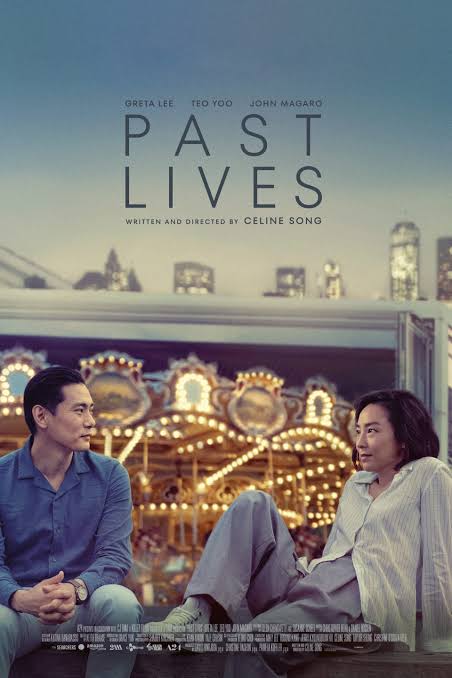
Nora’s story begins with a decision that many of us know all too well: a parent chooses to uproot their family for a better future. When Nora moves from South Korea to Canada and later to New York, she gains opportunities that she may never have had back home, but she also loses something meaningful: Her connection to Hae Sung, her best friend and first love, comes to an abrupt end. Over the years, Nora’s identity is drastically transformed. The Nora of New York is not the same person as the Na Young of Seoul. The film asks us to ponder: What happens to the parts of us that don’t survive immigration? And how do we connect with someone who only knew us before the transformation?
The film captures part of the immigrant experience that often goes unspoken: the split between who you were and who you become. Nora is not torn between two lovers; she’s grappling with two different versions of herself. Her meeting with Hae Sung after so many years isn’t about rekindling a romance but honoring a past version of herself. The little girl who might’ve stayed, grown up in Seoul, maybe married him, maybe not, but who she’ll never get to meet. That “what-if” echoes throughout the film, and it’s something that resonates with our community.
Many of us in the Rio Grande Valley come from immigrant families or are immigrants ourselves. We’re raised balancing two cultures, two languages, and a plethora of expectations. There is pride in “making it” in the U.S., but also a quiet guilt about forgetting your first language and drifting from your roots. You succeed in one world and, oftentimes, due to assimilation, lose your connection to the other. Like Nora, we may not realize it until it’s gone.
What makes “Past Lives” so powerful is that it doesn’t dramatize these experiences. It shows them quietly and tenderly: A conversation left unfinished, a look that lingers for a second too long. The film reveals the emotional cost of migration, a topic often overlooked in the national conversation. Not just the anxiety of potentially being in a mixed-status family, or the uncertainty of DACA and family separation, but the feelings that are harder to express. Missing family you haven’t seen in years. Knowing your children may never know where they come from in the same way you do. The ache of knowing you may never go back. This film shows how our community carries both hope and grief.
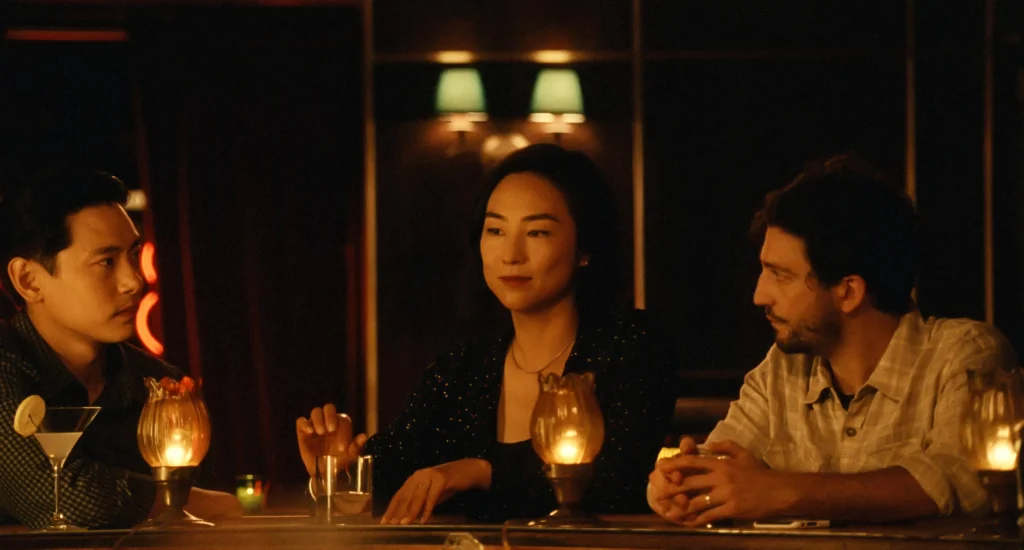
Ultimately, “Past Lives” is a story about accepting that grief. Nora doesn’t make some big, dramatic choice. She made it years ago. What she does is allow herself to feel both the love she has for her current life and the sadness for the one she left behind. That’s something many immigrants have to learn to do: hold space for both pride and pain. Even the best decisions come with loss. For those of us shaped by immigration, that kind of bittersweet honesty is what makes this movie worth watching.
Rating: 5 out of 5 Nopales

Have a movie in mind you’d like to review? Submit to Cine Trucha here!