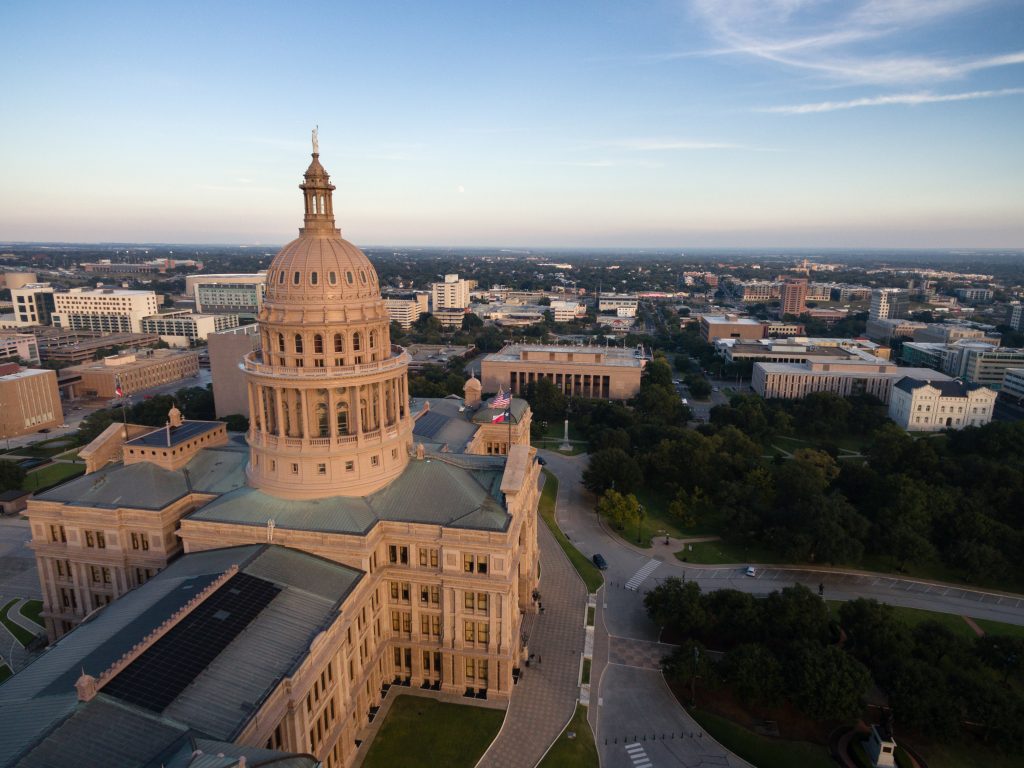
On November 4th, Texas as a whole voted in favor of all 17 proposed changes to be made to Texas’ Constitution. Staying politically informed can be difficult when that information is deliberately phrased to avoid being understood by voters.
Therefore, here are, in simpler terms, the 17 Constitutional Amendments that were voted on in this past election. While reading these, you will notice that many amendments are aimed at setting aside money for specific issues. While several of the listed issues could use funding, it is essential to remember that, unless specified, these amendments only set aside the money. They do not enforce how that money is spent afterward, so it remains a duty and responsibility to ensure those funds are spent on what they were created for. The amendments are categorized by their effect on the state.
Setting Aside Money for State Funds
Propositions 1, 4, and 14 focus on setting aside sums of money for different funds. These create funds for technical colleges, water infrastructure, & a new program to research cognitive brain diseases, respectively. These are all reasonable goals to have funded and be prepared for; however, the work does not stop at creating the fund. It is crucial to closely monitor the funds to ensure they are used as proposed.
With this, the Rio Grande Valley should find better equipment in technical colleges, improvements in water conservation, and an increase in studies on conditions like Alzheimer’s and dementia in Texas.
Limits on Who & What can be Taxed
The other three Amendments —Propositions 2, 6, and 8 —focus solely on protecting property and businesses from taxation. All of them already exist in some capacity, but are now to be codified in the Texas Constitution, making them immutable by law in this state.
Proposition 2 states that Texas is banned from ever imposing taxes on capital gains, such as stocks and cryptocurrency, and Proposition 6 does the same while also banning trading fees on stocks and bonds. Most relevant to the Valley is that these mainly enable and incentivize the trend of putting oneself in debt for a major purchase, such as a car or home.
Lastly, Proposition 8 prohibits inheritance taxes on property left to others after the owner’s death, which is likely to be the only one of these three propositions to benefit the people of Texas as a whole; however, it has not existed in this state since 2015.
Tax Breaks & Exemptions
There are a total of seven amendments that either grant tax exemptions similar to deductions or tax breaks that serve to make people, property, and businesses less taxable by the government.
Propositions 5, 9, 10, 11, and 13 all provide tax exemptions, with 5 and 9 not focused on people.
Proposition 5 helps businesses as well, but it’s more likely to help Valley farmers and pet shops as a whole by not taxing animal feed sold by retailers.
Proposition 9 grants exemptions for physical business equipment, such as machines and tools; however, it does not specify who qualifies.
Proposition 10 provides homeowners who lost their homes in a fire with coverage until they rebuild or a certain period passes; however, it is important to note that it will only cover the complete destruction of the home. This amendment, like some of the others, would be a net positive were it not for the restrictions previously outlined, namely that it only includes homeowners.
Finally, Proposition 11 provides exemptions for the elderly and disabled, and Proposition 13 increases an existing homeowners’ exemption—both by specifically making them immune from the tax that funds public schools. This would leave less funding for Valley schools, which are already in need of more of what they receive.
On the subject of tax breaks, Proposition 7 is for widows of veterans who died from service-related complications like illness, as long as it is considered service-related by federal law.
However, it is Proposition 17 that is bound to affect the Rio Grande Valley more than any of the amendments on this past ballot because it incentivizes citizens, primarily already wealthy landowners, to build border security infrastructure. This not only means that the state of Texas voted for the wall to be built, but for it to either be paid by citizens near the border, or someone wealthier to buy the land just to privatize border security. To illustrate, this means that any unnamed businessman, maybe not even from the Valley, could take advantage of this by entirely building a privatized border wall and receiving tax benefits from it.
Education & Judicial Propositions
Propositions 3 and 12 look to amend our justice system: The former by compelling judges to deny bail to people convicted of a felony deemed dangerous without providing an empirical definition of such. Meanwhile, the latter restructures the way the Texas judicial branch keeps its judges ethical and ensures they are qualified by creating the 13-member State Commission on Judicial Conduct. Theoretically, Proposition 12 will keep judges accountable, but it holds the risk of those groups being biased themselves, along with Proposition 3 opening up a door to protected prejudice in the court system.
Lastly, Proposition 15 focuses on children’s agency by affirming that parents have authority over both the government and schools regarding their child’s education. While this looks like a way to protect kids from the overreach of the government, this makes it much harder to intervene in instances of abuse and can be used by prejudiced parents to keep schools from teaching teenagers about sex education, mental health awareness, the colonization of Native Americans, or even just evolution.

That’s Not All, Though
There is one amendment left without a category, for the main reason that it has no actual purpose beyond setting a precedent: Proposition 16. It codifies that only citizens can vote in the Texas Constitution. For clarification, this already existed at the federal level and serves no purpose other than to create a judicially protected precedent that non-citizens do not have rights. Passing unnecessary legislation that only serves to exclude a group of people can have the sole effect of creating the assumption that that group —in this case, non-citizens improperly voting —are a larger problem than they actually are.
This also does not include the several local seats on the same ballot for residents of Alamo, Edcouch, Edinburg, Harlingen, Los Fresnos, & South Padre Island. I encourage you to look up your winners and their stances. Not just their social media to see what issues they platform, but also their publications to see what they genuinely believe in.
Finally, if you want to make sure change is steering in the right direction, take time to get involved. Whether that’s supporting a political campaign or local grassroots organizations, there will be a group of people who care about the same issue(s) you do. If you did not get the chance to vote or have qualms about how, reach out to Bloom RGV or VoteRiders RGV, two groups focused on helping you exercise your right to vote.