Brownsville Museum of Fine Arts Closes Temporarily: A History
Story by Josue Ramirez
Edited by Abigail Vela
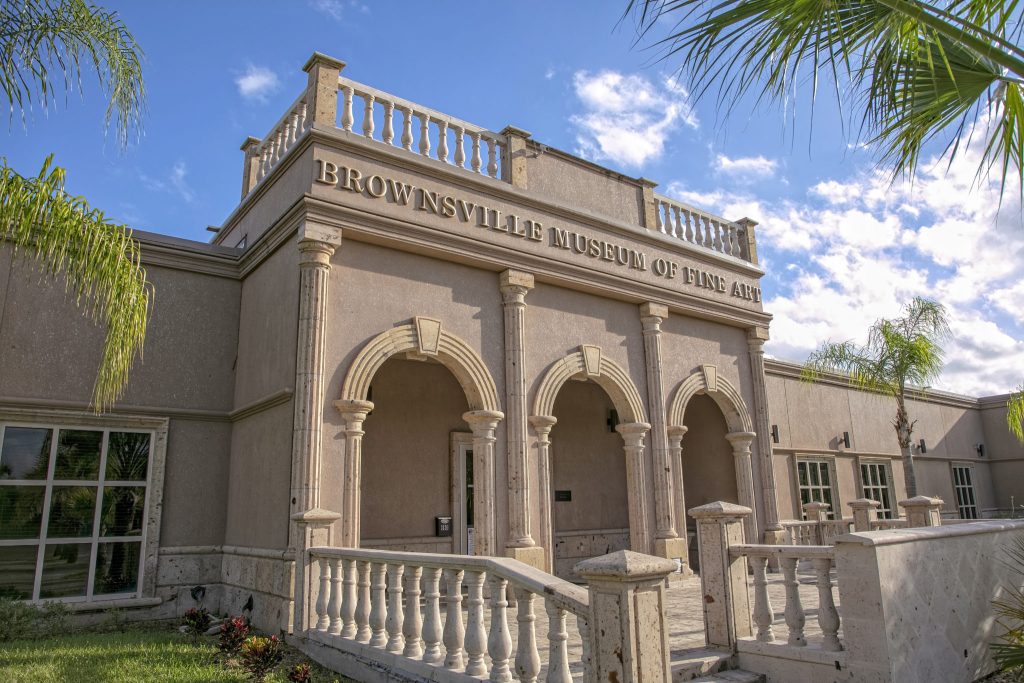
Over the holiday break, the Brownsville Museum of Fine Arts (BMFA) announced that it would temporarily shut its doors. This decision follows the museum’s “request for partnership” with the City of Brownsville (COB) in June 2024. The COB has now taken over the building and is seeking new partnerships to manage the space, while the BMFA’s social media accounts have transitioned to the Brownsville Art League (BAL). This development points to a new chapter for the city’s art scene, leaving locals without a significant creative resource and a major exhibition space in Texas’s southernmost city.
From Brownsville Art League to Brownsville Museum of Fine Arts
The legacy of the Brownsville Museum of Fine Arts begins with the Brownsville Art League (BAL). Founded in 1935 by eight women community leaders during the Great Depression and the segregated Juan Crow era, the BAL quickly became a part of the City of Brownsville’s history. They even hosted an exhibit for the first Charro Days festivities.
Initially, BAL members paid $6 annually in dues and met every Thursday in members’ homes, backyards, and churches to teach each other art techniques and methods. They often painted en plein air, producing art that showcased the coastal landscape, resaca scenes, and sunsets. In the 1940s, Texas Southmost College allowed the BAL to use the old Fort Brown morgue for classes, held daily and one night per week.
According to BAL, the founding members “studied with artists throughout the world and brought artists to South Texas from Mexico, other Latin American countries, and various parts of the United States as instructors and colleagues.”
In 1950, the BAL found a permanent headquarters in the oldest wooden structure in Brownsville. The home belonged to William Neale, a runaway slave catcher, a two-term mayor in the mid-19th Century and an ancestor to Brownsville’s current Mayor, John Cowen Jr. The house was the site of major regional events, including a raid by the famous Juan Cortina, which resulted in the death of Neale’s son. The structure was gifted to the BAL by Neale’s great-great-granddaughter and moved from its original site to Texas Southmost College near the Rio Grande River.
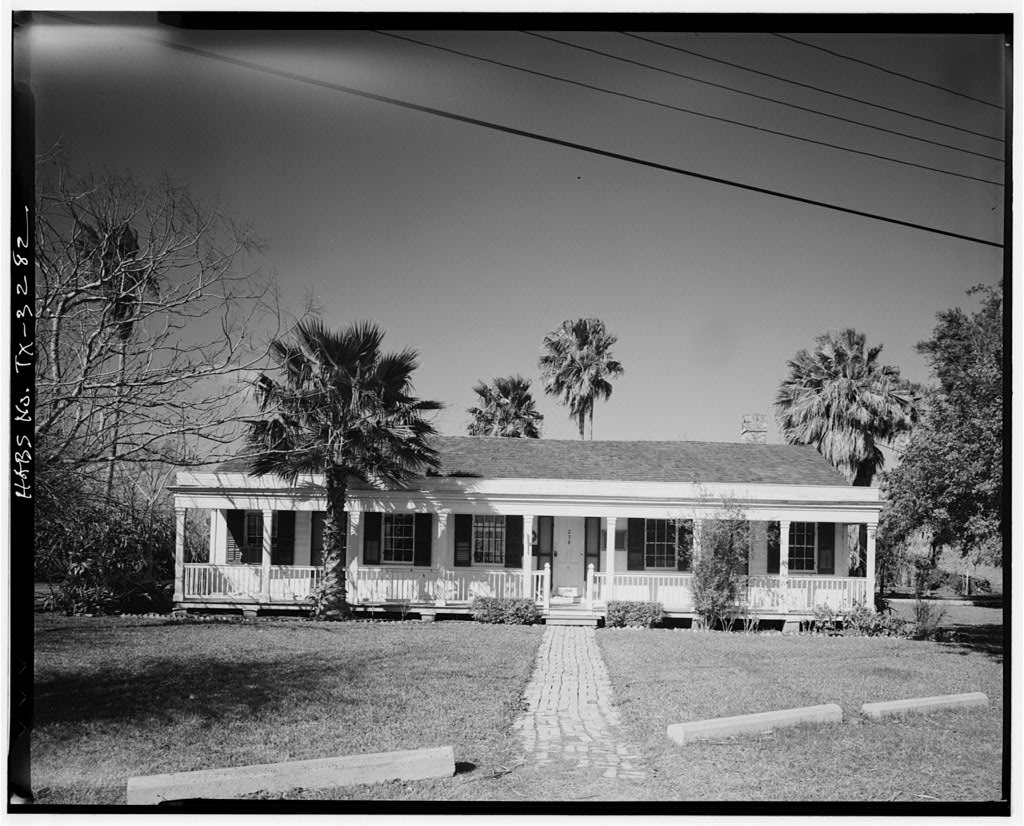

Ruth Young McGonigle, a founding member of the BAL and one of the first women to earn an architecture degree from Rice University, oversaw the move and resettlement of the home. In the late 1960s, McGonigle designed a studio behind the home to house the league’s growing permanent art collections, which was also where they taught workshops.
The BAL’s collection remains one of its proudest achievements, serving as one of the few repositories of art from this region and period, “representing many facets of Hispanic and border culture in America from the 1920s to the 1960s.” During this time, the BAL influenced the growth of new art leagues in cities like Harlingen (1959) and Laguna Madre (1975).
Some notable BAL exhibitions include the 1971 First Rio Grande Valley Arts and Crafts Exposition and the first International Art Show, sponsored in cooperation with the City of Brownsville and the Brownsville Chamber of Commerce. These events became their annual fixtures and supported the establishment of the Brownsville Art League Museum, erected in 1975 on Neale Drive, now part of the UTRGV campus with the border wall in its backyard.


The BAL’s “dream” was to operate as both a school and a museum. They hosted numerous workshops on painting, portraiture, and critiques, as well as from visiting artists. The museum supported local arts education by exhibiting the Brownsville school district’s student work and, in 1995, began to host the Brownsville Independent School District Faculty Art Show.
For local contemporary artists, the BAL often served as an introduction to the city’s arts scene. While the BAL is considered one of the main drivers of the “appreciation of fine art” in the city, it did draw criticism.
Many, including Carlos Gomez, the locally renowned artist and professor, described the League’s emphasis “on decorative more than on “fine” art and for “Mexican in preference to local Mexican-American art.” Regarding the work produced and featured at the BAL Museum, Gomez argued that the League prioritized “realist paintings” over contemporary movements such as Surrealism, Mexican muralism, Abstract Expressionism, and Pop Art.
The Transition to BMFA
The region’s growth and increased interest in funding the arts led the BAL to become the Brownsville Museum of Fine Art in 2001. In 2002, the City Commission of Brownsville entered into a pre-lease commitment with the new museum, leasing 0.535 acres of land at the intersection of Ringgold and 7th Street at Linear Park to the BMFA for 20 years. This lease was part of the development of the Mitte Cultural District, specifically aimed to establish and support facilities for storing and displaying art.
Municipal support represented a significant step forward for the creative community and the vision of a museum. Fundraising efforts, along with support from patrons, the Brownsville Improvements Corporation, and Wells Fargo culminated in the official opening of the Brownsville Museum of Fine Arts in 2006.
Over the years, the BMFA expanded its programming and showcased local, national, and international work. Local contemporary artists showcased include Cande Aguilar’s “Ni de Aqui, Ni de Alla,” Teodoro Garcia Estrada’s mid-career retrospective “Camino de Milagros,” Alexandria Canchola’s “Memories Blurred with Fiction,” and many more. Their annual exhibitions continued and became long-lasting traditions. 2024 marked the 48th International Art Show and the BISD 46th Annual Secondary Art Contest & Faculty Exhibit.
However, like many other creative institutions, financial and unexpected tragic obstacles shook the museum. The murder of Barry Thomas Horne, the newly appointed BMFA Executive Director, hours before the Anniversary Benefit Gala in October 2009 was a shocking and devastating loss to the museum and local community.
A 2011 article describes the museum’s struggles, including the funding cut from $219,000 to $50,000 in city cultural funding and the heavy burden of the new museum’s $3.1 million price tag. According to Glasstire, the BMFA reported a negative net income from 2011 to 2013 and again from 2016 to 2022.
A resolution from the COB in March 2014 supporting the museum’s request for $139,000 for the salaries drew ire from some and pointed to the museum’s financial woes. This, a revolving door of directors, and a changing landscape left the museum in a tough time before the COVID-19 Pandemic further impacted the museum’s operations. In 2022, the original 20-year lease with the City of Brownsville expired. However, the lease included options for two additional 10-year terms.
In the summer of 2024, the BMFA and COB signed a letter of intent for the proposed acquisition of the museum building, website, operations, and programming. As part of the agreement, the BMFA was required to provide operational documents and make necessary board decisions to facilitate the acquisition. If needed, the museum would temporarily close to “regroup and reimagine” its mission and vision.
The COB agreed to cover the cost of skylight and roof renovations, pay the BMFA’s remaining bank debt, and acquire the building title. This is expected as the original lease dictated that any improvements on the premise “shall become part of the leased Premises with title vesting to the City” at the expiration or earlier termination of the contract. Additionally, the city committed to managing operations, maintaining the building and formulating a transitional plan with input from foundations and educational institutions.
Dr. Candace Matelic, initially hired as a consultant to renovate the San Fernando Building to an exhibition space for a private gallery, expanded her role to assist with the transitional plan. Her work includes assessing the city’s historical, cultural, and fine arts community, meeting with locals, and developing recommendations to revitalize many historic cultural assets, not just the museum. The final report is expected in May through June 2025.
Currently, the museum’s walls are bare, and its doors only open for the restaurant operating inside. The BAL has “returned to its roots” as an art league, focusing on organizing exhibits, providing educational programs, and sharing its collection, which will remain in the building for five years. On January 27, BAL announced its first 2025 open call for “Un Tiempo Festivo: A Charros Day Exhibit” in collaboration with Puente Art Studio. The opening reception is happening this Saturday, February 22, from 6 to 9 p.m. at the Puente Art Studio at 741 E. Elizabeth St.
Documents:
This article is part of a two-part series on the Brownsville Museum of Fine Arts. This first article outlines the history of the institution, from its development to its current status. The second article will examine the BMFA’s impact on the region’s creative community and the implications of its closure for artists.