Carlos Limas’ “Destino Sur” Captures Peru’s Cultural Complexity
Story by Christopher Karr
Edited by Nina Alegre
- August 28, 2025
The nation of Peru is shaped by cultural syncretism that is produced from the merging of Andean and Iberian cultures. Carlos Limas, the current chair of the Art Department at South Texas College, captures this syncretism in his black and white photographs taken during three trips to Peru. His solo exhibition, “Destino Sur,” takes audiences on a journey to the nation’s historic sites, bustling streets, and vibrant markets.
Regarding “Destino Sur,” Nancy Moyer, Professor Emerita of Art at the University of Texas Rio Grande Valley, writes that Limas “approaches his scenes and subjects as a documentary photographer.” In essence, Limas’ photographs capture moments in time that are fleeting, yet brimming with vitality in their natural quality. The artist’s engagement with black and white tonality is a call to action, prompting audiences to fill in the photos with their own imagination.
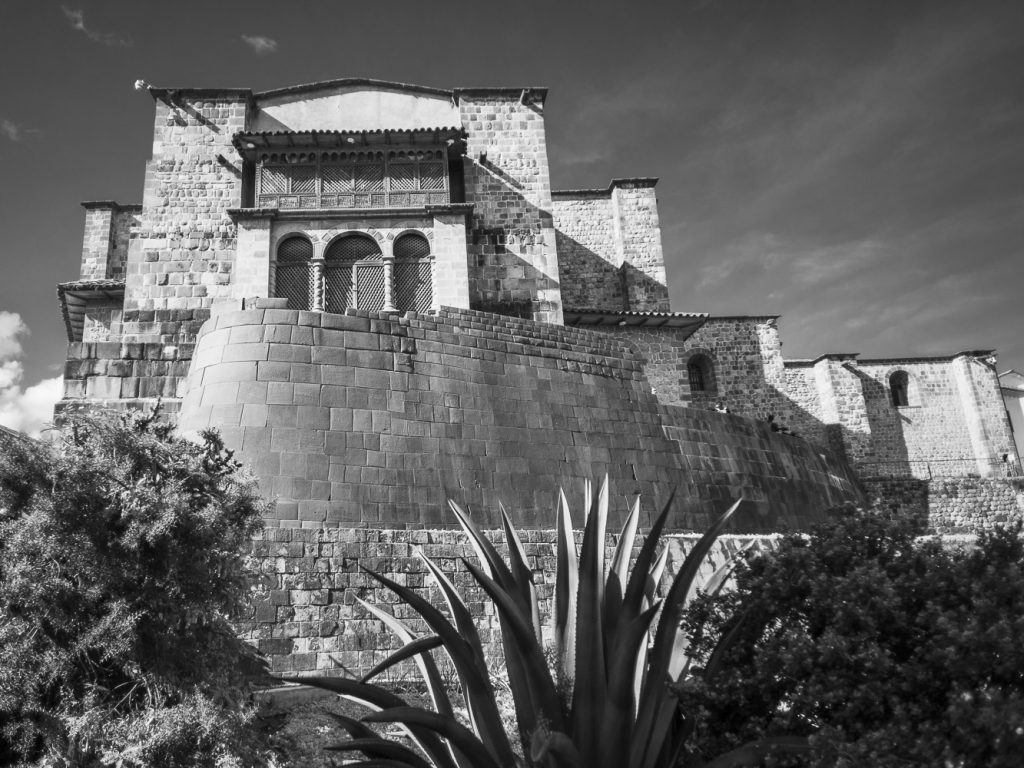
“Convento de Santo Domingo” showcases an iconic convent in Cusco, Peru, which was once the capital of the Inca Empire. Built in the 1530s by Spanish conquerors, the convent stands directly atop the foundations of the Temple of Qorikancha, originally dedicated to the Inca sun god, Inti. The Spaniards dismantled the Inca temple, using its same stones to create the convent. In doing so, they asserted colonial dominance while erasing pagan Indigenous practices. From the ground, Limas frames the convent’s façade with an agave in the foreground, a living presence that anchors the image in the present while subtly evoking the endurance of Peru’s layered histories.
Historically, the Temple of Qorikancha was the starting point of the Inti Raymi, an annual festival dedicated to the Inca sun god. Prior to Spanish colonization, the festival occurred during the winter solstice, but it now occurs on June 24. Each year, the people of Cusco recreate past rituals and ceremonies through various parades.
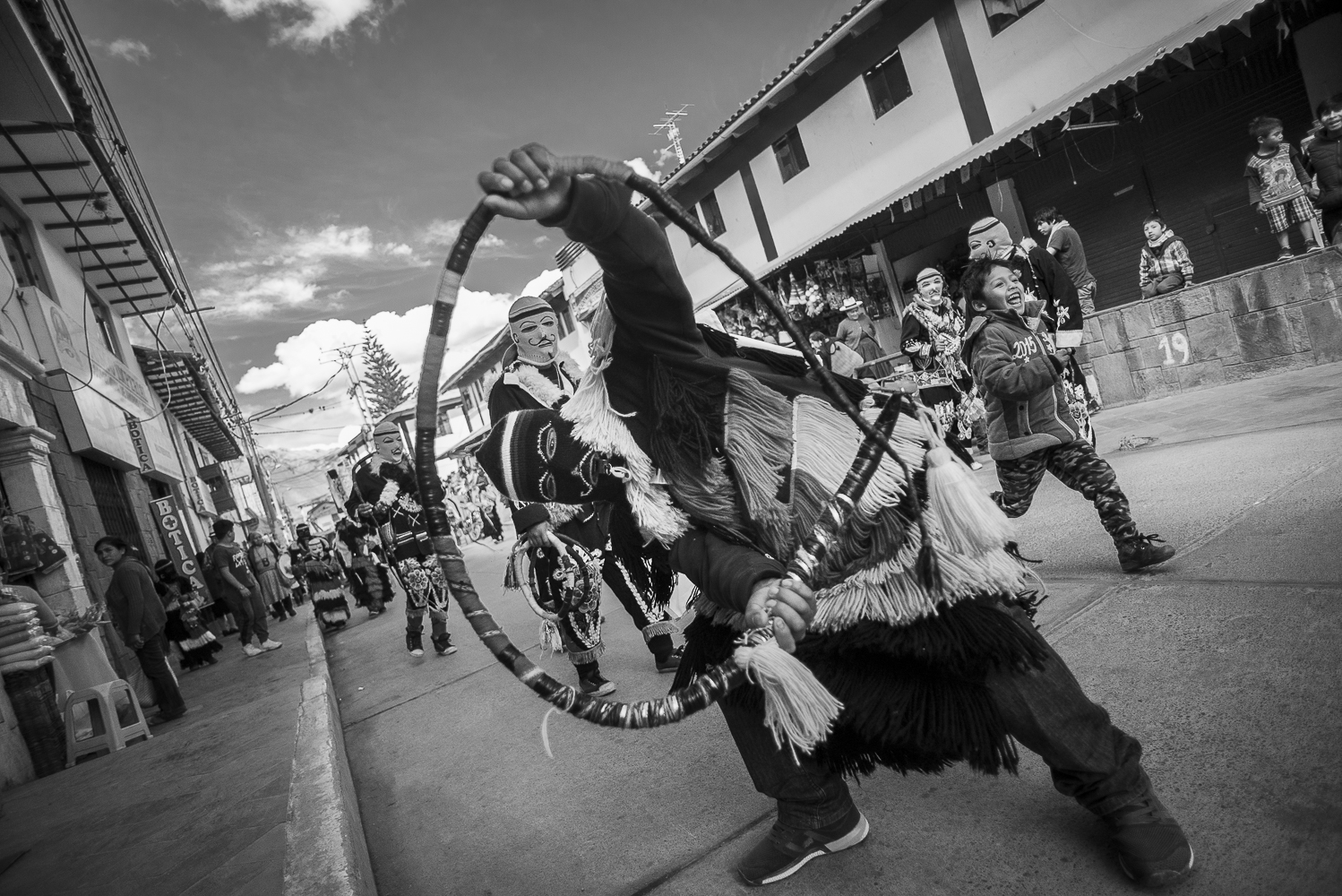
In processions such as the Danza de los Pablitos (or Pabluchas), the whip symbolizes authority and ritual power, grounding the performance in both history and cultural memory. In “Los Pablitos,” the main subject arranges a whip into a circular shape that forms a halo over his masked face. The unnamed man clearly poses for the artist, consciously embodying the role of a mythological archetype. To his left side, a young child jubilantly runs, while other masked individuals perform in the background.
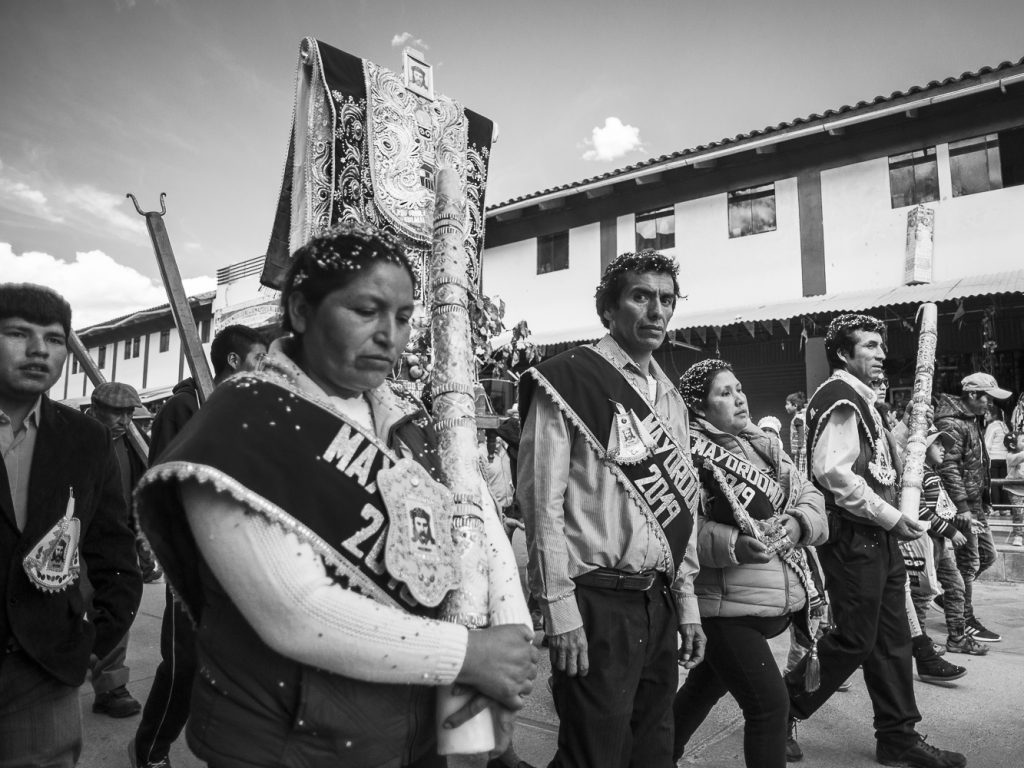
In another procession, people wear ceremonial sashes labeled mayordomo and mayordoma. These titles are given to community members who take on organizational roles for the various festivals of the Inti Raymi. The large embroidered standard that the woman closest to the frame carries bears an image of Jesus above sequined textiles with floral designs. The mayordomo’s position in Cusco reflects Andean reciprocity (ayni): giving to the community and the spiritual world to maintain balance and harmony. In Cusco and the surrounding highlands, such processions are a cultural embodiment of mestizaje, the syncretic blend of Andean ritual and Catholic devotion.
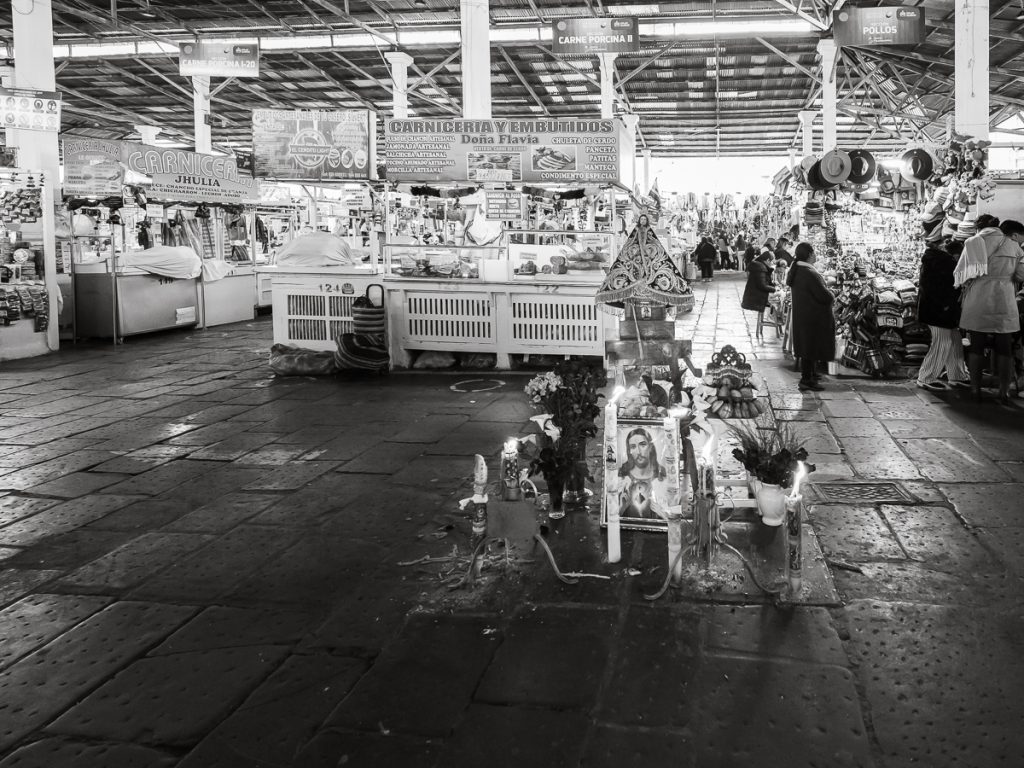
As of 2022, an estimated 76% of Peruvians identify as Catholic, and signs of the faith remain embedded in the nation’s everyday spaces. Limas’ “Mercado San Pedro” depicts a Catholic shrine in Cusco’s San Pedro Market. The shrine, which rises from the market floor, contains a framed photo of Jesus surrounded by flowers and candles. A heavily cloaked sculpture of the Virgin Mary sits above him on a stepped structure. Behind the shrine, market vendors tend to their booths. Limas’ composition reflects how Catholic iconography has been absorbed, reinterpreted, and seamlessly woven into the lived experience of contemporary Peru.
Despite colonization, indigenous culture and customs remain lively in Peru. Reflecting on the exhibition in a conversation with me, Limas observes: “Every time I visit a new country, I carry a piece of it home with me, but I also leave a part of myself behind. I feel it’s a fair trade. […] Peru shares a common past with Mexico, yet it also deepens the cultural richness of Latin America through its traditions, beautiful landscapes, and unique spirit. From the mysteries of the Nazca Lines to the vibrant energy of Lima, Peru is now part of my legacy that I’m very proud to share as a photographer.”
“Destino Sur” was on display at the International Museum of Art and Science in McAllen from February 22, 2025 through August 17, 2025.