Trigger Warning: Hauntings and Mentions of Suicide

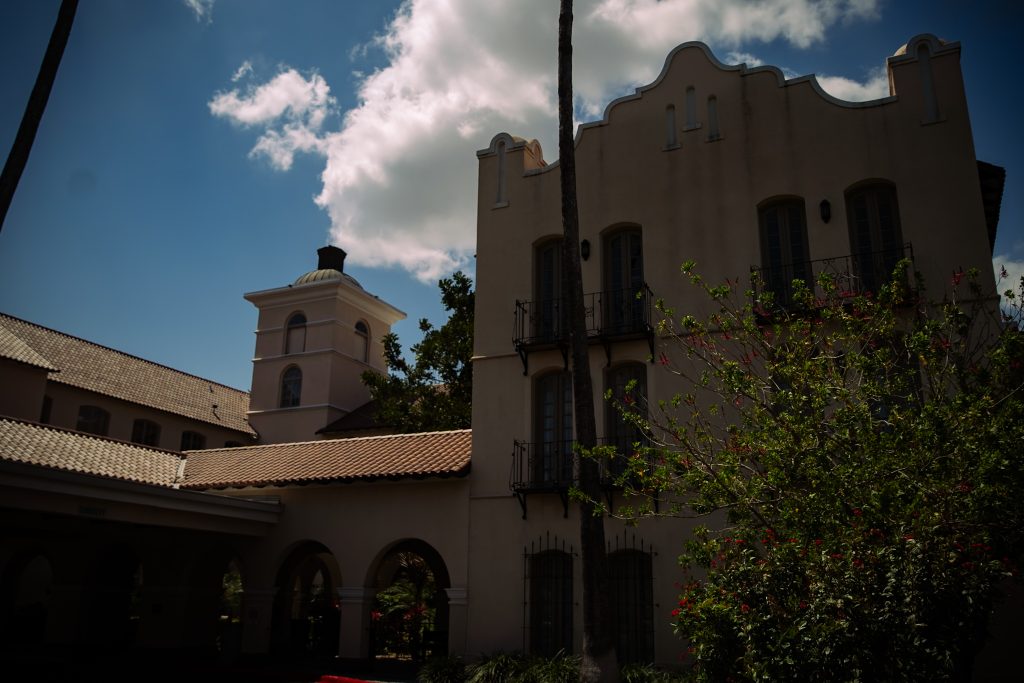
On Main Street in downtown McAllen, right by the arts district and across from Archer Park, lies the Casa de Palmas hotel. A Spanish colonial-style hotel originally erected in 1918, it is one of the Valley’s oldest and most recognizable cultural and historical landmarks.
Having worked at the hotel’s front desk for years, one of the most frequent questions I received about the location was, “Is that place really haunted?”
Whether you believe in ghosts or not, the history of this old hotel offers a fascinating look at the Valley’s development over the years. It’s interesting, complex, and yes, a little spooky.
The Hauntings
Ghost stories naturally accumulated around places with rich histories, and the Casa de Palmas is no exception. Locals know it as a hotspot for paranormal activity and legends have swirled around this location for years, attracting supernatural thrill seekers from all over. The hotel frequently features on lists of haunted locations in Texas and it was featured on the YouTube channel run by Valley local South Texas Paranormal, who investigates reportedly haunted locations across the Valley.
Stories about the hotel’s hauntings have featured in Valley writer David Bowles’s novel, “Ghosts of the Rio Grande Valley” and many Valley residents have their own stories of creepy goings on at the hotel. From strange figures in the hallways late at night, to items being moved, to cold spots.
I’ve heard reports of people feeling invisible presences in their rooms, sitting on their beds, or reaching out to touch them. One person told me they had to leave their room in the middle of the night because they had sworn they saw a dark figure standing over their bed, quietly watching them. But when returning to the room, it was empty; all that remained was a lingering sense of malice.
Ghost stories that are mainly passed around in whispers can be hard to verify. But the reports of ghosts haunting the Casa de Palmas seem to coalesce around three figures.
An old woman was reportedly seen in the basement. While this area of the hotel is not open to guests, employees in the housekeeping facilities there have reported strange sounds and unexplained and sudden emotional wellsprings. Supposedly, there have even been sightings of this old, unknown woman wandering the halls.
Another figure particularly enjoyed by the hotel staff is the apparition known as Miss. Roxxy. The story goes that she was a former employee of the hotel before committing suicide. She now haunts the third floor, where her old office used to be. Reports abound that the third floor is the most haunted, with sounds of a woman laughing, strange noises, phones ringing in the middle of the night with no one on the other end, and even sightings of apparitions.
The final figure is probably the most well-known. A woman wearing a black veil, stuck in her permanent mourning, has been rumored to appear around the hotel. Especially in the iconic towers.
In his book “Ghosts of the Rio Grande Valley,” Bowles discusses the legend of the veiled women that haunts the Casa de Palmas and recounts a tale from several decades ago, when the cops were called to investigate a woman spotted trespassing in the towers. Only to arrive and find no one there. Well, no one living, that is. He describes their encounter with this spooky poltergeist in eerie detail. It is one of the best-known accounts of veiled women in the hotel’s history. Nowadays, the rooms in the towers are condemned, but people still report seeing figures in the windows.
The veracity of these stories is difficult to verify, but ghost and haunting stories often speak to an emotional core that gives them the strength to stick around. Simply put, ghost stories are how we in the present day reckon with our collective past.
The History

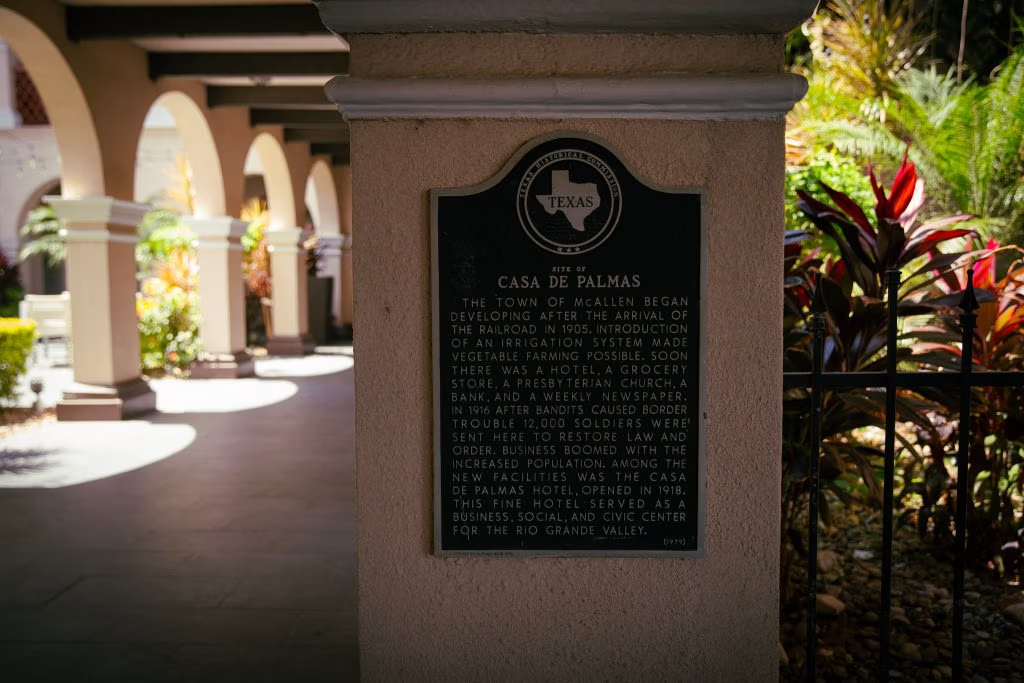
To better understand where these ghost stories came from and why they remain so popular, one must examine the hotel’s recorded history and the tumultuous period in which it was built.
Constructed in 1918 as luxury accommodation, the Casa de Palmas was built with the support of Oliver P. Archer (namesake of Archer Park across the street and future mayor of McAllen), at a time when the Valley’s landscape was shifting drastically, marked by racial upheavals, a population boom, and growing economic interest.
The arrival of the railroad, which connected the Valley to the border crossing in Laredo, brought new economic interest to the region and the “Bandit Wars,” a series of bloody racialized conflicts across the border wherein Texas Rangers clashed with Mexican seditionists and terrorized the populace, an event known as La Matanza, garnered national attention. During the conflict, which stretched from 1910 to 1920, the National Guard was deployed from New York to quell the violence. Over 100,000 troops flooded the Valley in a huge attempt at militarizing the border. And with this sudden influx of new people, McAllen, once a small town mostly consisting of privately owned ranches, experienced a population boom. Suddenly, more accommodations were needed to support the new, growing business class as the Valley began to attract a wealthier clientele.
The Casa de Palmas hotel was built and situated near a stretch of railroad in the growing downtown area. With its state-of-the-art amenities and architectural styling, it became a hub of commercial activity in the Valley. In its early days, it housed soldiers and business leaders; a legacy that continues today.
Over the course of its operation, many people have passed through its halls. Visitors and celebrities from around the world (it was said to have hosted a clandestine meeting between Fidel Castro and Cuban President Carlos Prio Socarras in 1956), all drawn in by its colorful history.
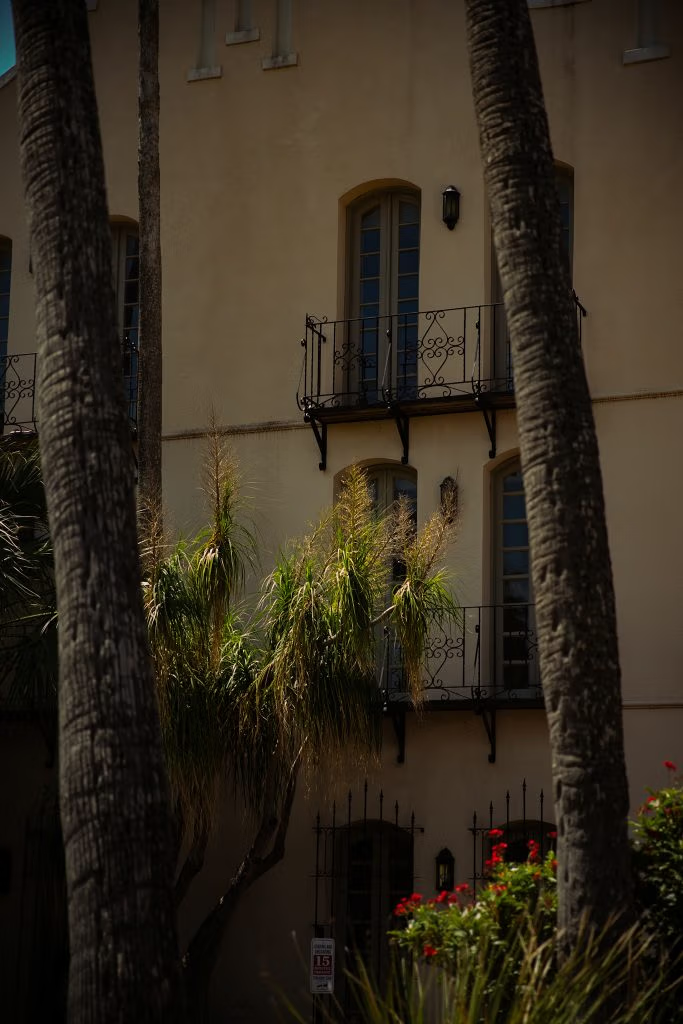
The hotel has operated continuously for over 100 years now. It has been bought, sold, remodeled, and rebuilt several times. It even burned down in 1973; news reports from the Monitor describe how lightning apparently struck the south tower, setting off a fire that destroyed much of the tower and its attic. The hotel was rebuilt soon afterwards. It’s hard to say how much of the original building still stands. But the history and legacy absolutely remain, in a lot of ways, it never truly left.
History Never Dies: Casa De Palmas Today
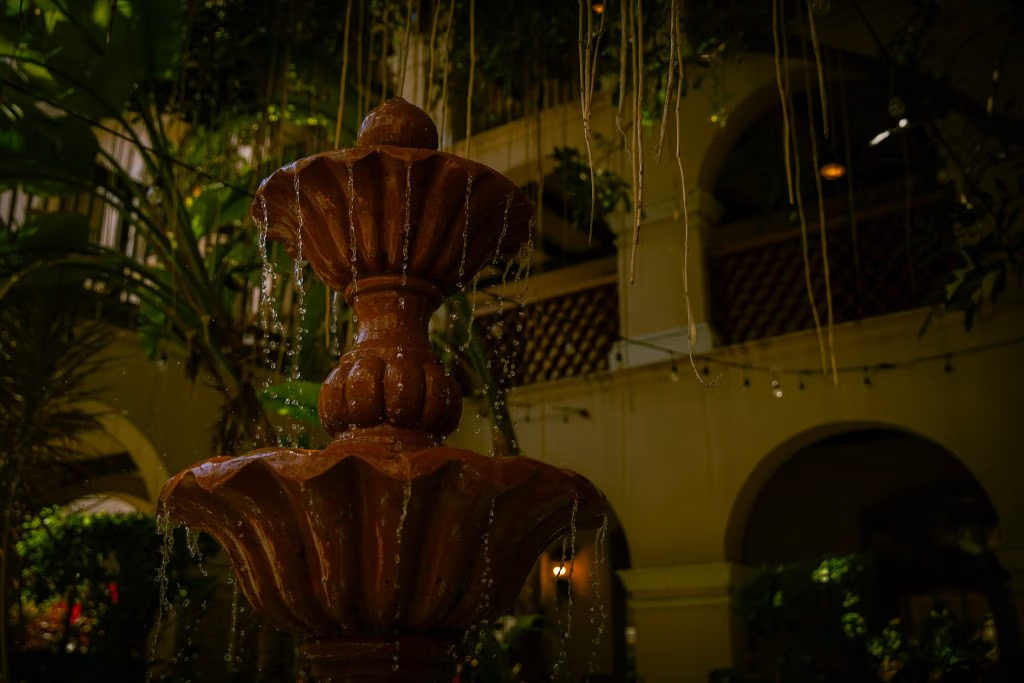
With so much history present in its walls, it seems only natural one would start seeing ghosts. When it comes to the supernatural, I’m basically a skeptic. I don’t actually believe the hotel to be haunted. The storied history of the hotel has given rise to a mythos. We like to imagine the hotel as haunted because we recognize its historical significance as something great and mysterious, but we struggle to conceptualize it ourselves.
Knowing the history of the hotel, how it was built in response to increased militarization of the border, and how it carries on that legacy today by continuing to house military service members, is important. But I find these ghost stories to be equally important to the hotel’s history.
Despite the tumultuous time in which it was built, it is an important piece of the Valley’s history and a sight of culture and history. The stories we tell about the Casa de Palmas give us insight into how we choose to reckon with a past that seems both distant and ever present.