Note from the Editors: This article was written by one of the five fellows who participated in the 2025 Pluma Libre Journalism Fellowship. This year’s fellowship focused on developing stories and projects about local immigration and social issues.
A part of what makes a strong community basis is experience. Not everyone will have that, but the history is there, and the path has been paved since and well before the Stonewall Riots, queer people in the U.S. have pressed for coming out not just to their families but to their nation. While the Valley has developed a small piece of that identity through its own gay bars, pride events, and leaders in the queer community, there are also established individuals who have moved here after putting in their fair share of effort.
One major group is the Prime Timers World Wide, an organization mainly focused on queer men, established in 1987 by Dr. Woodrow Wilson Baldwin, who at the time had recently retired from being a professor at the Simmons College of Business Administration. His life would be chronicled in a magazine, but as for the Valley, it only got its own member chapter in 2008.
JP, the current president of the local South Texas chapter, has been part of the organization since the 90s, even while he was living in North Carolina after college. Where his time spent in the older queer community has lasted a move and then some, he had originally grown up in New York. More importantly, he was present during the raids on gay bars. He recounts a time when, while underage, he had to dip from a bar that was just getting raided.
“The first raid I was in, I remember, it was wintertime [. . .] I put my new jacket in the coat room, and when it got raided, all the lights came on, and the guys were running out. And all the while I was thinking ‘I hope to get my coat’, and ‘I hope I don’t get arrested.’ They didn’t take names or anything; we just got our coats and left. And that was to the owners, you know. More money, pay up.” At the time, bars were frequently pushed by mafioso or police to get kickbacks in order to stay open.
People may recall that at the time, being openly gay was a crime. If you are questioning whether he was around for Stonewall, the answer is yes. JP had been there the day before the Stonewall Riots started, and he remembers that it was not the only bar to have violence spur out of the raids. It was before the Stonewall Riot, but he remembers a bar called the Ram Rod, where he used to go, where “someone was driving down [Manhattan] with a machine gun and fired through the windows of the Ram Rod. No one was killed, nobody was shot, they had the sense to hit the floor.” Around that time, he had left New York for college in North Carolina and returned to continue volunteering. JP would join the gay men’s health clinic across the street from the Stonewall Inn.
While he experienced second-hand violence by dodging out of the scene, his family was more welcoming. JP mentioned that he talked with his sister first before coming out to his family, and she asked him if he was happy. She asked, “Are you happy?” He said yes, and she responded, “Then that’s all that matters.” That reinforcement is needed with families that are unable to accept change.
Power Through Valley Culture
Not ignoring the hate and pain people have experienced in that era, but here in the Valley, it comes out of closed doors. JP talks about shifting from a political focus to welcoming people who join the Prime Timers regardless of background. He mentions that the number of gay retirees is increasing over time as the group grows past 100 members. Part of his comments to Valley parents that are lacking the security for their queer kids is to accept the change that is coming. The inevitability of change would only push families apart unnecessarily.
He says, “In the Valley, it’s many years behind. It’s cultural, and religious, and different things, it’s just slower to transition, but yes, it will get there.” He also says that Valley life “will be different from a parent whose child is in Boston, San Francisco, or San Antonio, or Corpus, or the Valley. It depends on the location; it’s important. The culture of the area comes into play, too.”
That is to say that in the 20-some years JP has been in the Valley, he says he has “seen the growing acceptance” here. Whether that is something based on the Valley’s culture of issues staying in the family or genuine acceptance, it is up to speculation and statistics. He talks about his opinions based on things he has seen on corporate news channels, noting some of the more stigmatized issues towards trans men. The strength through experience mentioned before is knowing the difference between the reality of what is reported and the reality of what the LGBTQIA+ community sees and feels.
Strength Through (Found) Family
While we have organizations in the Valley, both big and small, there are people who have explored their identity years before they even came here, and are not in that same circle of organizations.
Silvia Ram, a lesbian originally from Michigan, had moved to the Valley around the same time as JP, around the early 2000s. However, her lifestyle in Texas had revolved heavily around her family. Only now is she reinvolved in the queer scene. Before coming to the Valley, though, she lived through the American queer dream. She grew up in a couple of towns in Michigan, where she had not only a strong community but a network of people with whom she shared a large part of her life with. Ram talked about how her life was early on and how different a neighborhood was up North compared to here in the Valley.
She says, “We hung out with the neighbors. The parents all hung out with each other. They would drink together, have parties together, and it was our neighborhood. It was the neighbors.”
Families hosting pool parties, drinking together, and even the weather pushing to change what people like to do, like going to bowling alleys in the Fall when it would get too cold out. Something the Valley rejects more or less, as Silvia notes how “now [her] niece and nephew didn’t have that and [she] thinks that was sad.” While it isn’t a bad thing, compared to how she lived—almost a stereotypical kid’s lifestyle, playing kick the can in the dark with the parents up on a porch—it’s clearly lacking.
In her time in Ann Arbor, Michigan, she talks about being “all out” when she was younger. She talks about how she came out to different people in her family, noting how her dad reacted with “I know mijita. I just want you to be happy,” and her oldest brother saying, “Ok kiddo, just keep working hard and keep doing what you’re doing.” The shift came from current political and social change, where it isn’t as easy to go around here in the Valley as it used to be. But up North, she was so involved in the queer scene that she “worked in gay bars, had a lot of gay friends, and all [her] housemates were gay. And on Sundays, [they] would pull out the couch into the bed, and would all [lie] in the bed together.”
In recent years, the Valley has accelerated its place in the queer scene with an explosion of new queer groups and queer organizations developing the community. While these don’t fully make up for the difference in socializing yet, people just need to turn out for the LGBTQIA+ scene and show there’s more support than what we’ve seen so far.
Stand Up and Be Seen
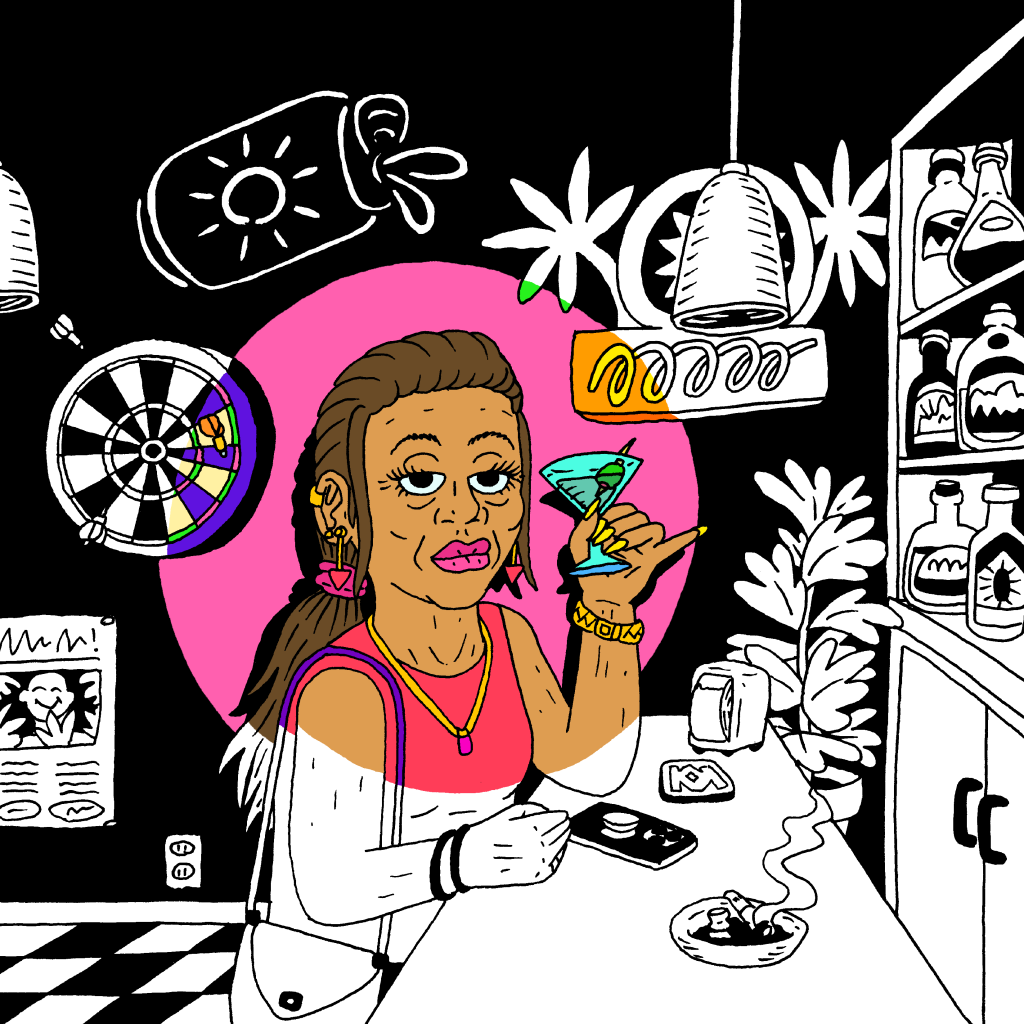
The point of looking back at these stories is not just to know what someone has experienced, but also to start joining spaces that are already accepting of queer people. For example, the South Texas Prime Timers. While it has mostly been older queer men, it’s worth noting that they are an openly queer social group that can host events at local venues or businesses. They have their own bowling group that goes and plays at the Flamingo Bowl every Wednesday. The Flamingo Bowl itself had also committed to donating some proceeds to the Trevor Project in June. It might take time, but more and more Valley businesses are accepting queer patrons.
The Valley doesn’t always seem ready to accept change, but it’s time the new generation of LGBTQIA+ people pick up the torch. Not everyone will be able to start their own community, since family in the Valley has a certain priority you can’t shake. Both JP and Ram are elder queers who are here to tell their stories, and most importantly, share their experiences. With Texas legislation micromanaging queer lives, it is essential to realize that these stories and organizations are born from the same fight we as queer people have been facing in recent years. The South Texas Equality Project (STEP), the Equal Rights Campaign, Texas Rising, and the Pride y Páginas Book Club are all different organizations and groups that have been keeping queer culture possible in the Valley as well. People are supposed to listen to their elders, but in a time when our history is being muddied, it’s important to reflect on their history to make our own.