Since beginning her role as Director of the San Benito Cultural Heritage Museum in 2020, Aleida García has curated an exciting slate of exhibitions in the small city nestled between Brownsville and Harlingen on the South Texas border. These have included solo shows by regional and international artists such as Javier Dragustinovis, Jessie Burciaga, and Veronica Jaeger, as well as exhibitions like “Conjunto In My Backyard” and “Habitar Tierras Fronterizas,” which explored the history of conjunto music in South Texas and highlighted female artists working on both sides of the US/Mexico border. García continues this streak with a new exhibit exploring the life and career of San Benito native Freddy Fender, taking an expansive look into the life of the acclaimed singer-songwriter.
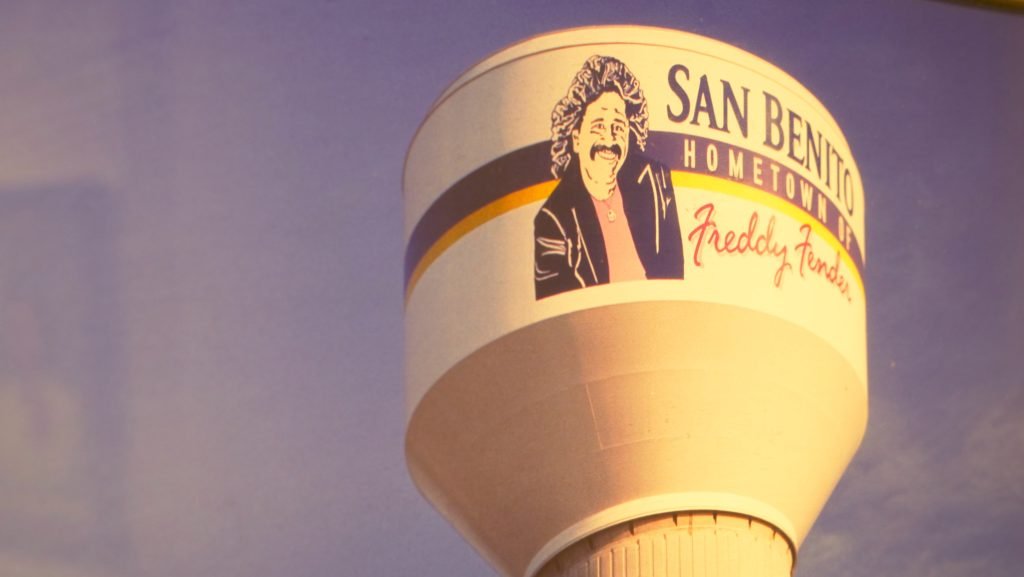
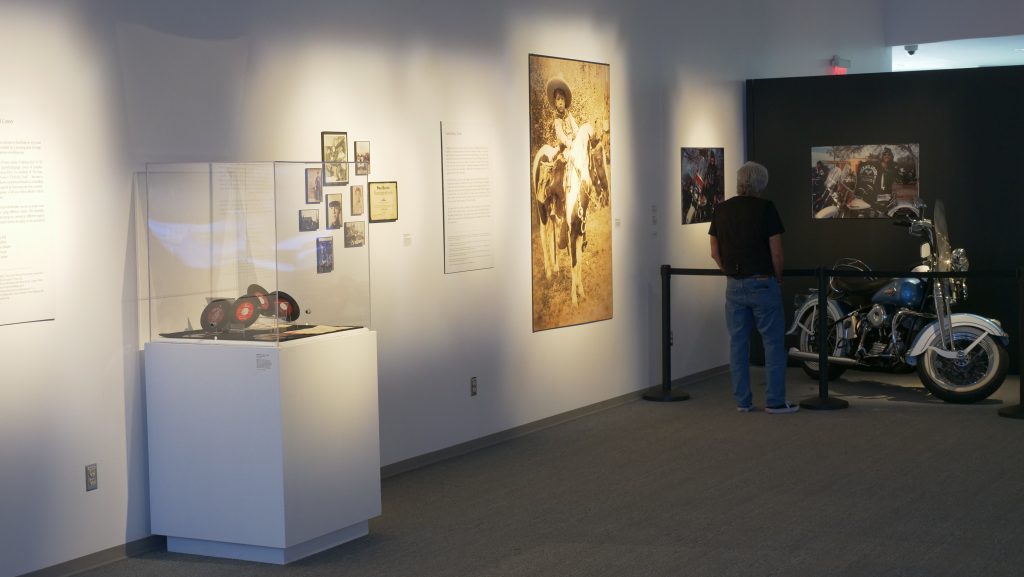
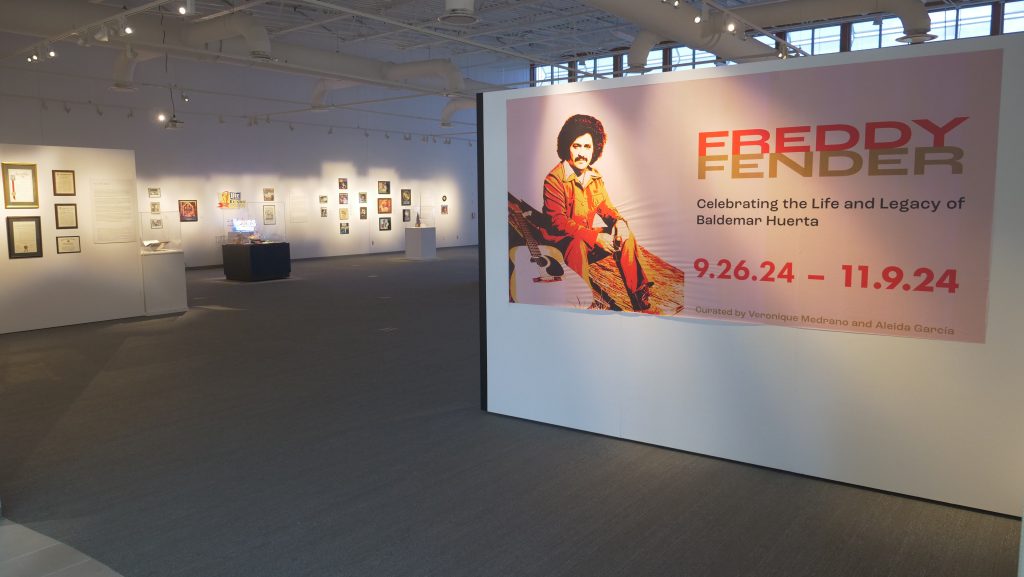
Baldemar Garza Huerta—better known as Freddy Fender—was born in San Benito on June 4th, 1937. Before his death in 2006, Fender established himself as a country music star with chart-topping hits and countless awards, including three Grammys, as well as a Hollywood career in film and TV. Curated by García and historian Veronique Medrano, “Freddy Fender: Celebrating the Life and Legacy of Baldemar Huerta” is the first ever exhibition on the artist’s career to be sanctioned by the Fender estate. Featuring rare photos and memorabilia, including many items from Fender’s personal collection, the exhibit follows Fender’s trajectory from a childhood of poverty in San Benito through his early career in the 1950s rock n’ roll scene of the Rio Grande Valley and subsequent struggles with substance abuse and incarceration—all taking place more than a decade before his rise to international stardom with 1975’s Billboard #1 hit, “Before the Next Teardrop Falls.”
While the exhibit contains no shortage of references to Fender’s illustrious career—see the various Grammy awards, behind-the-scenes photographs with filmmaker Robert Redford, and personalized letters from three US presidents—it’s the intimate look into Fender’s early life that proves most insightful.
Learning that “Wasted Days and Wasted Nights” was written in 1959 (16 years before it became a hit) while the 22-year-old Fender was living in the converted bathroom of Harlingen’s Starlite Club, struggling to kickstart his career, will permanently transform how I hear it. Within the context of the exhibit, it’s shown to be a song that charts a throughline from the Rio Grande Valley into the heart of American culture, with Fender continuing to find his way into the present-day mainstream with “Wasted Days and Wasted Nights” featured in Oliver Stone’s George W. Bush biopic, “W.,” Will Smith’s “Hancock,” and the hit 2021 TV series “Reservation Dogs.”
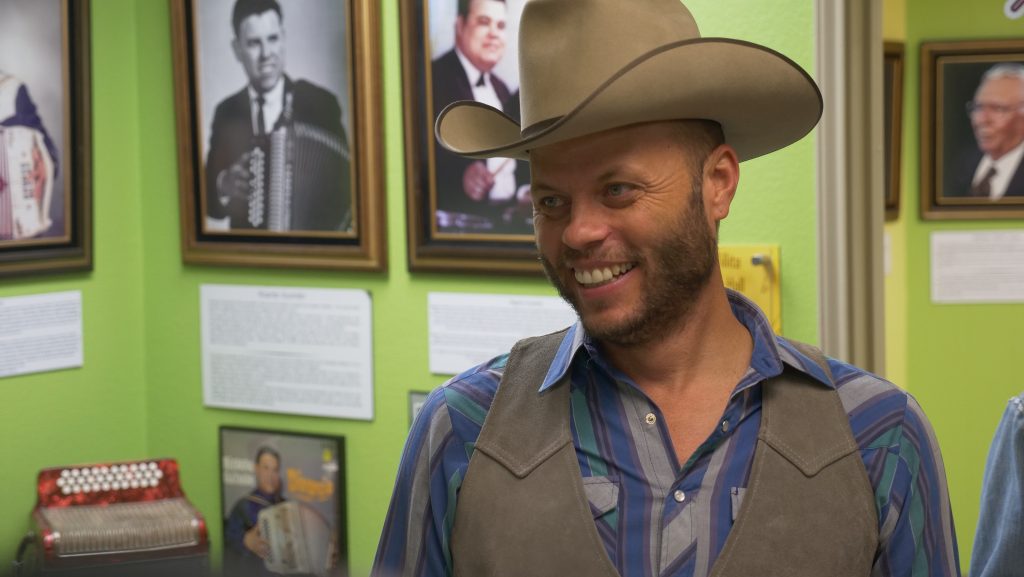
Fender’s influence can also be felt on the new generation of country stars, particularly fellow San Benito native Charley Crockett. Making his mark on American country music, Crockett has found success with albums like “The Valley” and “$10 Cowboy,” collaborating with artists including Willie Nelson and Dan Aurebach of The Black Keys. He often introduces himself as “born in the same town as Freddy Fender” and speaks openly about the impact Fender’s music has had on him.
While in the Rio Grande Valley for a recent concert at the Payne Arena in Hidalgo, Crockett visited the San Benito Cultural Heritage Museum, where he was awarded a key to the city with Sept. 7th proclaimed “Charley Crockett Day.” In his acceptance speech, Crockett made it a point to highlight Fender’s influence, and later, while touring the nearby Texas Conjunto Music Hall of Fame and Museum, he was surrounded by an adoring crowd that included children wearing shirts that read, “San Benito, TX. Home of conjunto music, Freddy Fender, Charley Crockett, and me.”
After breaking museum attendance records, “Freddy Fender: Celebrating the Life and Legacy of Baldemar Huerta” has been extended from its original closing date of November 9th, 2024, to its new closing date of January 4th, 2025.
Be sure to stop by and check out the exhibit at the San Benito Cultural Heritage Museum, located at 250 E. Heywood, San Benito, TX 78586. The museum is open Monday through Thursday from 10 a.m. to 4 p.m. and Fridays from 10 a.m. to 1 p.m. For more information, follow the museum on Facebook and Instagram.
Support RGV Storytellers.
Rio Grande Valley storytellers need your support. Trucha, a 501c(3) non-profit, provides artistic opportunities to the community, with the help of our donors. Your contribution will help us continue our mission to empower our creative community of storytellers.