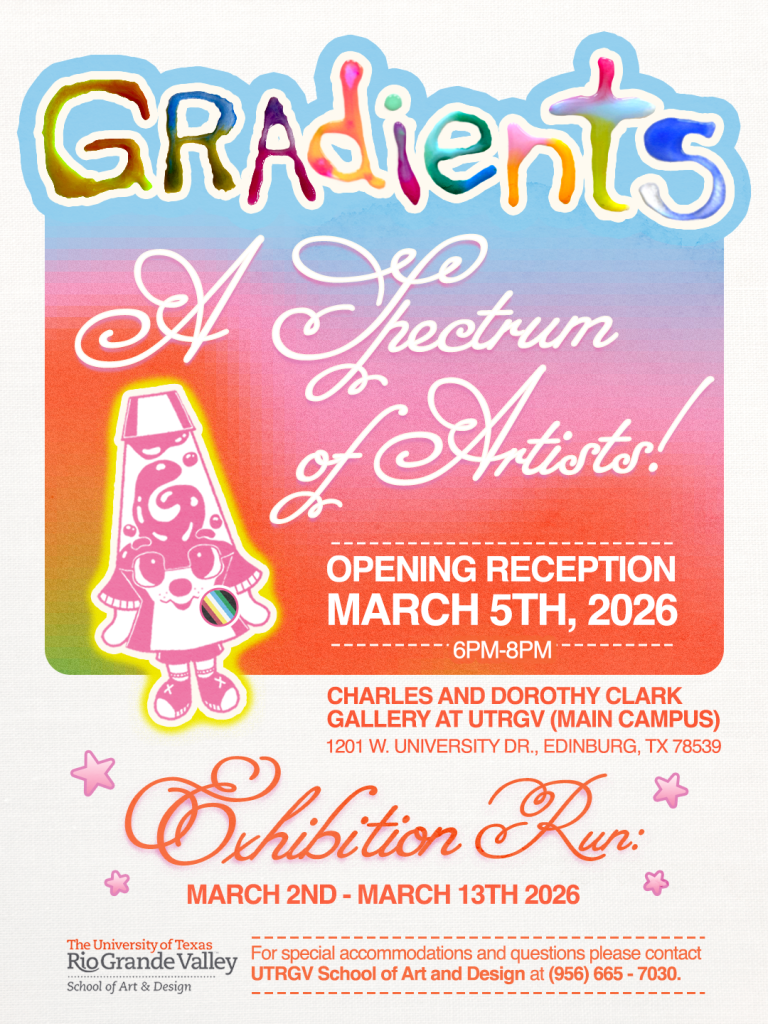
Earlier this month, a vibrant exhibition called “Gradients: A Spectrum of Artists” took place at the UTRGV Charles and Dorothy Clark Art Gallery in Edinburg. The “Gradients” exhibition ran from March 2 to March 13 and had its opening reception on Thursday, March 5, 2026.
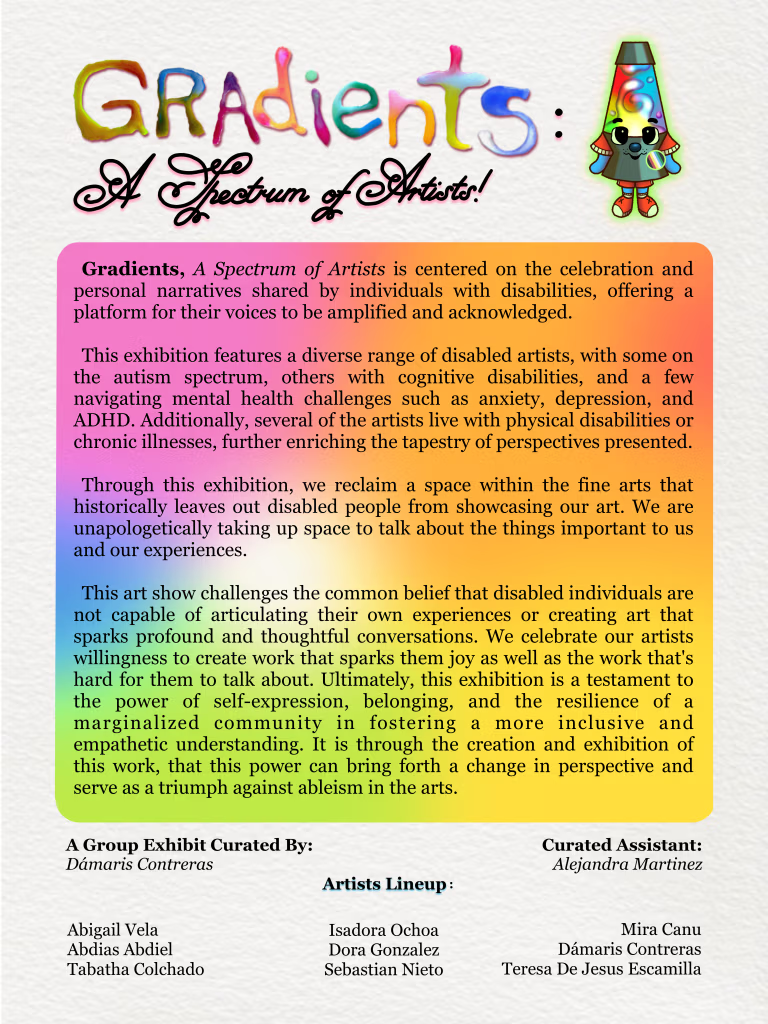
“Gradients” aimed to bring together individuals with a diverse range of disabilities, which included but were not limited to: autism, cognitive and physical disabilities, chronic illnesses, as well as mental health challenges like anxiety, depression and ADHD.
Abigail Vela, Abdias Abdiel, Tabatha Colchado, Isadora Ochoa, Dora Gonzalez, Sebastian Nieto, Mira Canu, Dámaris Contreras and Teresa De Jesus Escamilla were the nine artists who were a part of “Gradients.”
Notably, “Gradients” Founder and Curator, Dámaris Contreras (she/they), and Curated Assistant, Alejandra Martinez (Ale), worked diligently to provide artists a platform to have their voices heard and acknowledged.

Reclaiming a Space for Disabled Artists in Fine Arts
Contreras had always known that she wanted to feature an art show with disabled artists.
She shared her reasoning and explained, “Applying to open calls as a disabled artist hasn’t been easy. Although I will never know if this is truly the case, I feel like I haven’t been accepted to be a part of certain exhibits or to show at certain galleries because I’m disabled and [require] certain accommodations.”
Mostly, Contreras feels like people aren’t willing to work with disabled people because “of the challenges that may lie ahead.”
“I think the fear of not being accepted into these spaces is what keeps disabled artists from wanting to apply, because they are scared their needs won’t be met or they don’t want to cause any trouble,” Contreras further mentioned.
Having experienced this before, Contreras wanted to make it clear from the beginning that she was willing to work with anyone who identified as disabled.
“From the very start, I knew what I was getting myself into, and I knew I was going to have to do my part. I was willing to do the research I needed to do if it meant getting to work with other disabled people. Through this entire process, I learned a lot [about] how to communicate with folks with cognitive disabilities,” Contreras said.

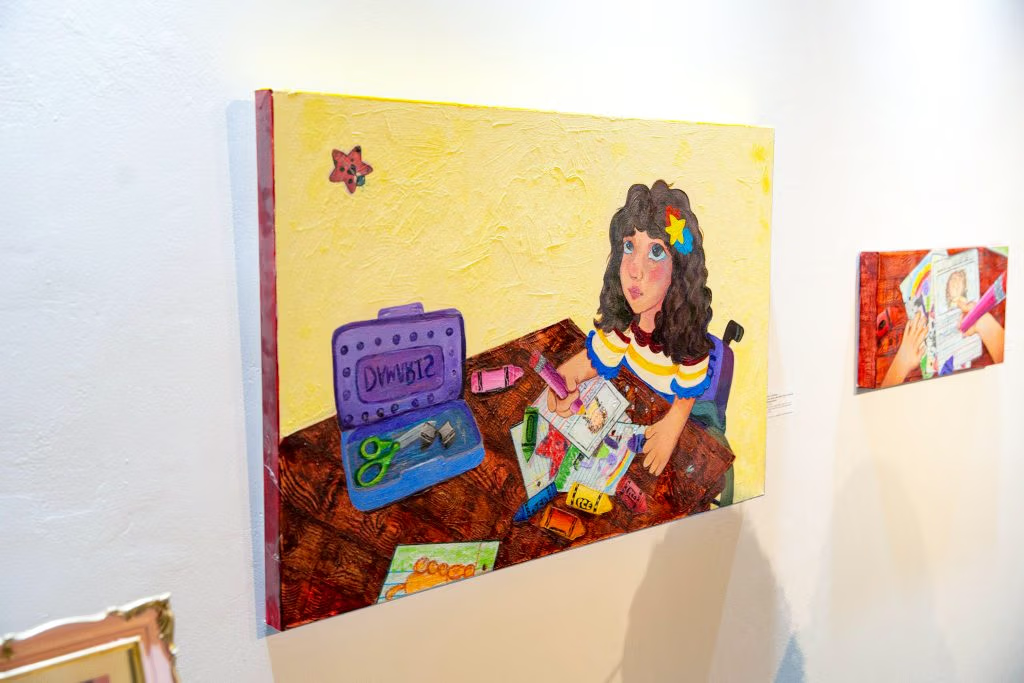
Furthermore, Contreras shared that coming up with a theme for the “Gradients” exhibition was easy. From the start, UTRGV’s former Art Director asked Contreras if she wanted to curate an art show featuring disabled artists, and Contreras immediately agreed.
At the time, Contreras had an idea of the art she wanted the artists to make: “which was art that talked about their experiences growing up disabled in the Valley,” but she quickly realized she didn’t want to restrict the artists to a single question or theme.
Instead, Contreras went for a broad theme which was for the artists to share anything they wanted regarding their identity, interests and experiences.
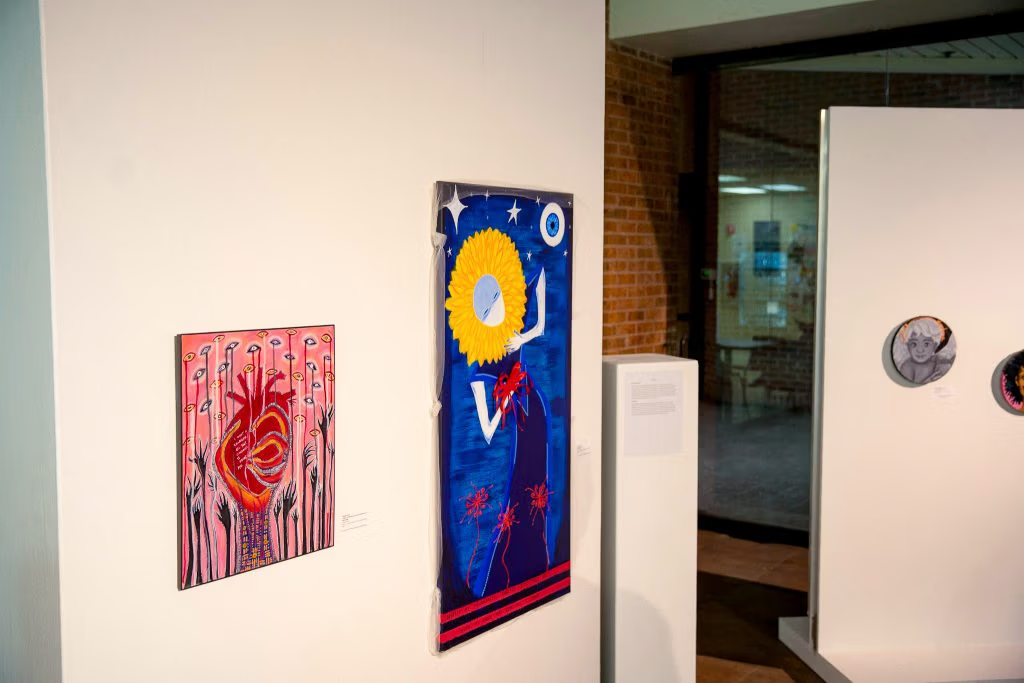
“The whole idea of this exhibit is to celebrate the expressions and stories that disabled people wish to share. The exhibit was created as a way for the artists to take up space and unapologetically be themselves,” Contreras said.

The Amount of Support Which Helped Shape “Gradients”
When it came to bringing “Gradients” to life, Contreras received support from various individuals. However, Contreras shared that she did most of the “behind-the-scenes work,” as well as communicating and organizing with the artists.
Individuals from UTRGV who helped Contreras with “Gradients” were UTRGV’s previous Art Director, who gave Contreras “plenty of tips” on what she had to do to make the process “as smooth as possible.” There was also Dr. Henson, UTRGV’s current Gallery Director, who helped Contreras finalize the exhibition. Dr. Henson, along with their gallery assistants, put up the artists’ artworks.
Contreras’ close friend and “Gradients” Curated Assistant, Ale, also helped by giving Contreras rides to meetings Contreras had. Ale also helped Contreras drop off art supplies, listened to Contreras’ ideas, gave Contreras feedback, handled social media and taught artists how to prep their artwork for the gallery.
Contreras shared that Latifah Khuffash helped her create the flyer because she felt overwhelmed and stressed about making one. “She took exactly what I had in mind, and created the most iconic flyer I’ve ever seen!” Contreras said.
Contreras also thanks the community for helping out, “I don’t think we would have had such a big turnout (the biggest turnout they’ve had since the fall) if it weren’t for everyone who shared our flyer both online and around the Valley. This exhibition was truly a team effort, and I couldn’t have done it without anyone I mentioned.”

The Art of Curating, “Locking In” and Artists Embracing Their Gifts
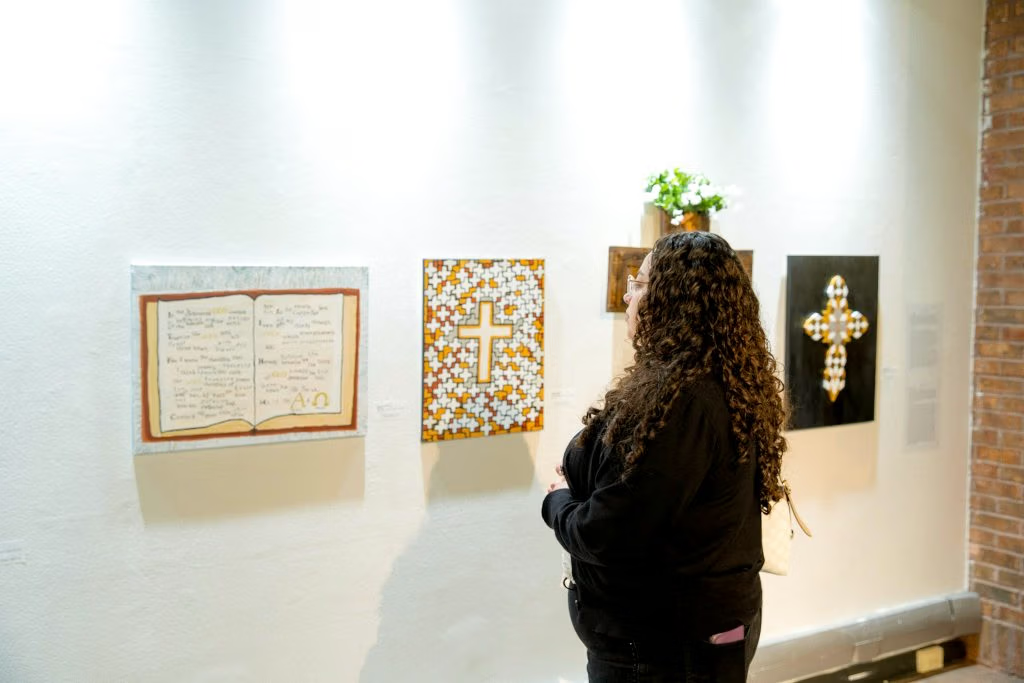
“Gradients” was Contreras’ first time curating an art show. Contreras admitted to being afraid of failing, and that she was scared no one would apply to “Gradients,” but once she saw how much attention the open call was receiving, she began to feel she could do it.
“I think the moment when I stopped doubting myself was right after I had my first meeting with the artists. They were all so excited, and knowing that from that moment on they were [going to] be looking up to me for guidance and answers was really what helped me lock in and put all of my focus on curating this exhibit,” Contreras shared.
One artist who was a part of the exhibit and who felt a sense of belonging and community in “Gradients” was Abdias (any/all pronouns), an autistic/bipolar artist who has been making art since they were 10 years old but began taking it seriously seven years ago.
Abdias uses water, brushes, calligraphy pens and fountain pen ink to create their art.
Abdias talked about the two artworks they presented at “Gradients”:
“The Gods of Ophiuchus” was inspired by a poem I wrote about the legend of the god Asclepius; I had this vision of celestial beings and tried my best to recreate it. “El Sueño Encontrado” was all about my obsession with cities and especially skyscrapers. Since I was a child, I have been constantly drawing them; so on this occasion, I imagined if my city could have music and a poem with the intention of bringing it alive, so I made a poem and an original music composition for it.”
For Abdias, being part of “Gradients” among other artists in their community was an amazing experience. “Being disabled can be so isolating at times, or at least that has been my experience, and this opportunity felt like I was not alone anymore,” Abdias said.
Abdias also shared, “I would like to share that I learned from this exhibition that knowing that you are not alone and that there is a community waiting to embrace your gifts is one of the most powerful experiences I have felt. I encourage others to someday, when they are ready, to experience something similar.”