Op-Ed: Privatizing Education is a Threat To Valley Public Schools
Story by Joel Corte
Edited by Abigail Vela
- June 19, 2025
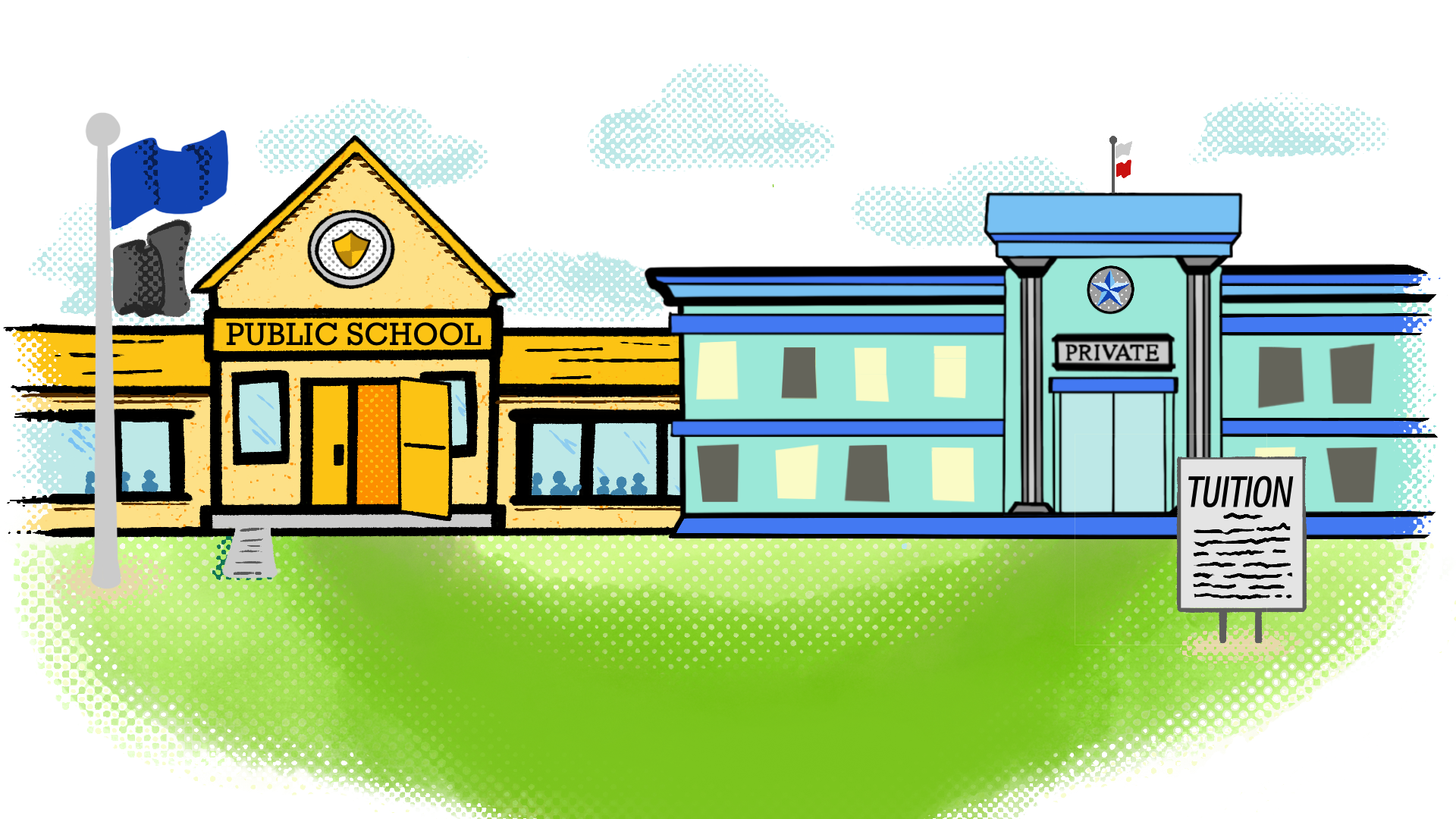
A recent conversation with a former Rio Grande Valley educator stuck with me. Reflecting on Texas’s new school voucher law, she pointed out that private schools “don’t have to take the STAAR (State of Texas Assessments of Academic Readiness), they’re not held to the same accountability, and they can turn away students with disabilities—public schools can’t do that.” Her words underscore what’s at stake as Governor Abbott signed vouchers into law: not just a shift in school funding, but a deeper question about who public education is for and who it leaves behind in the Rio Grande Valley.
Proponents of school vouchers argue that directing funds to parents will foster greater school choice. Critics, however, warn that vouchers would defund public education and not meaningfully improve educational outcomes.
In my view, using “school choice” to market vouchers masks an encroachment on one of the last universally available public goods: education. Rather than addressing student achievement, vouchers often: (1) ignore the impact of social issues; (2) overlook the agency of educators and students; and (3) erode the democratic spirit of public education. Vouchers are wrong for the Rio Grande Valley. With high teacher turnover, district management challenges, and immigration enforcement threatening attendance, the last thing our schools need is privatization.
Vouchers’ Blind Spot
What’s missing from support of school vouchers is a serious understanding of how socioeconomic conditions shape student outcomes. Children are highly vulnerable to food insecurity, homelessness, and limited internet access. Similarly, the mental health of American students has deteriorated, with one 2019 survey finding that one in three high school students and half of female students reported persistent feelings of sadness or hopelessness, an overall increase of 40% from 2009. Spend a few minutes with teachers, and you’ll realize that the issues students face outside of school are inseparable from those they face within it.
One family member and teacher in Mission recounted, “We have seen mental health needs of students substantially increase since COVID. We see students self-harming and having behavior issues because of their mental health.”
The market logic behind school vouchers fails to account for these realities because it fails to account for poor and working-class families altogether. And yet, when student performance declines, the blame rarely falls on the broader structural issues. Instead, it lands squarely on underfunded public schools, underpaid teachers, and crumbling facilities. Some Valley schools often outperform expectations despite local challenges, yet Texas Education Agency’s (TEA) accountability standards have been scrutinized by Texas American Federation of Teachers (Texas AFT) for unfairly penalizing districts in under-resourced areas. Meanwhile, the latest data show that 1 in 5 Texas schools earned a D or F, disproportionately impacting low-income communities. What does it say about us as a society when we set students and educators up to struggle?
School Choice for Whom?
For a movement focused on “choice,” the voucher push sidelines the voices of students and teachers. Instead of reforming the burdensome STAAR testing system—something even many public school parents question—vouchers shift control toward private and religious institutions. Even worse, this shift empowers right-wing evangelicals to influence curriculum and undermines organized teacher labor. Unionizing becomes harder as the workforce splinters across microschools and private campuses, where advocates have called unions “cartels” that are “taking students hostage for ransom.”
“When they say school choice, really what I’m hearing is privatized education,” said Michael Mireles of LUPE—a shift that risks turning teacher labor into a more commodified, less protected profession.
Instead, we should look to countries that invest in the teaching profession with the understanding that granting well-trained teachers autonomy, respect, and control over instructional hours strengthens education. We need a framework that would foster both student and teacher participation in shaping the education system. School vouchers would not create this kind of agency; they would further weaken public schools and restrict the vision needed to engage teachers and students.
School Choice for Whom?
Since its inception, public education has been a vital engine of political socialization and a cornerstone of community voice. Within a public school classroom, there remains the possibility of grappling with both the promise and failures of American democracy. The right’s book bans and school board takeovers reveal one thing: public schools are being targeted precisely because they are public, collective spaces for civic formation and democratic engagement. One attempt at banning books directed at Mission CISD singled out 676 books, including a graphic novel adaptation of “The Diary of Anne Frank.”
School vouchers threaten to dismantle that foundation. When private religious institutions are the ones who stand to benefit most, it becomes clear that the goal isn’t “choice,” but control. The same parent groups calling for censorship already exercise choice through school board elections, meetings, and local policymaking, core parts of democratic participation. Privatization strips away that power. It turns parents into customers, students into commodities, and communities into fragmented markets. That’s not hyperbole—it’s reflected in who is driving these policies: wealthy libertarians and political actors seeking to erode the public in favor of private interest. Private schools are not subject to the same transparency or standards as public schools. They don’t have publicly elected boards, can bypass certification requirements for teachers, and often discriminate in admissions.
“If they want money that comes from all of us, then they need to work for all of us. Private schools don’t do that. Public schools do,” said Enrique, a public school employee.
Academic research suggests that as privatization expands, civic engagement contracts, especially voter turnout in school board elections, particularly in Black and low-income districts. Privatization hollows out the democratic potential of a school district, reducing citizens to mere market participants. More privatization means we risk losing one of the last spaces where civic life is still taught and practiced. Rather than abandoning the process, we should show parents that school board elections are one of the best ways to advocate for change—and work to boost turnout, especially when some McAllen precincts saw less than 10% participation in the last race.
What Happens Next Is Up to Us
Ultimately, the push for school vouchers is not what the Valley needs. At its core, this movement seeks to weaken teachers’ unions, control what students learn, and coax parents into opting out of democracy with promises of academic achievement. But if student success were truly the concern, Texas wouldn’t rank among the worst states in public education funding. Thankfully, we’re not alone. As newly elected McAllen school board trustee Robert Carreon put it: “Public schools are the foundation of any community and the foundation of our democracy.” His words are a reminder that some local leaders still stand firmly with public education.
To be clear, I am not opposed to efforts to innovate in education. Innovation is essential. But genuine innovation does not require abandoning the public system—it requires investing in it. That said, I won’t deny that public education in the U.S. faces real and urgent challenges. Like any persuasive narrative, the school voucher movement draws on a kernel of truth. I deeply sympathize with parents who feel that privatization is their only hope for their children’s future. But the process and powerful interests behind Texas’s school voucher law make clear that this is not about choice. I fear that by the time that becomes undeniable, the harm will have already fallen the hardest on those most in need: our students.