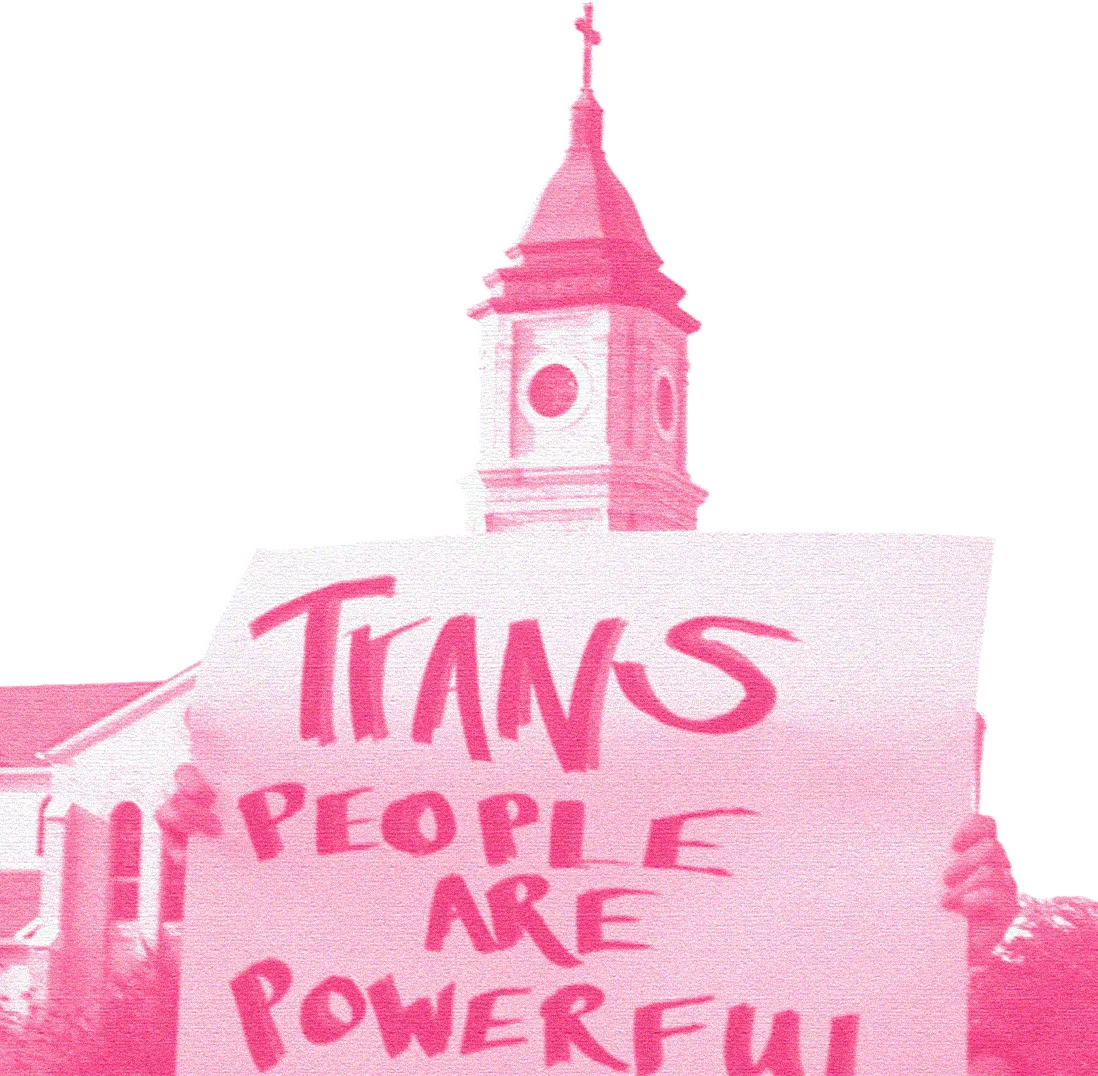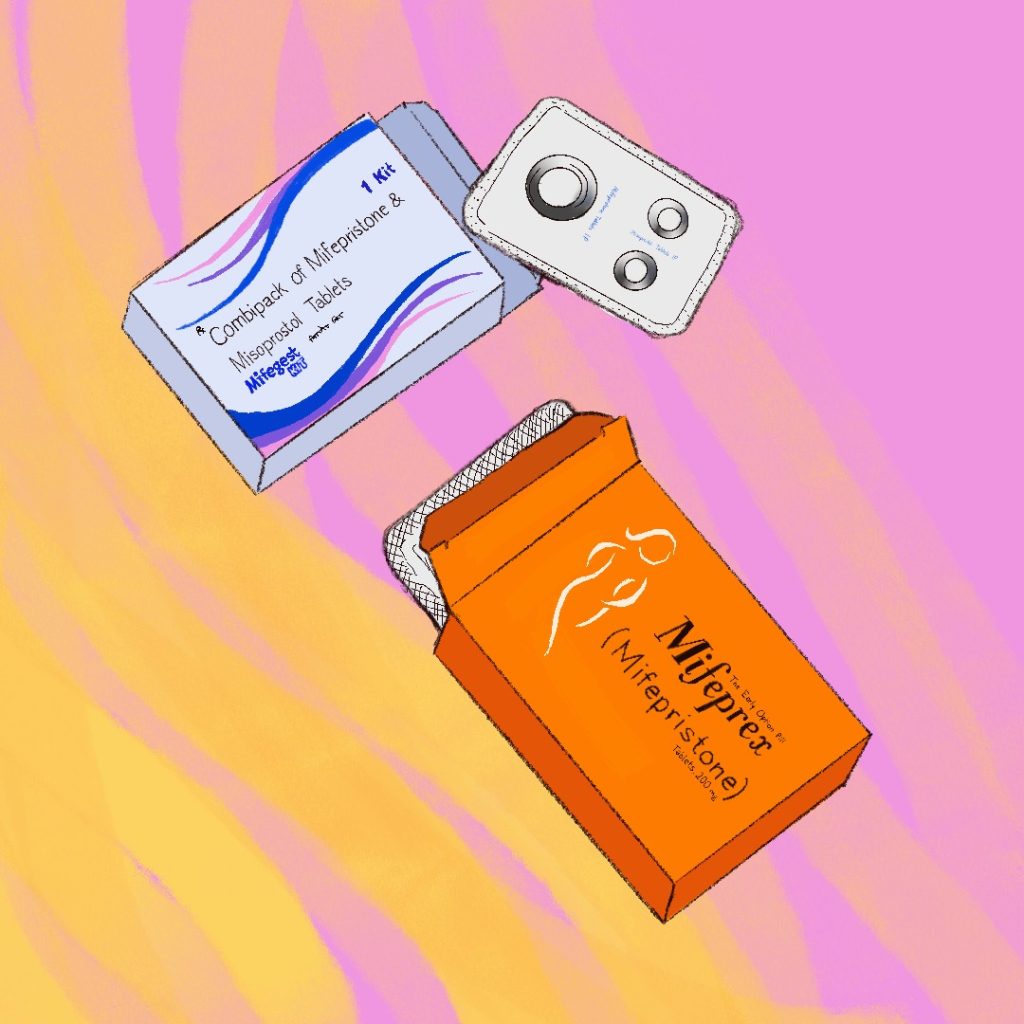
Abortions date back as early as 1550 B.C. The scrutiny surrounding whether or not a person with a uterus should be able to access abortion care is a more recent phenomenon. Within the past ten years, abortion access has shifted from a constitutional right to a heavily scrutinized “crime.” Everyone should have the power to make decisions about their own body and future, but the systems meant to protect us have only continued to hurt us and deny our freedoms.
Abortions were historically recognized as a common practice. They weren’t heavily policed until the 19th century, when the Comstock Act of 1873 came into place, which restricted the mailing of “obscene” materials, which included any information or tools related to contraception or abortion. Then, in 1910, abortion became illegal across the nation, a result of a group of male doctors who campaigned against the female-dominated profession of midwives and nurses. Although there was a strict national ban, wealthy white women were able to skirt responsibility and continue receiving abortion care. This revealed the government’s true motives. It wasn’t just about controlling women; it was about specifically hurting women of color from underprivileged backgrounds.
This was made abundantly clear when the Hyde Amendment was passed in 1977, just four years after the historical “win” of Roe v. Wade. While Roe v. Wade did not guarantee the right to abortion access for people of color or LGBTQ+ communities, the Hyde Amendment added another hurdle, as it banned the use of Medicaid for abortion care. Access to healthcare for low-income individuals and marginalized communities was restricted; the law is still in place to this day.
“Abortion bans are inherently racist and were created as a mechanism for control. There is no other way around it. These types of restrictions predominantly impact people of color and those trying to make ends meet. Patriarchal and white supremacist institutions push forward anti-abortion policies and sentiments to control our bodies and strip us of our ability to live freely,” shares Cathy Torres, Organizing Manager for Frontera Fund, the RGV’s sole abortion fund and resource hub.
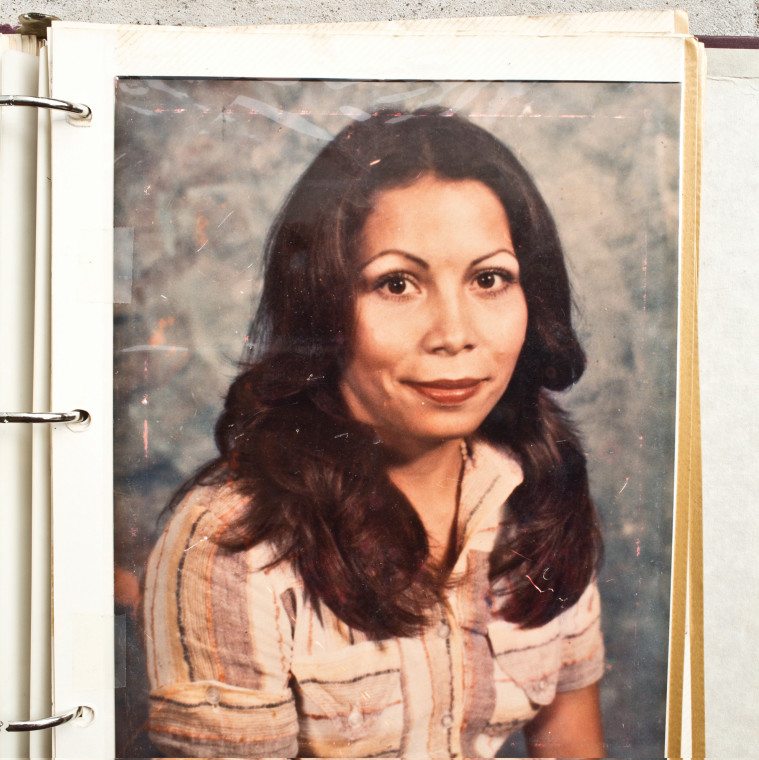
This new law had disastrous effects, leading to severe health consequences and deaths, with the first-known death being Rosie Jimenez, a McAllen native and mother. Without support from Medicaid, accessing quality care from an OBGYN is not feasible for many people seeking abortion care. This ultimately led to an unsafe abortion being administered, leaving Jimenez to suffer from a bacterial infection, which ultimately led to her death.
Attacks on abortion continued throughout the early 2000s – 2010s, with mandatory 24-hour waiting periods and compulsory sonograms. In 2013, over half of abortion clinics closed in Texas after House Bill 2 passed, which created yet another disproportionate burden on people of color who often lacked the resources needed to travel out of state for care.
Let’s take a deeper dive into the last ten years of abortion access in Texas:
2016 – The U.S. Supreme Court overturned HB 2, which allowed the 19 remaining clinics in Texas to continue providing abortions. If the law had not been overturned, we would have been left with only 10.
“South Texans for Reproductive Justice (STRJ) and Frontera Fund were founded around this time in response to HB 2. HB 2 introduced random regulations for healthcare providers, which made it difficult for them to stay open,” shares Noemi M. Pratt, Partnerships and Mobilization Advisor for Ipas US and Board Member for STRJ. Pratt continues, “It all comes down to racism. Abortion restrictions disproportionately affect people in Black and Brown communities, people from our community in the Rio Grande Valley.”
2017 – A 17-year-old, referred to as Jane Doe in the case, came to the United States without her parents and was held in a shelter in Brownsville, where she was in the custody of the Office of Refugee Resettlement. She was seeking an abortion, and while Texas courts gave her the authority to do so, federal officials refused to allow her to leave the shelter.
With support from many local and national organizations, Jane Doe was able to receive the abortion care she required.
2020 – Greg Abbott attempted to restrict abortion as a “nonessential” service during the COVID-19 pandemic. The ban only lasted 30 days.
2021 –Senate Bill 8 takes effect and creates a near-total abortion ban at six weeks of gestation, before many people know they’re pregnant. SB 8 also criminalized anyone who aids or abets an abortion, leading to potential civil penalties.

“Texas is purposely doing this to silence us and use it as a means of control. While this has continued for 200+ years, we’re not going anywhere,” shares Andrea Medina-Alvarado, Texas Policy Advocate for the National Latina Institute for Reproductive Justice .
2022 – Roe v. Wade was overturned, which eliminated the constitutional right to abortion.
Following the overturning, Texas’ trigger ban, House Bill 1280, took effect, creating a total ban on abortion throughout the state.
A woman in Texas was wrongfully charged with murder for a self-managed abortion in Starr County. The charges were dropped three days later, but her arrest had already made national news, leading to public humiliation, distress, and reputational harm.


2024 – The National Latina Institute for Reproductive Justice celebrated its 30th anniversary.
Andrea Medina-Alvarado shares, “The Valley has historically experienced a more militarized presence, police presence, and right now, with the continued ICE raids, there’s heightened fear in our community, but our community continues to show up regardless. They show up at local community centers, the library, and even at each other’s houses because they want the information we’re sharing with them. They want to know how they can protect themselves and their loved ones with the resources available.”

2025 – Similar to the Comstock Act of 1873, House Bill 7 restricts medication abortions by allowing private citizens to sue companies, organizations, or individuals that distribute or provide medication abortions, including Plan C pills, to a pregnant person in Texas. HB 7 does not criminalize the individual seeking an abortion.
While this law might seem misleading, Noemi M. Pratt assures that “self-managed abortions are still happening in Texas. There are no laws in the books that criminalize self-managed abortions.” Pratt adds, “These are simply bounty hunter laws that pressure people to turn each other in.”
Additionally, in December 2025, Frontera Fund celebrated its 10th anniversary.

Cathy Torres is proud of her team, sharing, “Frontera Fund was founded in 2015 by two fierce reproductive justice organizers, who are still active with the fund today. In response to the apparent gap in access our founders encountered as clinic escorts, they built “Frontera Fund,” and the rest is history. Frontera Fund started as a practical support fund and expanded to provide financial support for care as well. Today, we still provide these services and have expanded to fund non-abortion reproductive healthcare.”
Where do we go from here?
As we continue to navigate our evolving political landscape, it can feel overwhelmingly daunting and seemingly hopeless to think of where we’ll go from here. But the fight is far from over.
Cathy Torres shares, “Abortion access is beneficial to everyone – we all deserve the ability to make our own healthcare decisions with dignity and the utmost safety. The valley is so rooted in community, community care, and the vibrancy of a binational community. Any work that anybody does to build a better future, hold each other closely, and create a space where people can thrive is helping the cause.”
While we are still here, the fight for bodily autonomy and safe, accessible healthcare continues.
Noemi Pratt also urges community members to continue talking about abortion. “If you’re making it known to your loved ones and communities that you support and care about this issue, that is instrumental in destigmatizing abortion. The first thing you can do to support the cause is just to talk about abortion.”
You can support the work that Frontera Fund, National Latina Institute for Reproductive Justice, Ipas, or South Texans for Reproductive Justice does for our communities by educating yourself, volunteering, donating funds when needed, and being a bold advocate for abortion at home, online, and in your communities.
If you or someone you know requires emergency contraception, South Texans for Reproductive Justice mails these pills at no cost.