In January, Cactus Valley Art in Harlingen kicked off the year with a group exhibition, “Microplastic,” which brought together 14 artists who explored “the intersections of trash, nature, and humanity.”
The exhibition gave us an inside look at what a world plagued by plastic is like, because the truth is—microplastics are everywhere.
So, What Are Microplastics?
Microplastics, coined in 2004 by Marine Biologist Richard Thompson, are plastic particles less than 5 millimeters in size.
According to a World Economic Forum report, we inhale 68,000 microplastic particles each day, and microplastics have been found inside the human body.
Additionally, in an article from Stanford Medicine, researchers theorize links between microplastics and cancer, heart disease, poor respiratory health, and reproductive issues, but the effects and dangers of microplastics remain relatively new areas of study.
Turning Trash Into Art
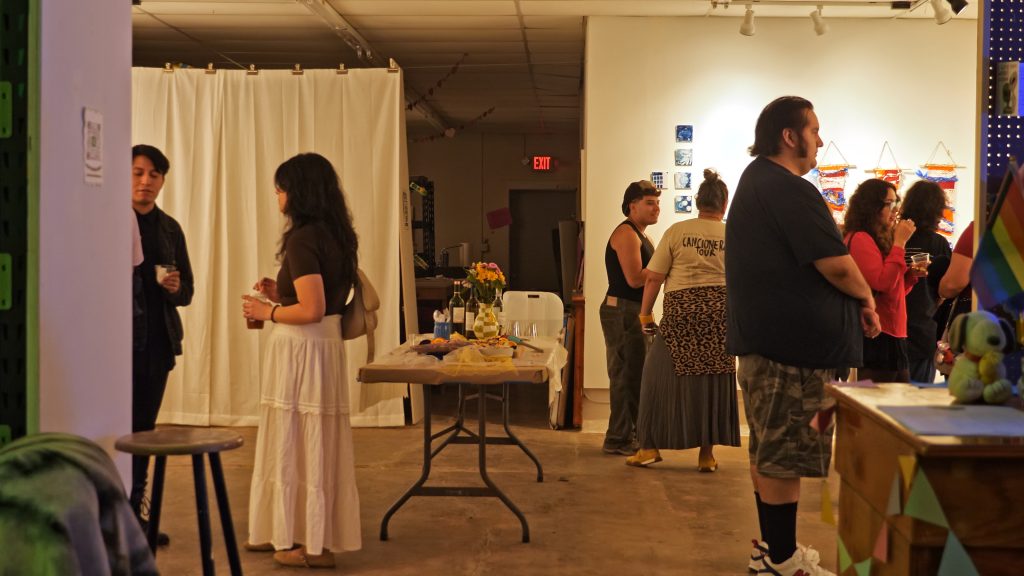
“Microplastic” taught audiences to come face to face with a reality shared by the plastic we helped create, consume, and degrade into tiny pieces. At the same time, how to find a sense of beauty or purpose in it.
One of the artists in the show, Aleida Garcia (she/her/ella), created jewelry pieces for “Microplastic” to reclaim the sacred. She shared, “In a world where it’s just full of trash and refuse, how do we make sense of that and what do we carry as sacred?”

Apolonio Flores (he/they) created a cyanotype art piece, titled “The Wrackline,” as part of the local art collective Generación: Art Lab (Generación:AL). Flores explained that during a beach cleanup at Boca Chica Beach with Voces Unidas and UTRGV’s Environmental Awareness Club, they kept a few pieces of debris to use as art.

“The name refers to a layer of debris that occurs within shorelines, usually referred to biomaterials, such as seaweed, driftwood, and stuff like that. But [we] played around with the name because now there’s so much trash and so much pollution that the pollution itself becomes a part of the ecosystem. And the piece was all about permanence and the inability to ignore the pollution, but also simultaneously being able to look past it,” Flores said.
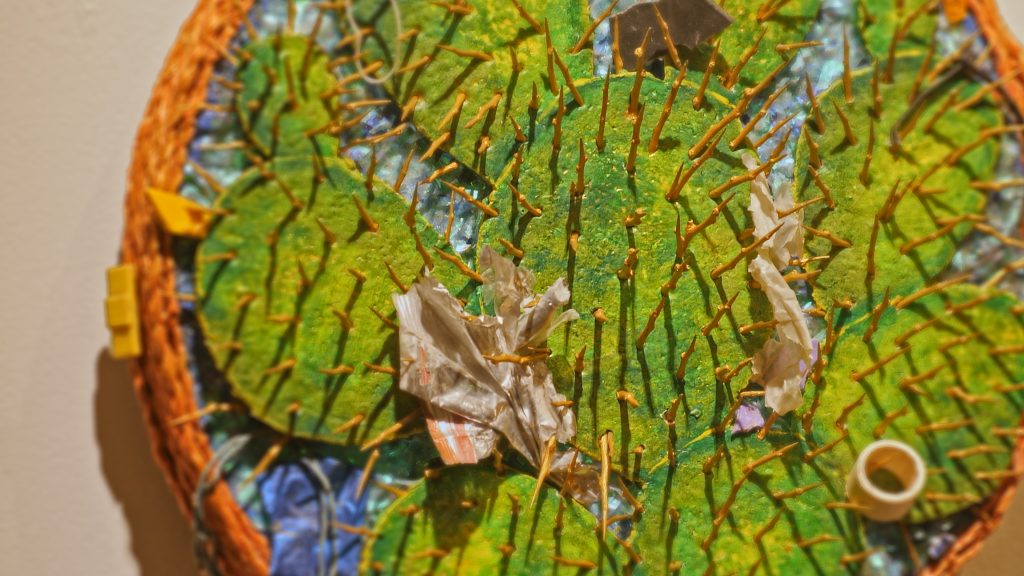

Val Hernandez (she/her) created “No Plastics on the Farm,” an all-mixed-media sculpture composed of many pieces of trash collected from her farm. In doing so, she hoped people would look at the pieces and wonder where they came from and to whom they once belonged.
“Maybe I produced that […] So, it’s not just everybody else at fault. I know I’m part of the problem, too. […] But we’re also part of the solution,” Hernandez positively concluded.
What Is the Solution?
“Sustainability has been in the forefront of a lot of people’s minds, but to bring it to a local level and to express it through an art medium is a really accessible and good way to get more people introduced to environmental activism and being a little more conscious in their daily lives and the choices they make when it comes to how they consume,” said Flores.
At the core of “Microplastic” is the need for sustainability. As we continue to consume plastic, harming our environment and ourselves, we can also find more sustainable solutions.
We can start by using less plastic, choosing more earth-friendly products, and becoming more active in our local environmental groups, such as the South Texas Environmental Justice Network, Voces Unidas, or UTRGV’s Environmental Awareness Club.