August 23, 2024
Service Dogs: Lifelines for People with Disabilities in the Rio Grande Valley
Words by Juan Carlos Lopez
Edited by Abigail Vela

Note from the Editor: This article was written with the help of Gemini, an AI assistant that Juan Carlos Lopez utilizes to share his knowledge and stories.
My service dog, Nathaniel, isn’t just a companion; he’s my lifeline. He opens doors (especially in hospitals, if they have the right buttons), helps me avoid fatigue from muscle spasms, and retrieves dropped items, no matter how small. At home, he can alert me to emergencies, open and close doors, and even turn lights on and off.
During difficult medical procedures, Nathaniel’s comforting presence helps me stay focused – a paw on my lap or a gentle nuzzle under my arm makes all the difference. When I’m speaking publicly, he eases my anxiety, becoming a calming presence for both me and my audience.
As a person with a disability who relies on the unwavering support of my service dog, Nathaniel, I am passionate about shedding light on the profound impact these extraordinary animals have on our lives and the broader community in the Rio Grande Valley. Service dogs are not merely pets; they are highly trained partners who empower individuals with disabilities to navigate the world with greater independence and confidence.
Understanding Service Dogs and Public Access Test
Under the Americans with Disabilities Act (ADA), a service dog is a dog that has been individually trained to perform specific tasks or work for a person with a disability. These tasks can be diverse, ranging from guiding individuals with visual impairments to retrieving dropped objects for those with mobility challenges, to reminding individuals with cognitive disabilities to take medication and providing emotional support during episodes of anxiety or PTSD.
One crucial aspect of a service dog’s training is the Public Access Test (PAT). The PAT assesses a service dog’s ability to behave appropriately in public settings, ensuring they are well-behaved, under control, and do not pose a risk to others. The test evaluates the dog’s obedience to commands, response to distractions, ability to ignore food or other animals, and overall demeanor in various environments. Passing the PAT is essential for a service dog to accompany their handler in public spaces, ensuring both their safety and the comfort of others.
Legal Protections for Service Dogs
The ADA grants service dogs and their handlers the right to access public spaces and businesses open to the general public. This includes restaurants, stores, transportation, and workplaces. To avoid discrimination, there are only two questions that businesses or members of the public are allowed to ask a person with a service dog:
- Is the dog a service animal required because of a disability?
- What work or task has the dog been trained to perform?
It’s important to emphasize that questions about the nature of the person’s disability, requests for documentation, or inquiries about the dog’s training are not permitted. These questions can be invasive and discriminatory, and they undermine the purpose of the ADA, which is to ensure equal access for individuals with disabilities.
Impact of Service Dogs on Individuals and Society
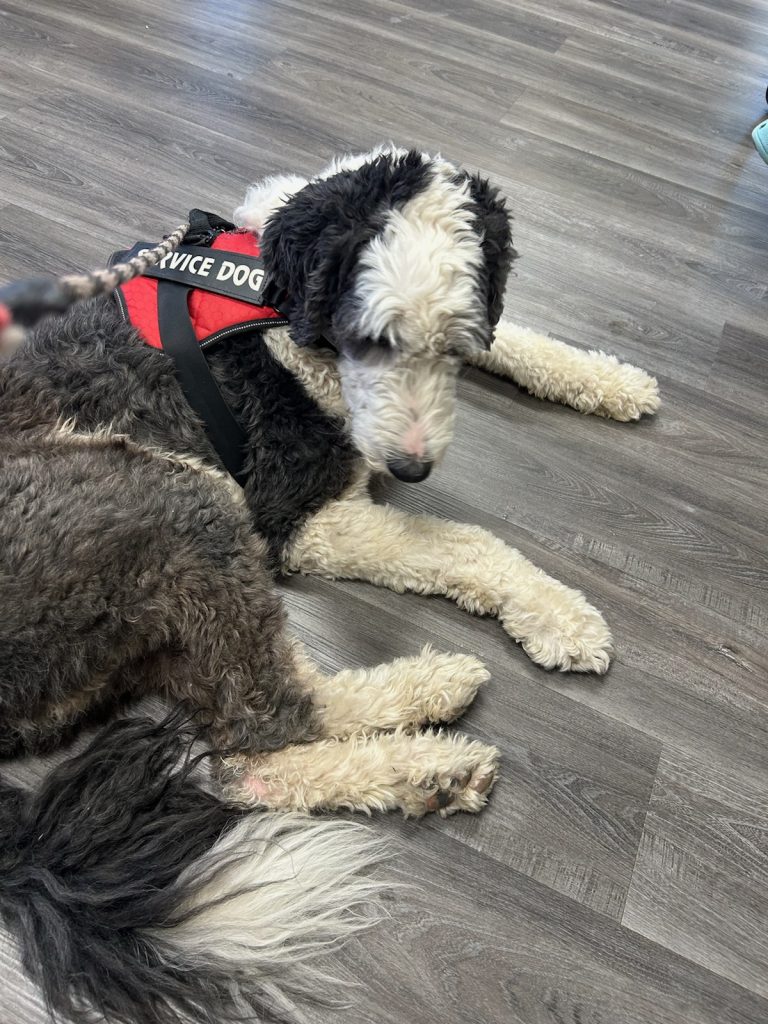
Service dogs are not just tools; they are lifelines. They provide a sense of security, companionship, and independence that can be transformative for people with disabilities. Service dogs enable individuals to participate more fully in society, pursue their goals, and live their lives to the fullest.
Beyond their immediate impact on their handlers, service dogs also have a broader societal impact. They raise awareness about disabilities, challenge stereotypes, and foster a more inclusive community. When people see a service dog in action, they are reminded of the diverse needs and abilities of individuals in our society. This can lead to greater empathy, understanding and acceptance.
I spoke to local Certified Canine Behaviorist Cindy Kendricks, who shared her experience and insights working with service dogs: “[My] service dog named Mushu [is] a three-year-old Sheepadoodle who came to us very badly neglected. We worked on him quite a bit on being friendly and obedient. […] I make it a point not to allow anyone to pet him while he is working […] That is a key ingredient to stress to others: that his job right now is to pay attention to me.”
The relationship between a service dog and their handler is one of deep trust, mutual respect, and unwavering loyalty. These dogs are not only working partners but also beloved companions who offer unconditional love and support. The bond between a service dog and their handler is a testament to the incredible power of the human-animal connection.
A Vision for Change in the Rio Grande Valley
Many people with disabilities in the Rio Grande Valley don’t have insurance that covers service dogs. They also may lack the time or patience to navigate the process I went through to get Nathaniel.
We must rally support for local non-profits like the Valley Association for Independent Living (VAIL). Imagine if these organizations had the financial and community backing they need. They could create and sustain service dog programs, hire local trainers, and even develop their in-house training initiatives. This would boost the Rio Grande Valley’s economy and provide much-needed assistance to people with disabilities and their families. Such a change would also educate the community about proper behavior around service dogs.
“Service dogs can help with any physical or emotional disability, such as PTSD. Most of the time, we go to the shelter, and the dog and client get acquainted. It is so wonderful to see the result,” said Kendricks. “There was a man from South Padre Island who had been in Vietnam and had terrible PTSD and did not want to go out of the house, but with his service dog, they [walk] on the beach together, enjoying each other’s company […] I cannot say enough about how service dogs help people with disabilities!”
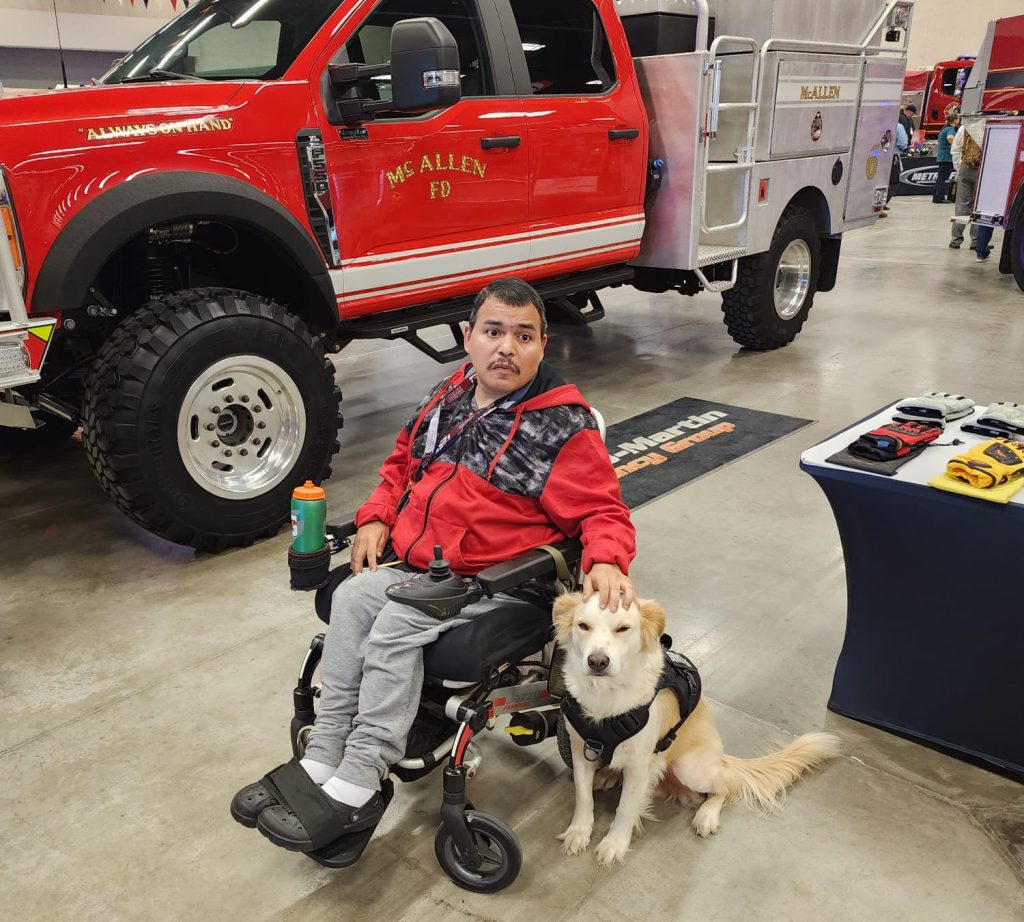
Service dogs are a vital resource for people with disabilities. They provide invaluable assistance, enhance independence, and promote inclusion. By understanding the role of service dogs, the significance of the Public Access Test, and the legal protections that safeguard their access to public spaces, we can all contribute to a more inclusive and equitable society. With the right support, we can make service dogs more accessible, enriching lives and strengthening our community.
Support RGV Storytellers.
Rio Grande Valley storytellers need your support. Trucha, a 501c(3) non-profit, provides artistic opportunities to the community, with the help of our donors. Your contribution will help us continue our mission to empower our creative community of storytellers.