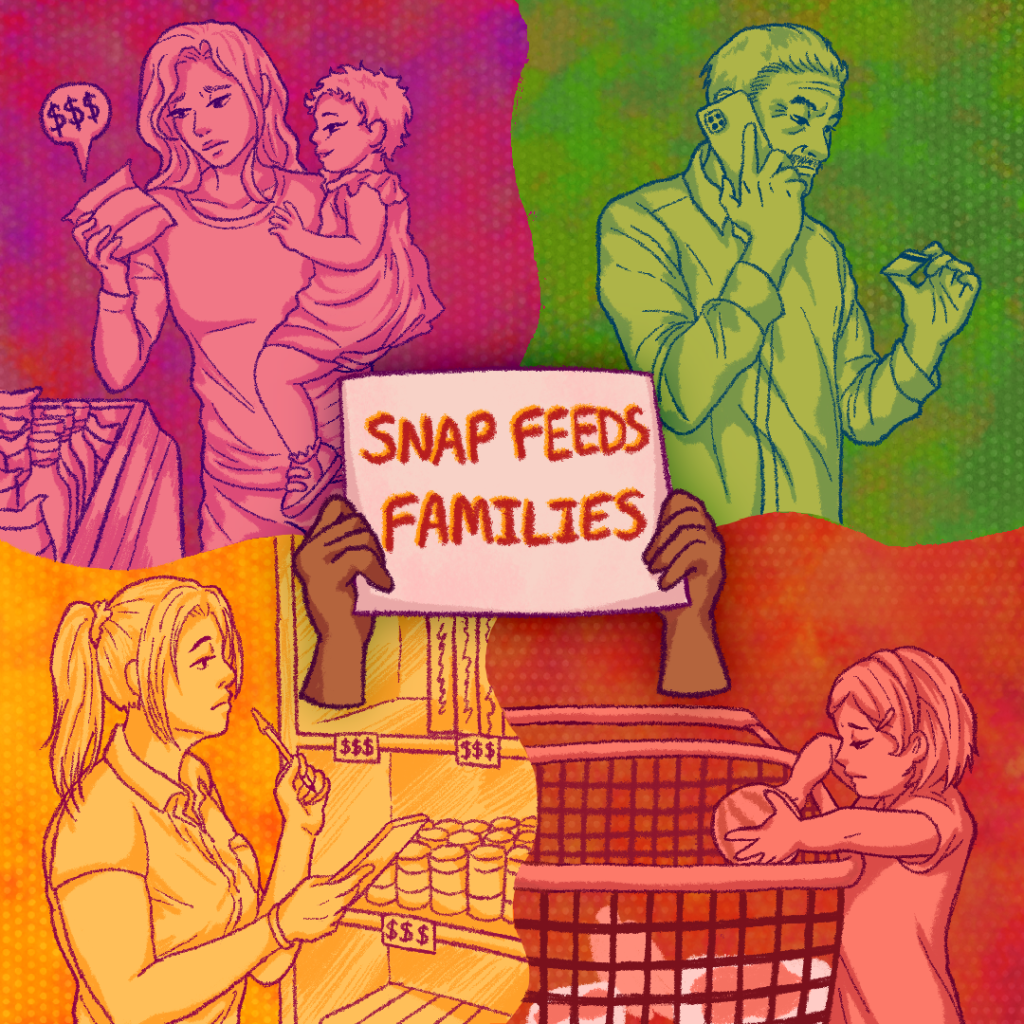
In the weeks leading up to the reopening of the federal government on Nov. 12 and the reinstatement of funding for programs like SNAP, families across the Rio Grande Valley were caught in a confusing limbo. Partial SNAP benefits, payment delays, and a last-minute scramble to restore full support created so much uncertainty. For many households in our community, this chaos demonstrated how fragile the safety net can be and how essential, yet deeply misunderstood, the SNAP program is to the majority of the country.
In October 2025, with no congressional budget agreement in place, the Supplemental Nutrition Assistance Program (SNAP) faced widespread disruption. In Texas, roughly 3.5 million people, including 1.7 million children, depend on SNAP for food assistance each month.
When funding lapsed, the U.S. Department of Agriculture (USDA) warned that November benefit disbursements would stall unless new appropriations were enacted. Then, under pressure and a federal court order, the USDA permitted partial benefits; estimates suggest that some households initially received around 50%–65% of a usual allotment, while others received far less.
Finally, as of Nov. 14, states including Texas were ordered to restore full November benefits; households that had received partial benefits were to receive the remainder. But the delays and uncertainty left many families with limited options. Some rationed food, skipped produce or fresh groceries, and turned to charities while they waited.
RGV Community Networks Step Up
In the RGV, the stakes are especially high. Many families already live on tight margins, and food insecurity was a serious concern before the shutdown. The disruption of SNAP hit households hard: for some, this meant choosing between essentials like electricity, rent, medicine, or groceries.
Local food banks and community organizations across the Valley, already stretched thin, braced for increased demand. As SNAP disbursements faltered, these groups mobilized, shifting to “emergency mode” to help families who suddenly found themselves without their usual support. The region’s network of mutual-aid groups, nonprofits, churches, and food pantries became a crucial stopgap.
In response to the crisis, grassroots efforts spread across the Valley. Food pantries, mutual aid networks, and local businesses collaborated to coordinate food distributions. Organizations like Weaving Food Webs Farm and Food Not Bombs RGV joined the efforts to help families across the RGV.
Even as federal benefits slowly returned, the community’s response did more than fill a temporary gap; it showed the community how decentralized support systems can provide lifesaving aid when government mechanisms deliberately fail us.
A Misunderstood Lifeline: SNAP’s Role in Stability and Survival
The situation has also revealed how deeply many families across the country depend on SNAP. For some households, these benefits are the primary source of food security. When benefits are delayed even by a few weeks, basics like nutritious groceries become luxuries.
For working people, seniors, and disabled residents who are already facing tight budgets and rising costs, SNAP provides essential relief. In places like the RGV, where economic opportunities can be limited and the cost of living is constantly rising, such aid can make the difference between a balanced meal and hunger.
Beyond individual households, SNAP has broader effects on the economy: benefit dollars flow into local economies, supporting grocery stores, small retailers, and farms. When benefit payments are delayed or reduced, the economic ripple effects hit the entire community.
Despite its importance, SNAP is often misunderstood and even stigmatized. Some public discourse brands recipients as “lazy” or “dependent,” both of which are wholly untrue. What this recent shutdown revealed is that many SNAP households include people who are working, elderly, or disabled folks who simply don’t earn enough to cover food plus rent, utilities, medicine, and other basics. Undermining support systems or treating recipients as undeserving ignores the reality of what people actually go through when food security is at stake.

What our Communities Need Going Forward
The 2025 shutdown and the disruption to benefits should be a wake-up call. Policymakers must ensure that essential safety-net programs like SNAP are insulated from political ploys. Families shouldn’t suffer hunger because of delayed legislation or budget fights.
At the same time, local communities, nonprofits, mutual-aid groups, food banks, and faith-based organizations must continue to strengthen networks and support people when systems fail. The solidarity shown this fall in the RGV matters.
We must all fight stigma by advocating for empathy and understanding, acknowledging that food assistance isn’t a handout but rather a necessary support for families. The recent SNAP benefit disruption exposed a hard truth: when government funding falters, real people pay the price. For many in the Rio Grande Valley, those weeks of uncertainty meant rationed meals, worried nights, and deep stress. But the community response reminded us that we are stronger together.
As we move through December, restoring reliable aid, building resilient community infrastructure, and protecting dignity and access must be more than a policy goal; they must be commitments we demand from our elected representatives.