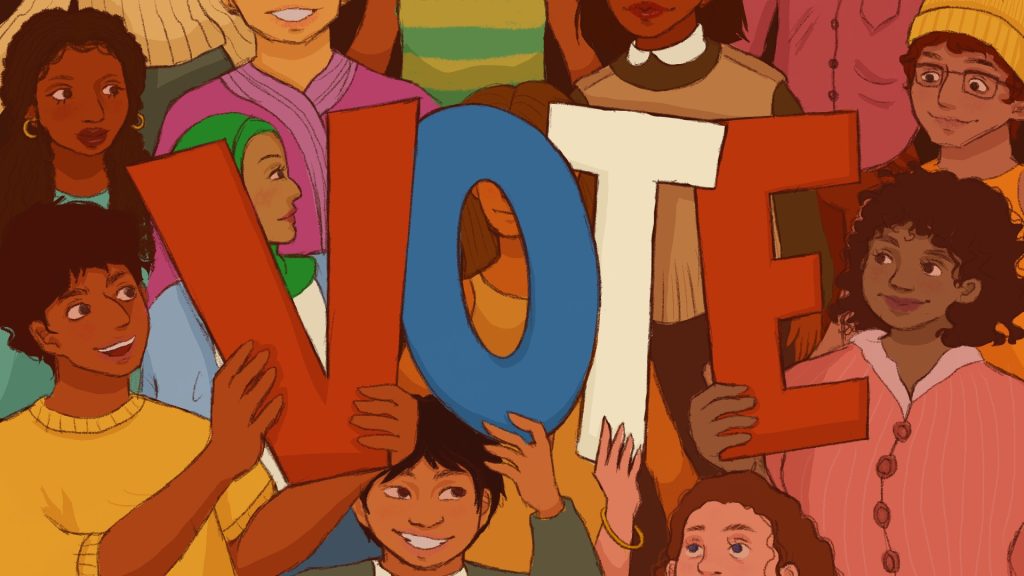
Voting in the United States is vital for many reasons. HeadCount, an organization that registers people to vote and become interested in democracy through pop culture, lists some important reasons for voting: having a voice in decision-making, influencing policies and laws, holding leaders accountable, reflecting the will of the people, honoring the struggle of suffrage and fostering civic engagement. If you don’t believe your vote matters, hopefully, this article can help change your perspective and allow you to vote for whichever party or political candidate you want!
It’s also a good reminder that for so many years, major news organizations that report on politics show us how politicians have fought for the votes of various people of color, such as Black, Latine, Asian and Native American voters. With the careful analysis of the Presidential Election of 2020, amidst the pandemic, we can see that “communities of color represent 40% of the population and many lean Democratic,” which is why these politicians work strategically to make plans that would influence people of color to be more likely to vote for them.
In 2024, it is estimated that in the swing state of Pennsylvania, the ethnic group that could change things up during this presidential election is Latines. Research done by the Pew Research Center shows that “Latinos have grown at the second-fastest rate of any major racial and ethnic group in the U.S. electorate since the last presidential election. An estimated 36.2 million are eligible to vote this year, up from 32.3 million in 2020. This represents 50% of the total growth in eligible voters during this time.”
Although Texas is a big state and Latine people make up about 8.3% of the state’s population, there are a lot of people who prefer not to vote and just aren’t interested in it. Within our region, there are people such as Edith Cuevas (she/her/ella), who works for Bloom Rio Grande Valley, a non-partisan civic engagement organization that seeks to help harness the power of RGV youth through voter registration, education and turnout, and Vicente Martinez, Jr. (he/him/el), who works for VoteRiders, a non-partisan, non-profit organization that focuses on making sure that all citizens can exercise their freedom to vote.

Blooming the RGV Into a Better 956
Edith Cuevas, Director of Data and Communications for Bloom RGV, said that the organization was created in July 2024 due to Cuevas and two other directors’ contracts ending with a previous organization. The three decided there was still a large need for civic engagement in the RGV. “Because there were already a lot of people in that network showing us support, we wanted to build our own non-profit so that we [could] continue giving a lot of the same resources and the program that we had in the high schools as we originally were doing in our previous work,” Cuevas said.
Cuevas also added that Bloom RGV is “looking into creating a secondary program” that could be called: “A Better 956.” This secondary program would explore making Bloom RGV’s work more “community-oriented.” Cuevas said that this secondary program would include possible collaborations with other non-profits in the RGV, such as beach clean-ups, blood drives, microchipping animals, and helping other similar causes.
During the interview, Cuevas discussed some strategies that Bloom RGV engages in to increase voter registration and turnout among young people in the RGV. Bloom RGV first sees how they can connect with the youth by reminding them that their voice is essential. Cuevas said, “We have certain activities that bring out students who are more shy or feel like they don’t have any sense of where they align politically, and they have yet to build that up and have a framework into what they really care about.”
One activity that Cuevas discussed includes letting students start by making random choices that make them more interested in the conversation by participating in active decision-making. The questions begin with asking the students to pick between two types of drinks and chips, and as the activity continues, the room is split into what the students want. Then, the questions that Bloom RGV asks require more thought: “Would you prefer if your streets continued to have potholes or if they were pothole-free?” and “Would you want your job to pay you more or less by the hour?”
Cuevas says these activities let the students see they “make important decisions every day.” Bloom RGV wants young students to think seriously and be aware of all of the barriers that are in place in Texas and in the RGV that they can face as youth of this region. “We let them know that although there are these barriers, there are people like our organization and others that we work with that are there to help,” she said.
An organization Bloom RGV closely partners with is VoteRiders. Cuevas explained, “[VoteRiders] offers voter ID assistance, and we constantly name-drop them in our schools because a lot of the students that we see don’t have an ID.”
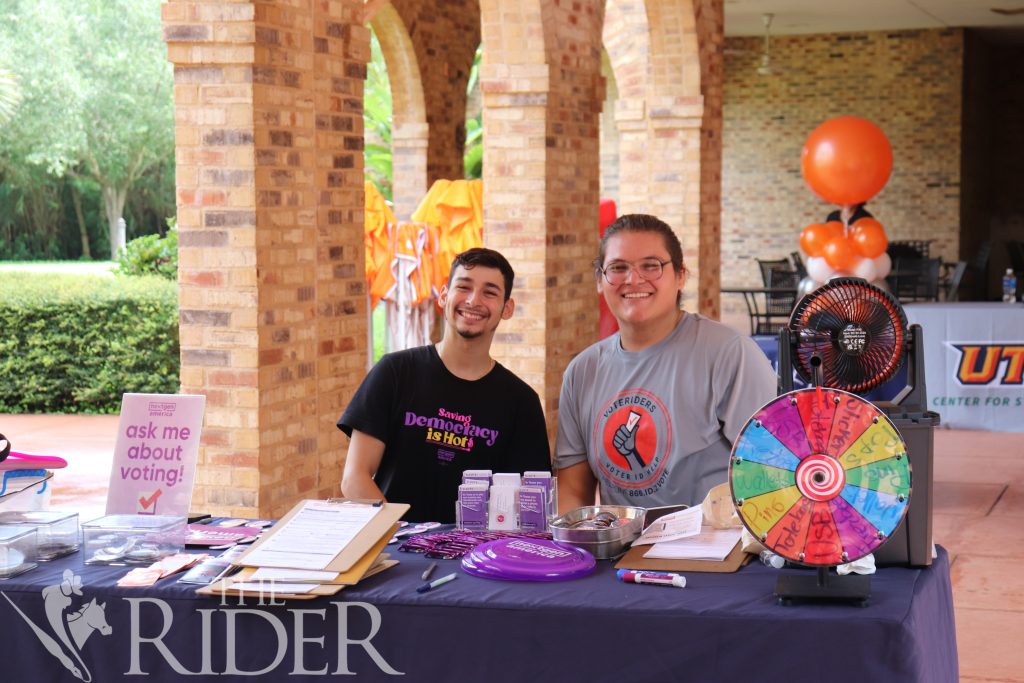
VoteRiders Eliminating Voting Barriers
Vicente Martinez, Jr., the Texas Coordinator for VoteRiders, said, “VoteRiders is a national leading organization focused entirely on voter ID education and providing free direct help to any eligible voter who needs an ID to successfully cast a ballot.” As a non-partisan organization, VoteRiders consistently works on its mission “to ensure that no eligible voter is prevented from casting a ballot that counts due to voter ID laws, either directly from the lack of having [an] acceptable ID or indirectly because of voter confusion.”
Through the tremendous work VoteRiders does, the organization provides guidance to eligible voters in Texas, specifically in the RGV region. Martinez said, “We’ve worked with organizations and people across the state of Texas and in the Valley. For instance, we work with Bloom RGV, Border Workers United, Texas Civil Rights Project [and] Voces Unidas to share our tools and resources with them because we believe that the best people to provide the information are the people who are already in those communities. And of course, we work in conjunction to do voter ID presentations, for them to use our voter ID info cards that go over what IDs are required to vote.”
To be able to vote in person in Texas, you must show a photo ID to vote on a regular ballot. Here are seven types of acceptable photo IDs that you can show to vote, which can be expired for up to four years or more after your 70th birthday: Texas driver’s license, Texas state ID card, Texas Election ID Certificate (EIC), US passport or passport card, US Citizenship Certificate (no expiration), Texas handgun license and finally, a Military identification.
Martinez talked about a cause for worry in our state: “For folks who are trans or non-binary, recently in Texas, folks [can] no longer change their gender on their ID. If they would like assistance obtaining an ID that reflects their gender identity, they can contact us at 866-432-8683, for us to provide them with a passport card. We’ll guide them through the process and cover fees to ensure they are able to cast a ballot and it’s not a barrier for them.”
Martinez talked about VoteRiders with honor, “For the past 13 years […] we’ve been working hard to ensure that every eligible voter is able to exercise their right to vote and has the resources needed to do so without any barriers at the voting booth. Having proper identification and documentation is our way of making sure this can happen. We provide folks with direct aid. […] If they need help getting an ID and [that] causes a barrier, we help cover the fee. If they need transportation to the Social Security Office or The Department of Public Safety, we provide them with transportation.”
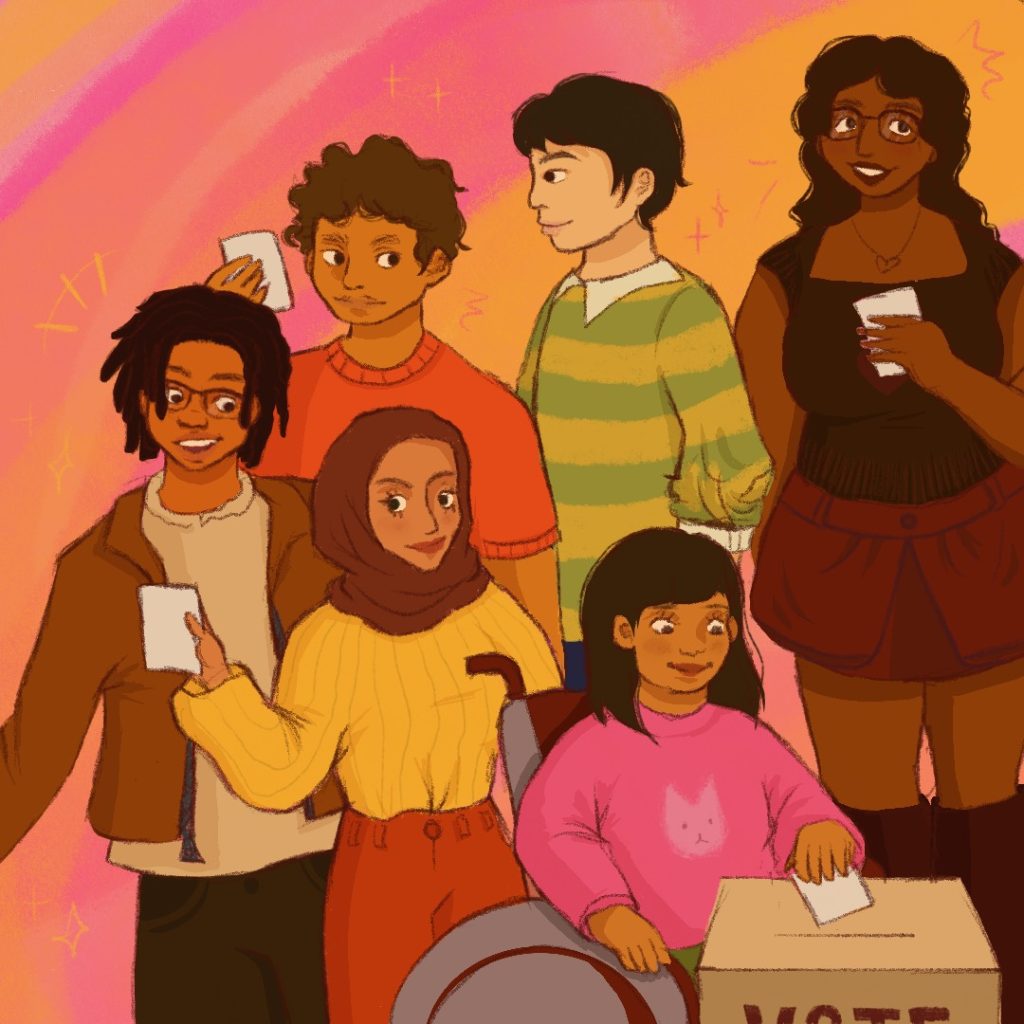
Vote and Let Your Voice Be Heard
In the RGV, there are many more organizations, such as Bloom RGV and VoteRiders, who work day by day to unlock the power that Latine folk have on the polls. As voting registration ended on October 7, it is vital that everyone eligible to vote do so during early voting!
Whether you are voting for red, blue, or green this election year, we hope you choose what you want to decide and what best aligns with what you want to see in the world for the next four years.
If you need any voting guidance, we highly recommend visiting Bloom RGV’s or VoteRiders’ pages! You can also find more information on this official site to locate where you can vote at the polls and whether you are eligible for the Nov. 5 election.
Don’t let anything prevent you from voting. There are always resources available for you!
Support RGV Storytellers.
Rio Grande Valley storytellers need your support. Trucha, a 501c(3) non-profit, provides artistic opportunities to the community, with the help of our donors. Your contribution will help us continue our mission to empower our creative community of storytellers.