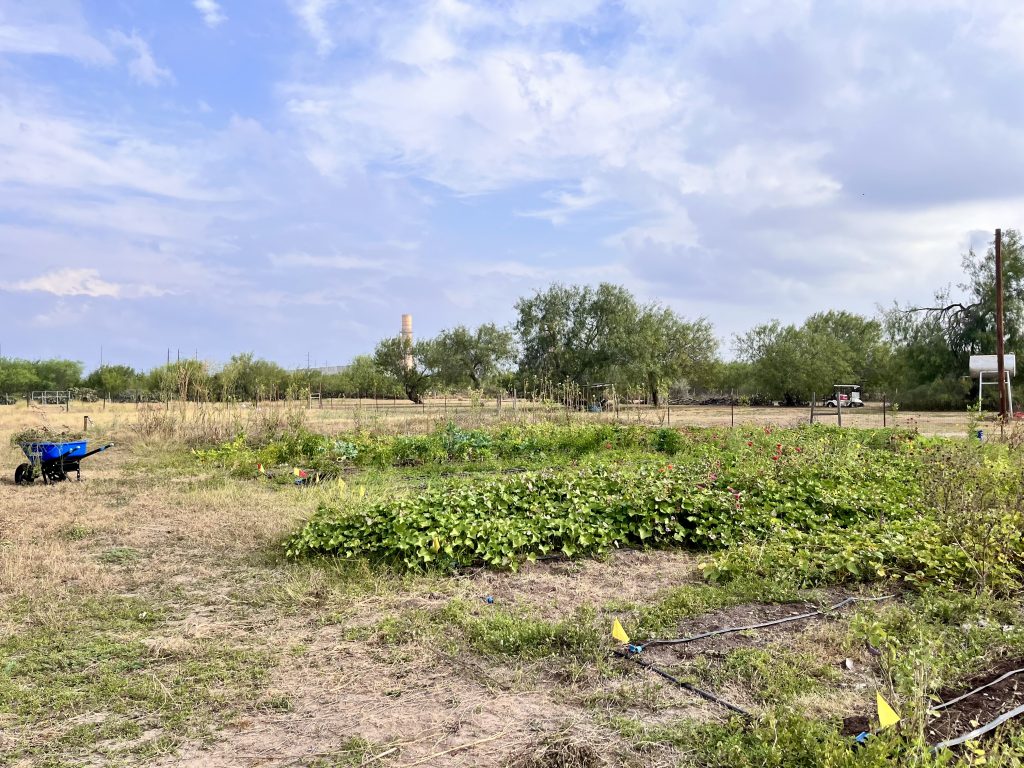
If you didn’t know to look for it, you might drive right past Weaving Food Webs Farm. Tucked behind a small house in a suburban neighborhood on the outskirts of Edinburg, the one-acre plot could be mistaken for someone’s backyard. A small handwritten sign hanging on the fence and a friendly dog named Val who trots up to greet visitors are the first signs that there is something special there.
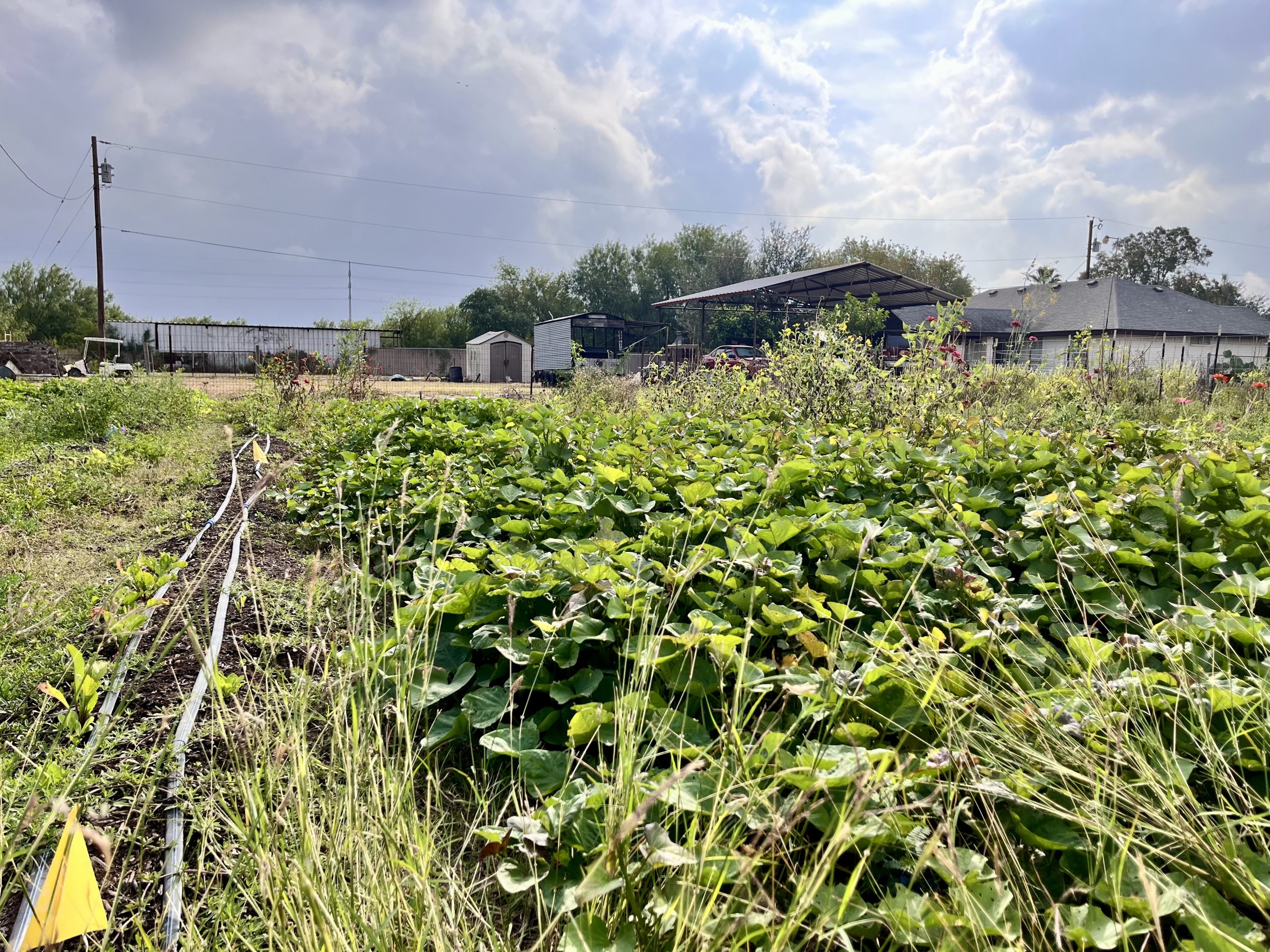
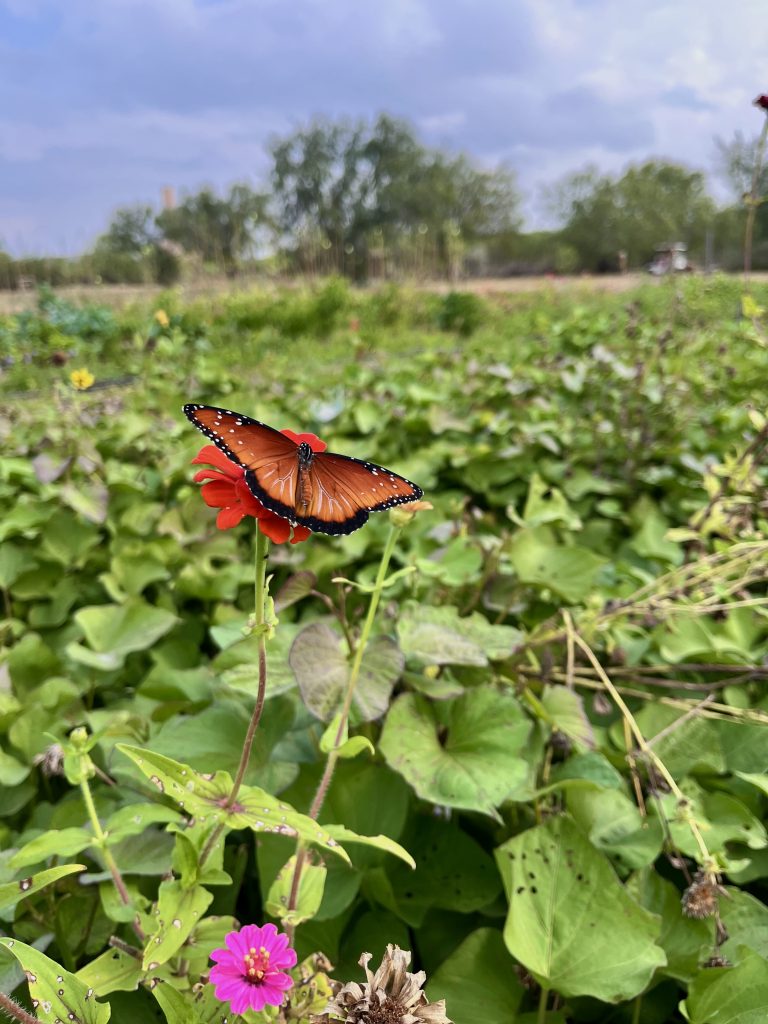
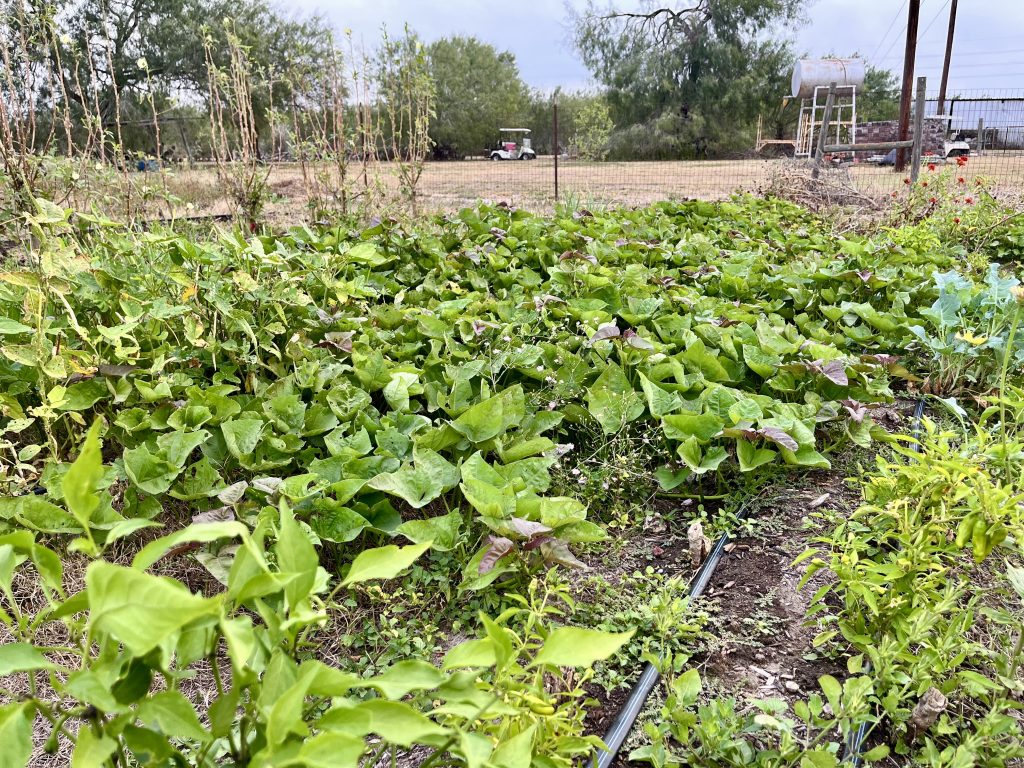
Behind the house, rows of vegetables stretch out, divided by narrow irrigation lines and low fences where chickens wander freely. Butterflies drift through the air, landing briefly on Okra flowers. The space is quiet and serene. On this small patch of soil, community and care take root.
Farm educator and founder of Weaving Food Webs Farm, Katie (she/they), started the farm in 2024 with a vision to help people reconnect with nature and each other. Through yoga, potlucks, long-table dinners, and partnerships with local justice groups, the farm is weaving a network of resistance and belonging.
“Food is one of the most basic needs we all have and one of the most powerful instruments to bring people together,” Katie said.


A Family Legacy and a Purpose
The roots of Weaving Food Webs stretch back to Katie’s childhood and the memory of her Tío Al, who passed away at 65 from diet-related health issues, inspiring the farm’s mission.
“He always loved bringing people together over food,” Katie said. “It kinda felt like a way to honor his life and have his legacy live on, but also it’s like a really dire need to have access to nutritionally dense foods.”
Her uncle’s story pushed her to think about how food and health intersect not just for her family, but for the Rio Grande Valley as a whole. Our communities face higher rates of food insecurity, obesity, and diabetes than many others in the country. According to the Food Bank of the Rio Grande Valley, up to 146,000 people in the RGV are experiencing food insecurity. Many communities in the RGV are also considered food deserts, places with very limited access to affordable and nutritious food.
“During COVID, it was very clear that those industrial marketplace food sources were not as resilient as a local food option,” said Katie. “My passion and purpose in life is to help people reconnect to nature and to food and through that, to become better stewards of everything they do.”
That sense of purpose led Katie toward agroecology, a program that combined food production with ecological practices. Later, during graduate school, they launched the first version of Weaving Food Webs as a small food sovereignty project.
“The idea was that everyone can grow something, even if it’s small,” they said. “And if each neighbor started to grow something else, that could be exchanged.”
When her family was able to invest in land, Katie decided to expand that philosophy into a working farm.
“I wanted to keep the ethos of Weaving Food Webs of food sovereignty and community-based food systems alive,” they said.
The name was a bit of serendipity and confirmation that they were on the right path: “The land had a lot of spiders, so it feels like it was meant to be. They’re like guardians of the garden, and the point is that everyone can come together and build connections and grow food and exchange food, weaving energy throughout our communities.”
Growing Food, Weaving Community
Weaving Food Webs functions as both a farm and a gathering space. Katie grows vegetables like radish, beets, Swiss chard, and okra using organic methods, often letting plants reseed naturally and keeping “volunteer plants” that return each season.
The farm has also become a hub for community events and a collaborative space with various grassroots organizations, including the Sunrise Movement, Voces Unidas, and Casa Kimberly.
For Katie, those events embody what they want the farm to be: a space where people can gather freely and safely.
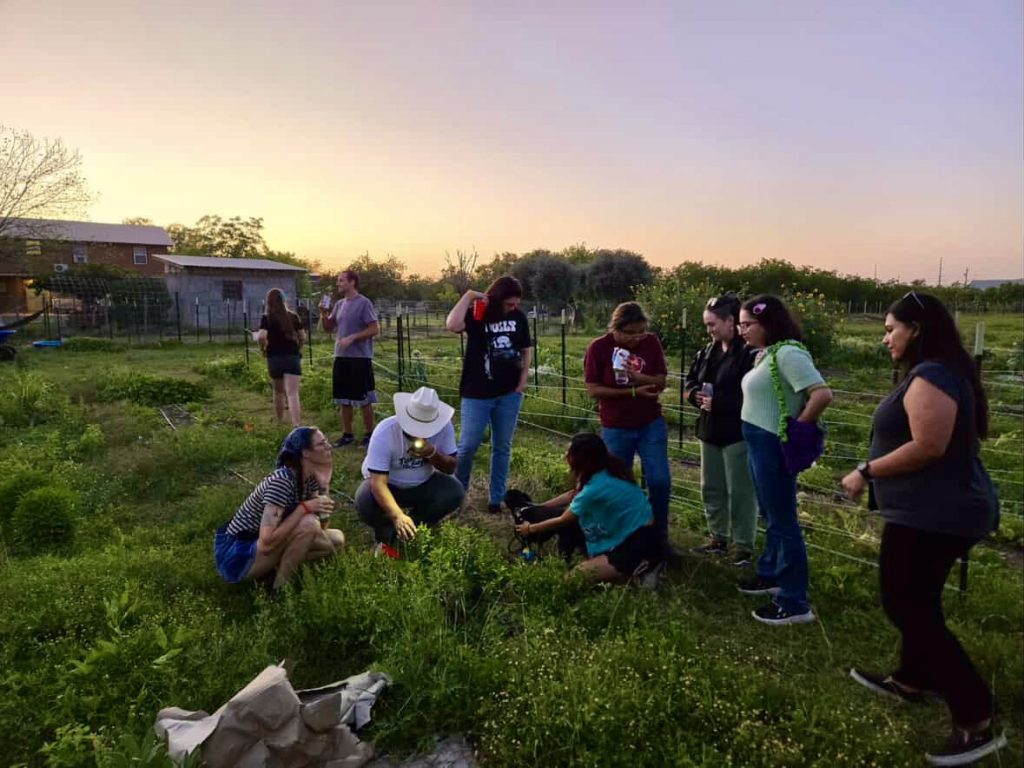

“I am hoping that the farm can be a hub, especially for social justice organizations, to have retreats or fundraisers or events,” they said.
One of their proudest moments was hosting a drag show on the farm.
“I’m a queer person, and it’s been really challenging navigating the current political systems right now,” Katie said. “It was really cool to have that space to create a safe place. It felt like a big, ‘Oh my god, we made it’ moment.”
Food as Social Justice
At its core, Weaving Food Webs is about redefining people’s relationship to food and power.
“Food is one of the most basic needs we all have,” Katie said. “It holds memories and has the power of bringing people together to break bread. It’s a powerful instrument to enact social change.”
But they also know the agricultural system is deeply inequitable and tries to bring awareness to that in their work.
“Food and farm workers are not earning living wages. They are forced to work in unsafe environments,” Katie explains. “Bringing back a community-based system allows people to create their own food system. It might not feed everyone, but if we can take care of our block or neighborhood, that can be really powerful. If you control the food, you control the people.”
That belief shapes how Katie runs the farm. Across the U.S., farmworkers earn an average of about $15 an hour, often without benefits or job security, despite working some of the most demanding and essential jobs in our country. Katie tries to challenge that imbalance by offering sliding-scale pricing and trades whenever possible, a practice that keeps food accessible while respecting farmers’ labor.
Even as the farm grows, Katie’s vision remains deeply community-centered. They hope to expand composting, host more collaborative events, and one day create monthly “farm days.”
“People can come pick up their food, drop off their compost, do yoga, and eat with others,” Katie said. “Bring in community.”
To learn more about upcoming events or how to volunteer, follow Weaving Food Webs Farm on Instagram or reach out through their website to support local, community-based agriculture in the Valley.