Weaving Narratives de La Casa
Story by Josue Ramirez
Weathered text layered and collaged together, tattered fabrics of family garments infused into found objects and curious questions to make one wonder and contemplate our place in the local context. These are some methods used by artists Cielo Zuñiga, Jose Angel Lozano, and Rene Cardenas to examine their experiences and surroundings in the group exhibition “Woven Narratives.”
The showcase features the second cohort of participating artists in the De La Casa Artist Residency, organized by Trucha. The purpose of the De La Casa Residency is to support Rio Grande Valley artists in developing and exhibiting new work. Over the course of the two-month hybrid residency, the artists engaged in individual explorations that draw attention to the Rio Grande Valley community, focusing on facets such as family, personal histories, visual representation, social dynamics, and the fluid nature of identity.
While their work is vastly different, ranging from prints to sculpture, textile and participatory art, they share a subconscious thread: the understanding that a multitude of voices and histories precede us and are woven into our narratives.
Different but Similar Visions
Multimedia artist Rene Cardenas, for example, references graffiti artists, rotulo painters and the visual language of Brownsville, Texas, in his brightly colored paintings, prints and collages. He translates news headlines and images of landscapes, signs and anything he captured along his bike rides and explorations of downtown and rural communities into the digital realm. Cardenas sees these works as collaborations with community artists that decorate our streets but are often taken for granted.
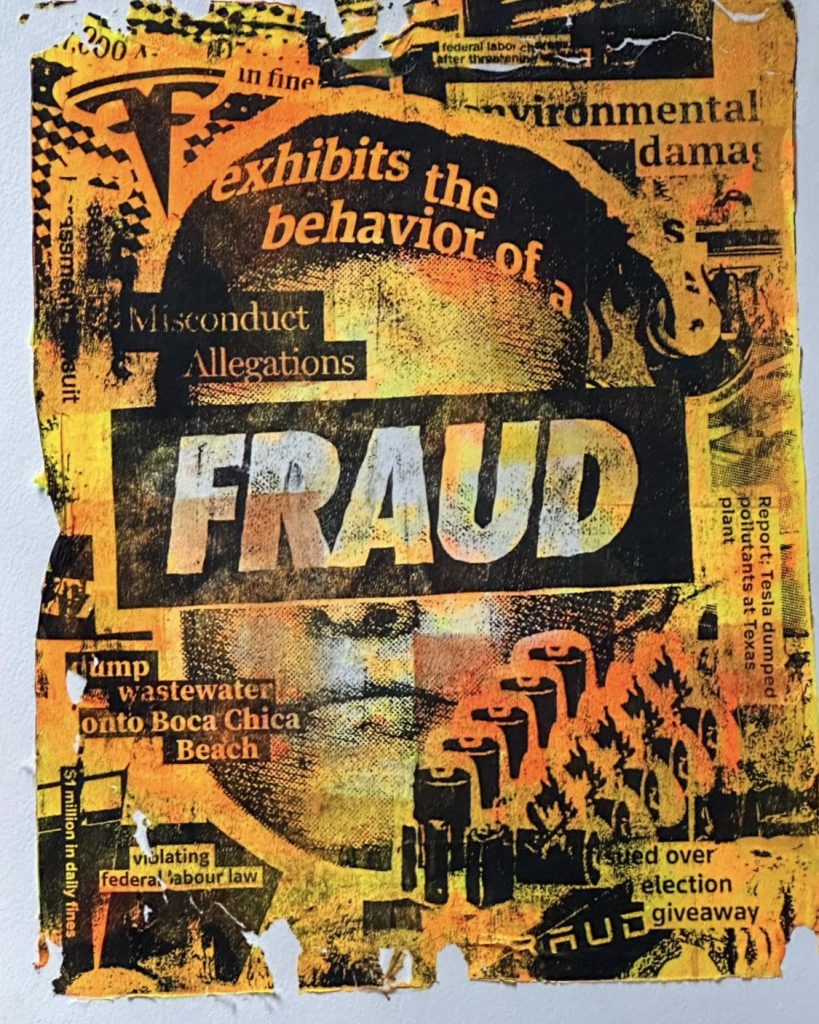
During the residency, Cardenas learned to use gel blocks to transfer his digital work into print. While some prints are left complete, others are cut and reassembled into collages of local birds, including the native green jay and kiskadee. In addition to recognizing community artists, Cardenas also draws attention to the environment and issues impacting the city. He does so directly in the print “Don’t Believe the Hype,” which features a portrait of Elon Musk covered and surrounded by headlines regarding his and his company’s professional misconduct. His work provides counternarratives to the propaganda used to paint a rosy picture of the billionaire and his local impact.
Jose Angel Lozano shared a similar interest in the narratives that shape us and our varied regional identities. Lozano explored these topics in more participatory ways that required first-hand interactions from the public. A particular interest for Lozano during the residency was to create work that dissolves the separation between art and the viewers, especially in white wall spaces. To engage the public, he explored art-based evaluation techniques (surveys, open questions) that made space for viewers to reflect and participate through mark-making or adding to pieces.
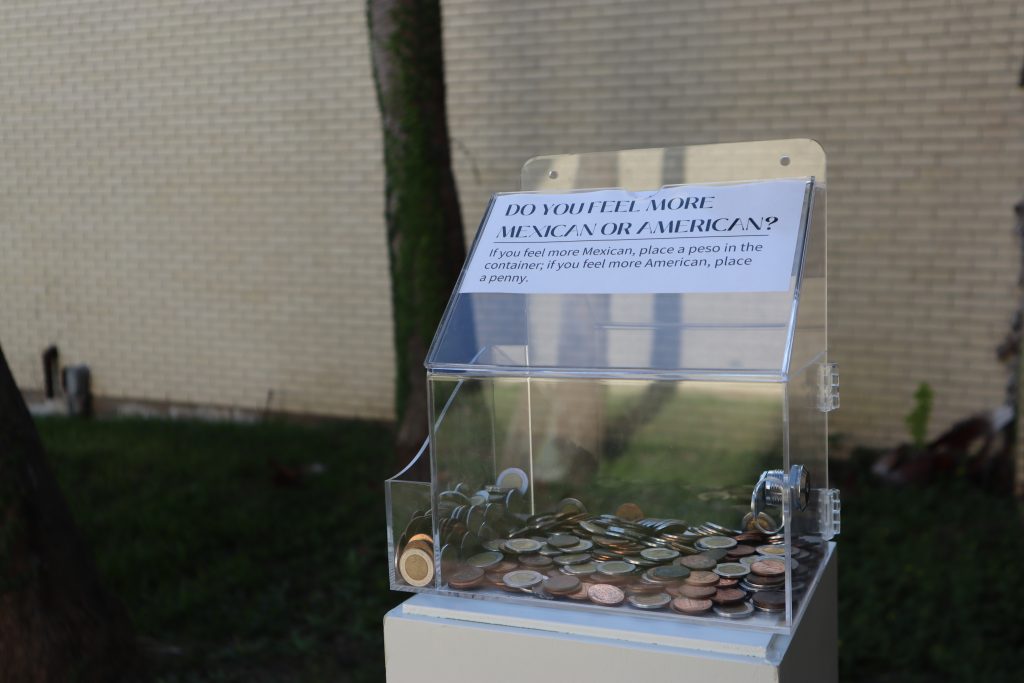
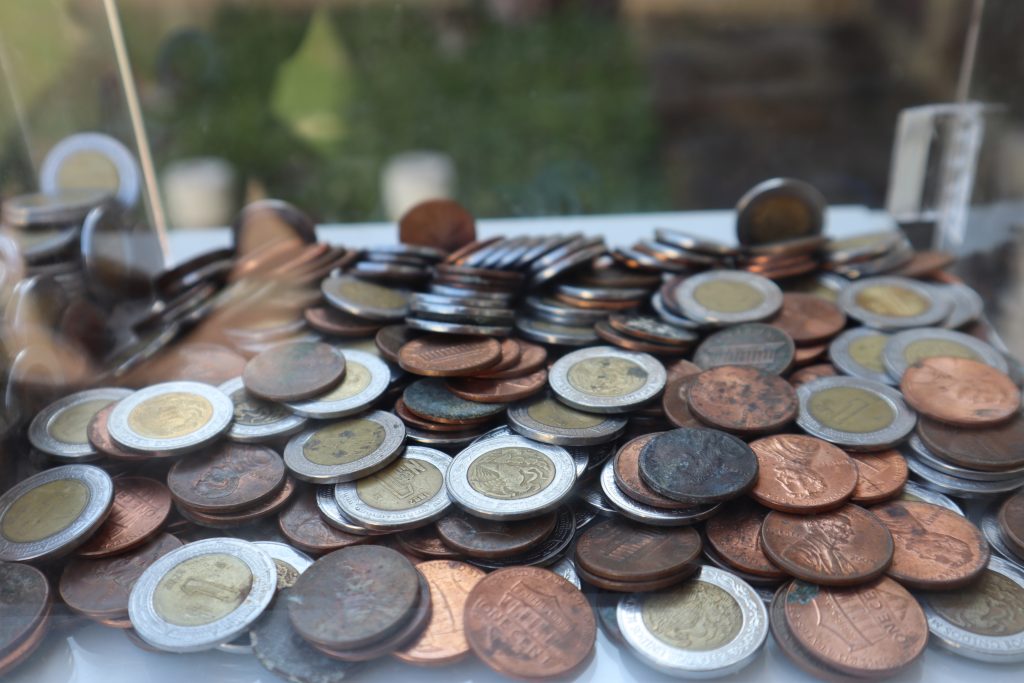
For example, in the sculpture ”Pesos or Pennies,” three transparent donation boxes are placed side by side on top of a stand; each states a question beckoning the viewer to put a peso or a penny into the box based on their response. With questions like, “Do you prefer Mexican or American food?” and “Do you feel more Mexican or American?” the participants’ final answer ultimately changes the artwork. Another interactive piece, “Capture your Heartbeat,” asks participants to measure their heart rate across a large black and white grid ingrained with a medley of transparent stock images. The end result is a multicolored graph that resembles a mountainous landscape of data that can be seen as artwork or analyzed to better understand the Lower Rio Grande community.
Cielo Zuñiga looked to her family and childhood stories for inspiration. Working with textiles and found materials recycled from her demolished home, Zuñiga enlisted her father to help construct dioramas resembling altares. One sculpture titled “A House Called Home” is adorned with weavings made with old clothing and found objects, including childhood toys. Zuñiga included her home in her creations to honor the memories it held, the spirit of her family and others who found shelter and safety within its walls. It was a new challenge for her as she began delving into the sculptural during her time at the residency.
In addition to the concept of home, Zuñiga’s process relied on the inclusion of her family in her creations. In the “Ripples” installation, a stop-motion video of cyanotype portraits of her family members flash on a cloth screen sewn from recycled garments. As the video plays and loops, it splits the portraits or combines them through cuts and weavings. Through the work, Zuñiga explores the concept of lineage and the similarities among families that are passed down in personality or physical likeness.
A Vibrant Tapestry
The work presented in “Woven Narratives,” developed in the De La Casa Artist residency, shows an artistic need to reflect one’s surroundings and include the people who make home as part of their creative process and art. The reason for this need differs for each exhibiting artist, ranging from understanding our regional identity to a desire to recognize everyday artistry and even the personal need to honor memory and place. The cohort collectively depicts the vibrant tapestry of voices, histories and experiences of our home. The exhibition will be open to the public at Hinovations Gallery from December 13 through January 31, 2025.

Support RGV Storytellers.
Rio Grande Valley storytellers need your support. Trucha, a 501c(3) non-profit, provides artistic opportunities to the community, with the help of our donors. Your contribution will help us continue our mission to empower our creative community of storytellers.