Recounting the Flood and Its Aftermath on the RGV Community
Story by Melissa Cortes Santiago
Edited by Abigail Vela
- June 20, 2025
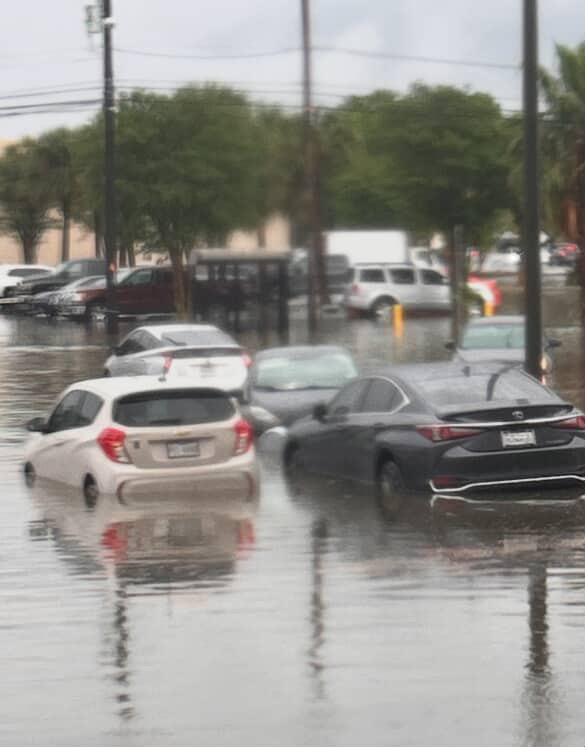
When Erica Briones (she/her) walked into the hospital for an MRI in late March, it seemed like a typical day with clear skies. She was optimistic, after struggling with health issues for some time, she finally had the opportunity to prioritize her health. Just an hour later, she stepped out of the hospital to find her car in the parking lot submerged in water.
“I feel like it went from zero to 100, and it was really unexpected,” said Briones.
Briones, who recently started a new job as the educational coordinator at the Edinburg World Birding Center, was grappling with medical expenses, and now faces another financial blow: her only means of transportation was no longer usable.
“[The car] would drive maybe a block and then just start stalling… so I wasn’t able to fix it.”
Across the Rio Grande Valley, experiences like Briones’ were widespread. The storm that hit in late March brought more rain than anyone had predicted, catching many by surprise. The frontage road throughout the whole Valley resembled a river, making it impossible for cars to enter or exit the expressway. Hundreds of people were stranded with little warning and even less support in the aftermath.
A Storm No One Saw Coming
Humberto Moreno, (he/him), who runs a snow-cone business in La Feria, had just picked up his brother from dialysis treatment in Harlingen when the storm hit.
“Just like everybody else, we didn’t know it was going to be horrendous,” he said. “We were on the expressway, and it felt like something Biblical, the water just came out of nowhere.”
Referring to the rain as “biblical” was not an exaggeration on Moreno’s part. The RGV received nearly 20 inches of rain, according to a report by the National Weather Service. Governor Greg Abbott issued a disaster declaration in all four counties, with some areas experiencing rainfall that rivaled the all-time two-day record set by Hurricane Beulah in 1967. The report estimated that the damage and recovery totals from the flood would exceed $100 million.
As Moreno tried to navigate his way from Harlingen to Alamo, where his brother lives, and back to La Feria, Moreno’s van struggled against the flooded roads. “That thing floated at one point,” he said.
He eventually made it home, but the van, which is essential for his business, did not survive. “Once I made it home, my vehicle just shut down. It was a total loss.”
Like Briones and many other people in the RGV, Moreno only carried liability insurance, a more affordable option, which meant that the damages to his car would not be covered.
“I called FEMA. They don’t give a fuck,” he said. “I called all kinds of [government] numbers… They didn’t even consider it a natural disaster.”
Oskar, (he/him), a Starbucks barista from Pharr, had already experienced a flood in the past and prepared by choosing a vehicle with a higher clearance. But it wasn’t enough.
“I thought I could make it down my street, but then the canal by my house overflowed,” he said. “My Jeep got stuck, and then it started floating.”
Oskar sat in his vehicle for nearly an hour as water began to trickle in and fill the inside, vibrating with the bass of the music still playing from the sound system. Eventually, he was forced to climb out and walk home.
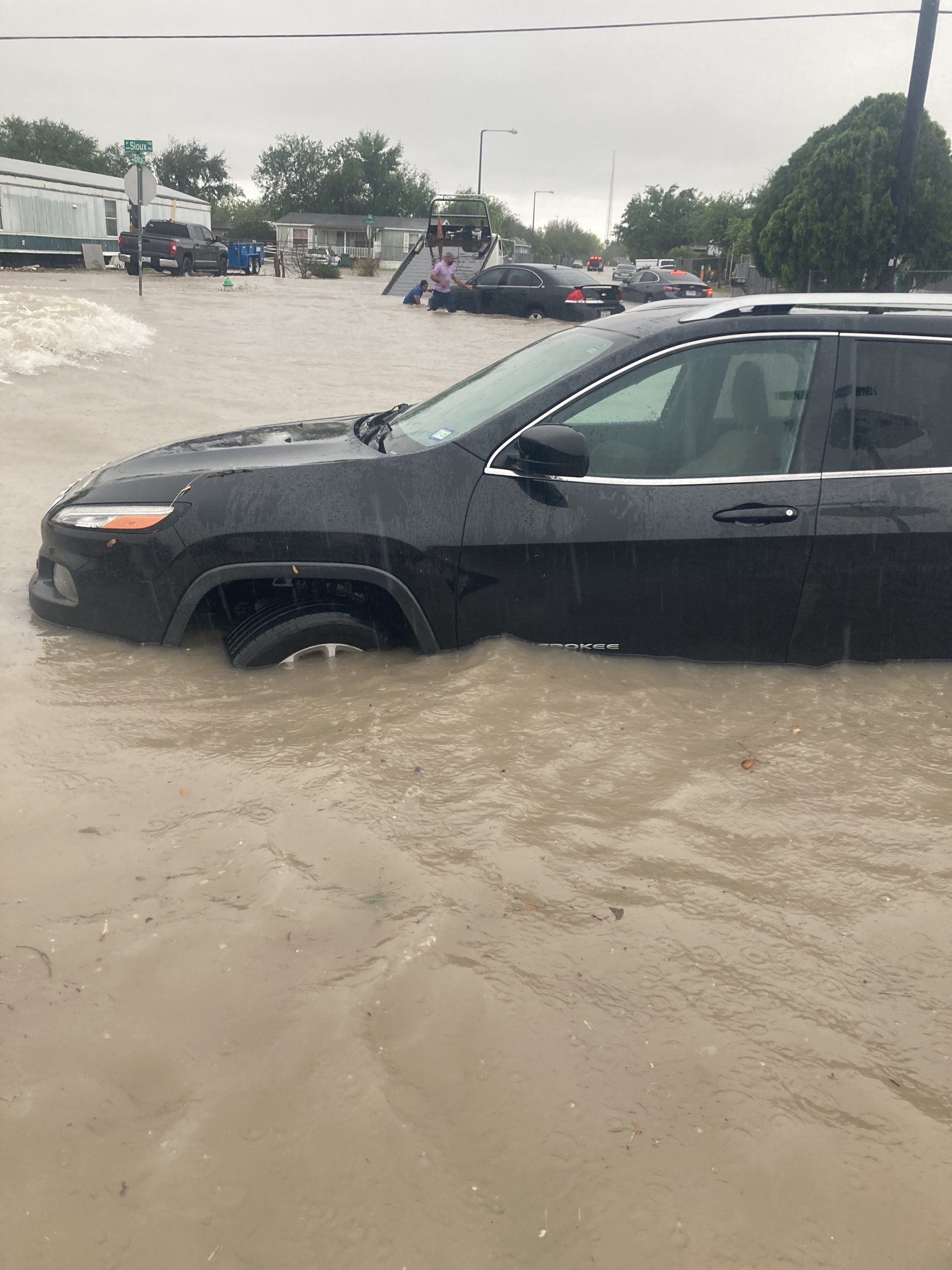
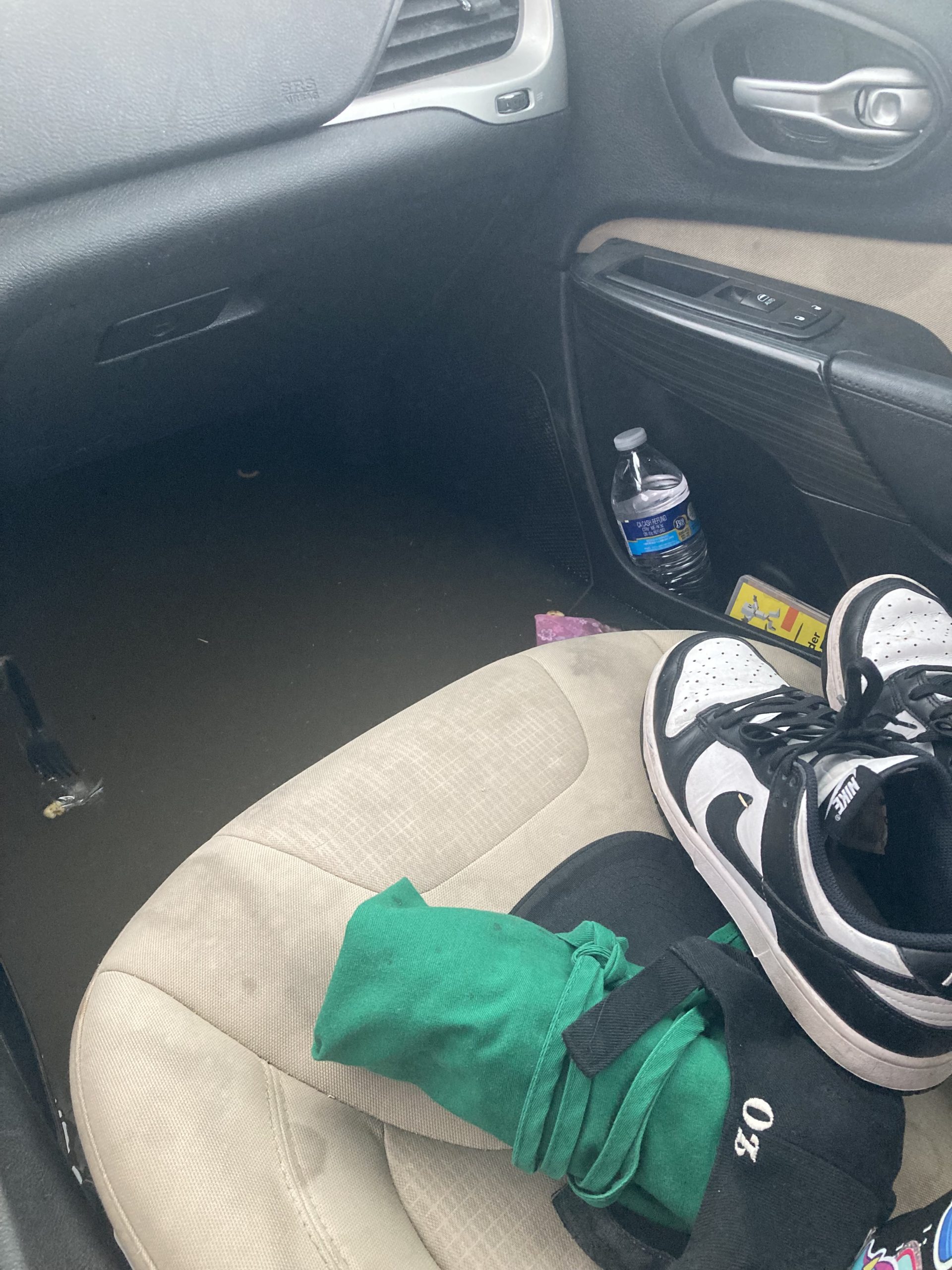
Like Moreno, Oskar’s car was declared a total loss, and his insurance coverage fell short. “They have me $8,000, but I still owe $9,000 to the dealership,” he said. He’s still being charged monthly payments for the car that he no longer has. An issue that he has been trying to resolve.
“Every week is a new excuse. I feel overwhelmed. It just seems like no one is really there to help.”
The day after the flood, when police found his flooded Jeep, they told him to move or else it would be towed. According to Oskar, they did not offer help and seemed indifferent to his situation. This interaction sums up the lack of compassion he feels from the institutions that are meant to help.
How the 956 Continues to Show Up
“This isn’t new,” said Moreno. “We flood all the time. But we don’t put money into drainage. We don’t put money into relief.”
In a car-dependent community like ours, where there’s incredibly limited public transportation, floods can bring daily life to a halt. Although drainage systems are vital and need to be invested in, climate change exacerbates these events. City governments need to do a better job of preparing our communities and providing resources for them in the aftermath of these natural disasters.
While the local government’s response was slow or completely absent, community members found relief in one another.
“I saw people with big trucks pulling others out,” Moreno said. “They weren’t posting it on social media. They were just doing it.”
Briones sold art prints to raise money for a new car. “Some people just donated, even if they didn’t want a print,” she said. “It made a real difference.”
In the face of indifference from systems meant to protect us, the RGV has always found ways to lean on one another, and unless things change, we’ll have to continue showing up for our community.