As the new decade forms and storytelling progresses, there has been a steady growth of
media representing different forms of girlhood. From Barbie to Thirteen, there is no exact
formula for reflecting on one’s inner world and experiences as a woman. However, during this
political climate and Hollywood casting less and less Latine actors for newer projects, there has
not been a better time to look back and see our stories told. For one particular story, it reflects
young girls in low-income immigrant households at the crossroads of going to college or
staying home to work.
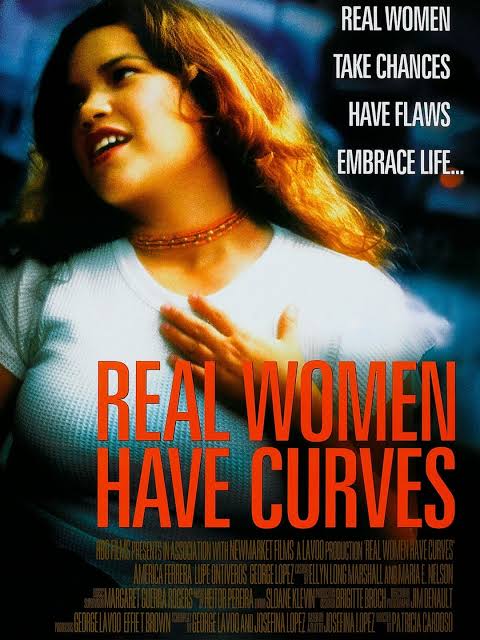
In Patricia Cardoso’s “Real Women Have Curves” and America Ferrera’s acting debut,
the protagonist is 18-year-old Ana Garcia. It dances around the relationship Ana has with her
mom, Carmen, and the constant nagging to be the perfect daughter. This film challenges the
dynamics of what’s safe for her, staying, or, better, leaving for college. A relationship that many
daughters of immigrant mothers, especially in the RGV, can understand and relate to.
In striving to get Ana to be the perfect daughter, one thing that is consistently told by
Carmen is her weight. Ana’s weight is a long, repetitive argument in the movie. This is
justified by her mom because Ana needs to lose the weight to attract a potential boyfriend, even
nicknaming her “gordita” throughout the film. Many plus-sized women within the RGV face this
criticism from not only their mothers, but the public too. Within the Valley, and other Latino
communities, it is no secret that girls who are plus-sized are called “tortas,” and even skinny girls “flautas.” There is always a defense made to insinuate that it’s just the culture, and it’s not meant to harm anyone, but if that was the case, where are these names for the men? It is difficult to decipher whether it is a light-hearted joke or a mean-spirited comment.
Along with the nicknames, Carmen constantly pitted Ana against other women, even if it’s
to her own sister or her friend’s daughter. Whether it was for her weight, her perceived laziness,
or ungratefulness, nothing Ana did was up to her mother’s standards. Even so far as to say,
“It’s because I love you that I make your life so miserable,” because to Carmen, a perfect daughter is one who is skinny, who stays put, and who gets married.

Carmen’s ideal version of Ana is tied to the stereotype of a traditional young woman.
This narrative only wanted Ana to push away and be strong on her own. Stereotypes like these
are not bound to the RGV. In past media and occasionally now, there has always been either
the very traditional husband-loving wife or the loud-mouthed hothead Latina. Additionally, not
even content creators have helped ease the stigmatization. For example, Ashley Treviño
represents perfectly how one bad apple can spoil the barrel. She was famous because of
horrendous choices in dating multiple imprisoned men, being a neglectful parent, and her
ludicrous diet. Her image and behavior harm the Latine community. Her actions only popularized the negative stereotypes against Latina women and how they are perceived. It may seem funny, but not enough to overshadow people who actually serve and reflect
the community well.
“Real Women Have Curves” is a vibrant film that hits close to home for many women in
the RGV. The topics it explores, like sexuality, family dynamics, and stereotypes, allow viewers to analyze and branch out with their own opinions. More exposure to this movie would help others, especially young girls, understand that their experiences are universal and can be overcome.
Rating: 5/5 Nopales