Photo Courtesy of Sol Meztli.
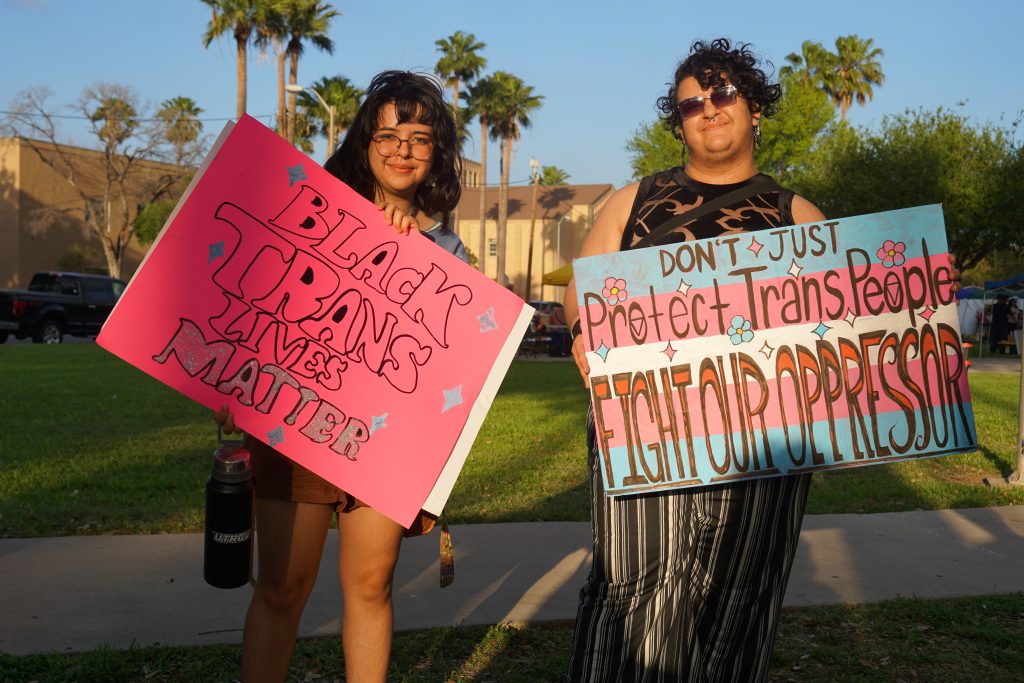
“Hey, hey, ho, ho, transphobia has got to go!” rang loudly across Main Street in McAllen on Saturday, March 28. Cars honked in support, with posters calling for trans justice and trans flags waving proudly, lining down block after block.
About 200 people came together for the Valley’s annual Trans Day of Visibility (TDOV) march.

Photo Courtesy of Sol Meztli.
Trans Day of Visibility: A Day To Honor and Celebrate
TDOV’s designated day to honor and celebrate gender non-conforming identities is March 31.
This is the third year that GENTex (the Gender Equality Network of Texas) and Casa Kimberly have led this McAllen march from Archer Park to the Gremlin for an all-ages celebration of transgender and non-binary identities.
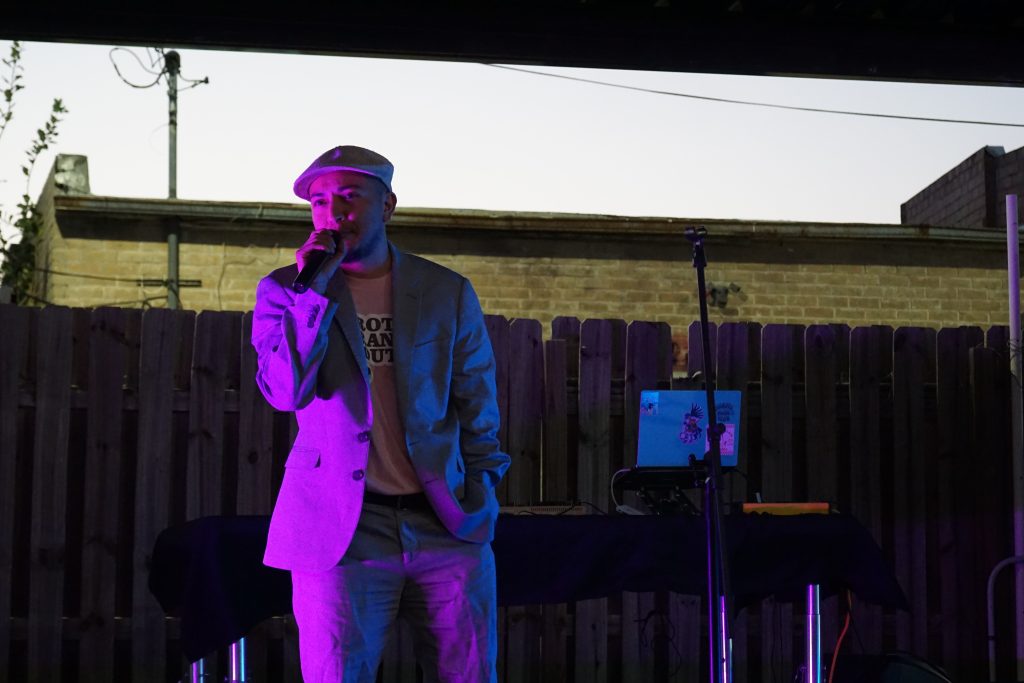
At the Gremlin, folx could learn all about community organizations: like South Texas Equality Project, the Intersectional Feminist Student Organization, Texas Civil Rights Project, Harm Reduction, Powered by People, Half the Sky TX and South Texans for Reproductive Justice; Shop from local vendors: like breathingstorm, the Druid’s Fancy and Mingy’s Crafts; and if lucky—snatch up some sourdough bread from Edinburg’s Weaving Food Webs Farm before it ran out. Golden Mirror Fortunes, aka Fernie Salinas, served as the enchanting host.
Most importantly, TDOV was a space where everybody was welcomed, accepted, celebrated and honored, including our LGBTQ+ family members who have lost their lives.
FarmHER Katie (they/them) from Weaving Food Webs Farm created an altar to remember our gender non-conforming siblings such as Tahiry Broom, Shyyell Diamon Sanchez-McCray and Lia Purcell Smith.
A Place To Be Yourself in the ‘90s
Jada Josette De La Rosa (she/her/they) and Adrian Melgar (he/him), both with GENTex and Casa Kimberly, purposefully chose Archer Park as the beginning point for TDOV marches because of its history as an LGBTQ+ spot.
In the ‘90s, Archer Park was a place where you could be yourself and be among other LGBTQ+ community members. People would also cruise there or meet other folx wanting to hook up.
“You’d get in your car, you would cruise down 10th Street—that was for the cis,” Josette said. “For the queers, and the gays, the trans and the thems, that was all Archer Park.”
The Gremlin was the final location because not only has it shown its support for the LGBTQ+ community, but it is LGBTQ+ owned.
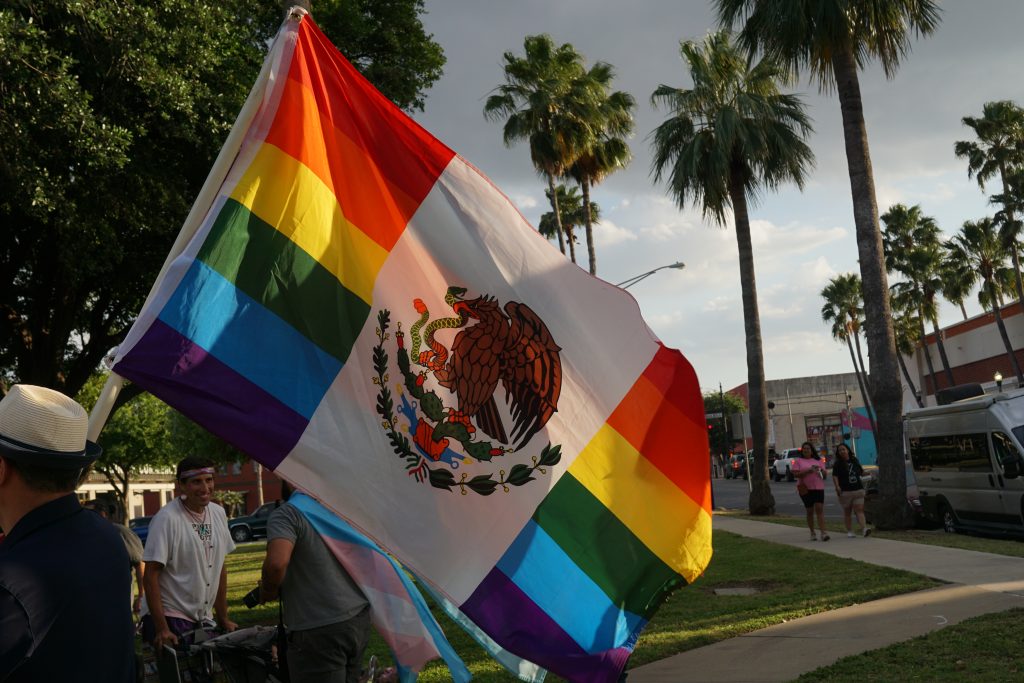
Photo Courtesy of Sol Meztli.
A Sense of Connection and To Being Visible in the RGV
The memories of lives lost did not end with those from the Rio Grande. Half the Sky preserved the memories of Palestinians who have been murdered by Israel’s genocide. Attendees could write down messages in their memory.
One of the messages shared by speakers like Azul Granados, a McAllen-based LGBTQ+ artist and STEP volunteer, centered around the intersections of being trans in the RGV.
“We’re gathered as a community, united by the unwavering belief that trans people deserve human rights; we’re also a community that’s primarily composed of immigrants during one of the most ICE-infested and anti-immigrant times in recent history,” they said.
Alyx, a proud Brownsville resident and STEP volunteer, discussed how difficult it can be for LGBTQ+ people from other RGV areas to feel a sense of community.
“We don’t have as many queer events outside of the McAllen area, and I just want to let you guys know that I hear you. I feel you,” he said. “Sometimes, it feels like, ‘man, I have to make that drive out’ or ‘why is my community not here?’ And we want to hear that. We want to know where everybody is. We want to know all of the safe spaces and have more events at these safe places, so please tell us. […] We want to be here for you and provide everything that you folks need. Trans Day of Visibility is for all of us.”

Photo Courtesy of Sol Meztli.
Get Involved With Your Local LGBTQ+ Community!
Attending events like the TDOV march is only one way to support the LGBTQ+ community. Josette mentioned a powerful tool is calling your representatives to stand up for trans and other LGBTQ+ identities.
“When organizations [and] allies get together, it’s harder to tear down a community when you have that network of people. It’s like a firewall that you cannot break down,” she said.
Trans couple Tabby Belis (he/him) and Desi Escalante (they/them) said they had been searching for community and found the march to be a safe space. Both of them have been worried and fearful for friends due to the ICE raids in the RGV.
“We’re all resisting. We’re a community that stays strong throughout the times,” Escalante said, to which Belis added, “In times like these, we need to all stay together and really push the fight, use our voices to make sure we’re heard, and to try shutting down everything that’s going on.”
After other speeches from Melgar, Lilia Ortiz from Transparent RGV, STEP’s John Taylor and Yazbel Yerb Rodriguez, the night ended with moving poetry and stunning performances from Valerie Paris, Justice Sin Fronteras, Black Dahlia Deville, Golden Mirror Fortunes and first-time performer Ace of Spades.
Gabriel Sanchez (they/she/he), an LGBTQ+ community historian and Melgar’s spouse, said the marches have always been intentional about being age-inclusive.
“It’s really important to create a family-friendly environment where people can bring their children and their parents,” Sanchez said. “There were trans kids there with their parents, there were trans parents with their kids, and there were families where people are both: a trans parent with their trans child, and I think it’s really important to make spaces for both […] and create spaces where everybody, regardless of your age or your ability, [is] part of it.”
To learn more about trans and non-binary RGV history, check out Sanchez’s Pansy Pachanga’s online archives that document how queer people have lived and thrived in the RGV.