UTRGV Students Fighting for Basic Rights on a Shifting Campus
Story by Melissa Cortes Santiago
Edited by Abigail Vela
At a time when college campuses across the country are being stripped of their diversity, equity, and inclusion (DEI) initiatives, the fear that federal funding will be withheld continues to increase. However, amidst the turmoil and uncertainty, students at the University of Texas Rio Grande Valley (UTRGV) are still trying to make change, even if they have to do it carefully.
The Intersectional Feminist Student Organization (IFSO) isn’t new to advocacy. They’ve been organizing on campus for years, focusing on reproductive justice, gender equity, and support for marginalized students. Last fall, we reported on one of their most recent projects, End the Period Poverty Project, which tackles period poverty by distributing free menstrual products across the Edinburg and Brownsville campuses. The organization has been trying to get funding from the university for the project, but given the current political climate, they’re fighting an uphill battle.
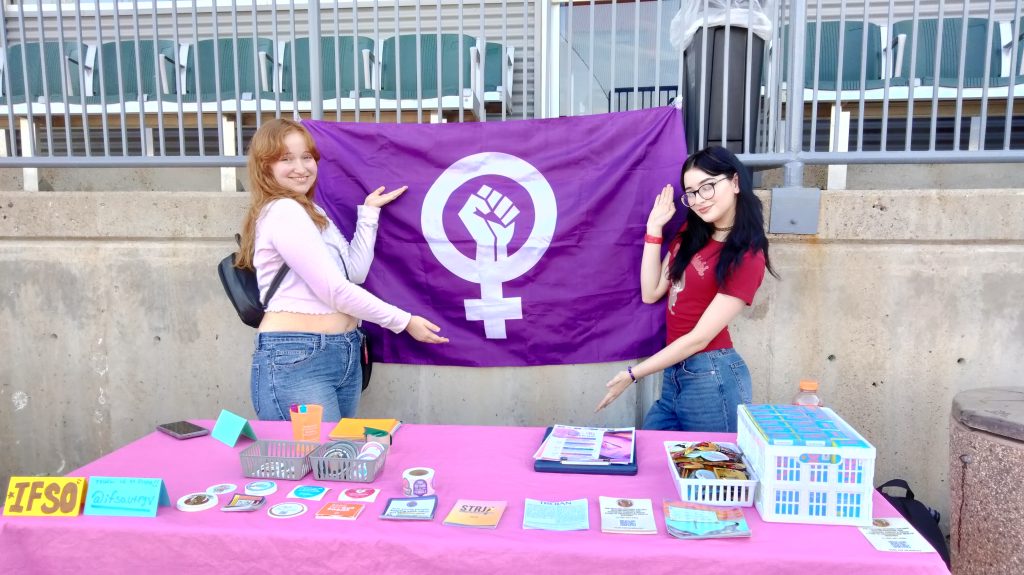
IFSO: Same Mission, Harder Fight
Texas has aggressively followed the federal government’s lead on dismantling DEI efforts, leaving public universities scrambling to comply with shifting policies. UTRGV is no exception. Student organizations like IFSO now find themselves stuck between a university administration that’s under pressure and students who still need support.
“We’ve been battling a lot with backlash,” said Cindy Ruiz (she/they), president of IFSO at UTRGV’s Edinburg campus. “Things with the Trump administration are not looking good. Faculty are trying to tiptoe around all these changes… it’s a very difficult future.”
The battle for campus funding hasn’t been easy. Last year, IFSO submitted a proposal to get permanent funding from the university for its menstrual product project, but unfortunately, it was unsuccessful. However, they’re not giving up. Backed by the Office of Advocacy and the Dean of Students, they’re still working to get into the 2026 university budget.
“Menstrual products are not where we need to be making cuts,” said Kylie Torres (she/they), IFSO’s chief of staff in Brownsville.
Barriers at Every Turn
The challenges they’ve had to face, however, don’t stop at funding.
In Edinburg, IFSO members have had to deal with uncooperative facilities and outright removal of the receptacles, where menstrual products are kept, from restrooms, especially men’s restrooms.
“We wanted to be inclusive of trans students,” Ruiz explained. “But every time we placed receptacles in the men’s restrooms, they’d get thrown away. No explanation. Just gone.”
That experience is part of a bigger pattern: policies and practices forcing student organizations to make their work palatable to university officials to receive support. Ruiz says they’ve even considered whether the word “feminist” in their name might become a liability under new rules that ban certain language in federal grants and research.
These are not hypotheticals. Last month, the Trump administration published a list of “prohibited words” for federally funded studies, which impacts how academic departments operate and how orgs like IFSO speak about their work. Some of the banned words are gender diversity, social justice, intersectionality, and racial identity.
“We’re not scared,” Ruiz said. “But we’re cautious. We try to comply, we negotiate. We haven’t done anything harmful. We’re just trying to help people.”
That help, by the way, goes far beyond their work on campus. Ruiz traveled to Austin on April 2nd to speak with lawmakers about bills criminalizing abortion funds, while supporting legislation that would allow minors access to contraceptives and protect people who’ve had abortions from civil lawsuits.
This is happening as UTRGV deals with another controversy: reports that several international students have had their visas revoked. It’s another sign that the current administration will continue pushing its agenda on public universities unless campus officials stand up for their students.
So what keeps an organization like IFSO going?
“I’ve had multiple surgeries, a tumor on my ovary, I’ve bled for months,” said Torres. “That made me want to fight harder. If I’m suffering, who else might be suffering? I want to help them.”
Ruiz echoed that sentiment: “All the obstacles I’ve overcome, they’ve made me realize that no matter how much people try to make me feel miserable, they never will. I’ve already been at my lowest, and I survived.”
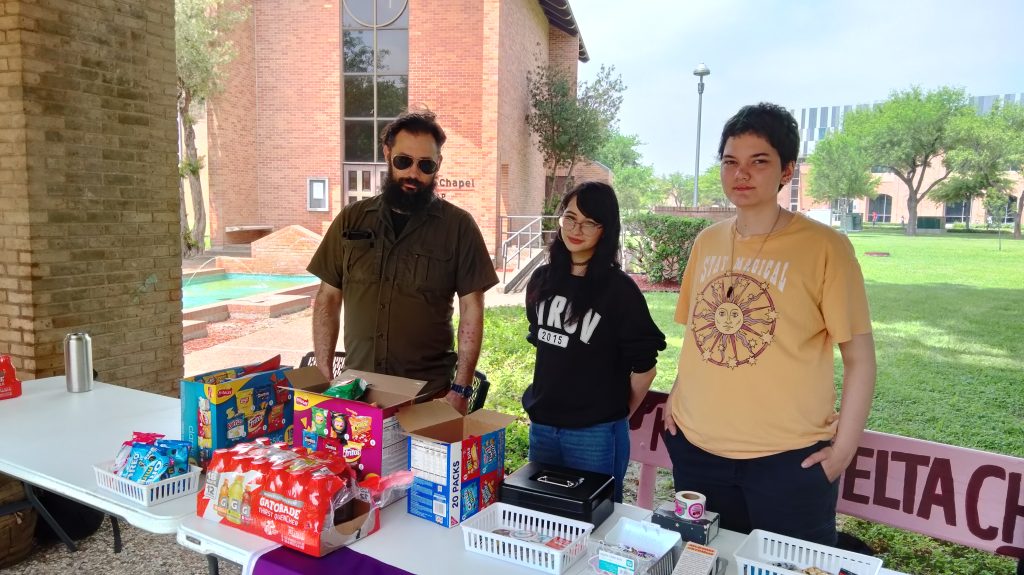
IFSO: Continuing the Fight
IFSO’s work isn’t just about period products, it’s about refusing to disappear, even as the government tries to make it harder to exist, be seen, or speak out. It’s about making sure others aren’t erased either.
The attacks on public education, whether through banned words or slashed budgets, aren’t going away on their own. Real resistance is students and community members who keep showing up, even when it feels like the odds are stacked against them.
“Community and unity — because at the end of the day, if you don’t have community, you don’t have a reason to keep going,” said Ruiz. “If you’re receiving backlash or hate because of your activism, just know: you’re not alone.”