Living on Pause: How Fear of ICE Shapes Everyday Life in the Rio Grande Valley
Story by Zoraya Berlanga
Edited by Abigail Vela
- August 28, 2025
“No pensé que ICE estuviera aquí en Brownsville.” [“I didn’t think ICE would be here in Brownsville.”]
Dulce from Brownsville, TX
President Trump has been vocal about immigration reform, often targeting Mexicans in his speeches, calling them rapist and criminals. While it’s important to recognize that immigrants are not only Mexican or Latino, it’s also hard to ignore how his anti-Latino rhetoric has shaped immigration policies.
In the RGV, the presence of immigration enforcement has created a constant atmosphere of fear. In Brownsville, a city often referred to as a sanctuary, many undocumented families now struggle to carry out their daily routines. Dulce, a Brownsville local, has spent most of her summer inside her home, afraid to go anywhere for fear of deportation.

When Safety Turns to Fear: Life in Brownsville Under Heightened ICE Activity
“Tengo miedo de salir para H-E-B. Siempre suben que ICE está en un lugar en Facebook, y prefiero major no arriesgarme,” Dulce shared.
[“I’m afraid to go to H-E-B. There are always post on Facebook saying ICE is somewhere, and I’d rather not risk it,” Dulce shared.]
She’s been wanting to visit the beach since the summer began, but worries she might get pulled over and deported. Dulce has lived in Brownsville for over 20 years. She shares that she hasn’t felt this kind of fear in a long time, not since she first arrived. Over time, the city had made her feel safe, and raids were rare or unheard of. Now, that sense of safety has disappeared.
Social media has played a complicated role in this new reality. On the one hand, platforms like Facebook help inform community members about where ICE might be present. On the other hand, the constant flood of posts has contributed to growing anxiety.
“No quiero ni ir al gimnasio. Tengo miedo que me separen de mi familia. Tengo dos meses sin salir a comer, ni por una nieve.”
[“I don’t even want to go to the gym. I’m afraid I’ll be separated from my family. I haven’t gone out to eat, not even for ice cream, in two months.”]
Entre Libros y Miedo: Navigating College Life under DACA
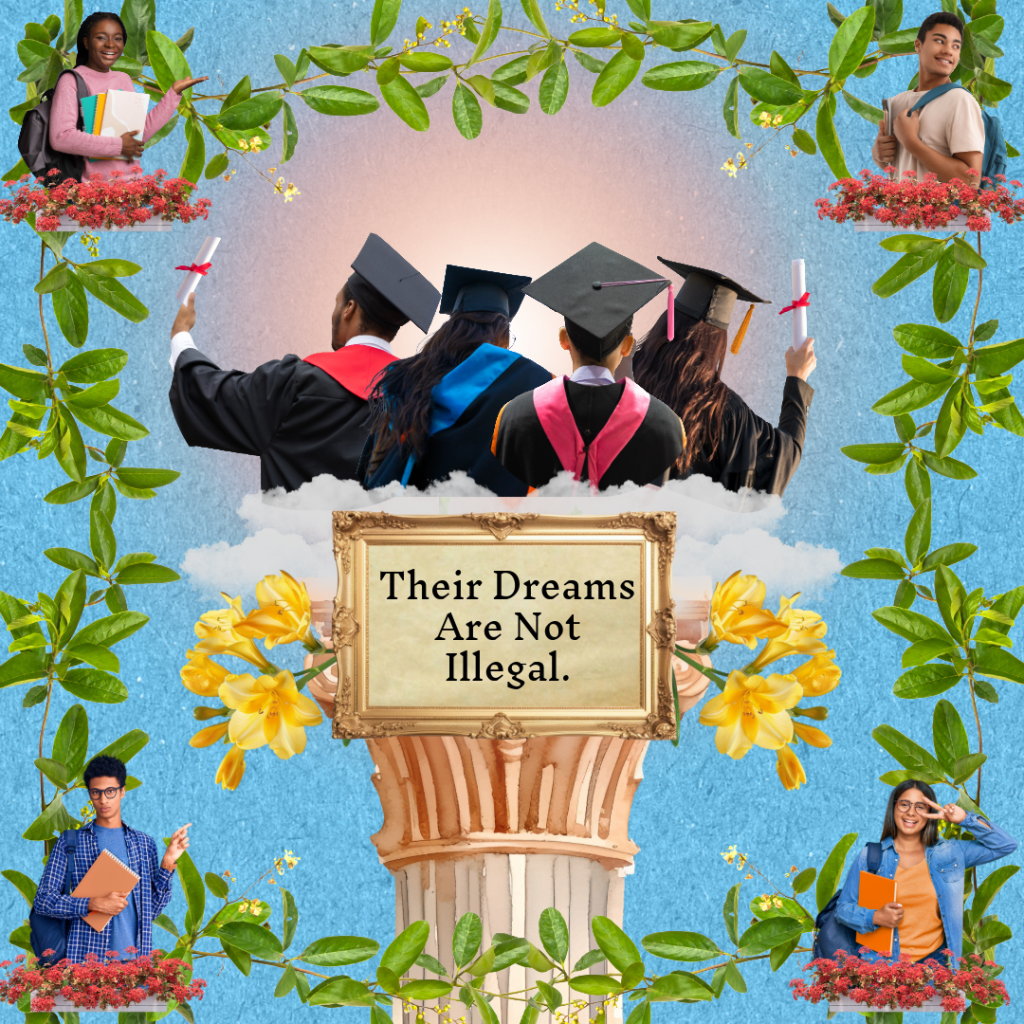
While older undocumented adults like Dulce are adjusting their routines out of fear, younger generations are navigating a different kind of uncertainty. For undocumented DACAmented students in the Valley, fear doesn’t always come in the form of raids or checkpoints; it shows up in paperwork, deadlines, and the constant reminder that their futures are tied to policies that could change overnight.
Many of these students carry the weight of their family’s hope while managing the pressures of college life without the safety nets that others take for granted. For some, even attending school requires driving through internal checkpoints. For others, the stress lies in not qualifying for federal aid or being unsure whether they’ll be able to stay in the country after graduation.
“I was used to renewing my license and DACA every two years; it had become like a routine,” one student shared. “But during Trump’s first presidency and his attack on DACA, I started to get afraid as each deadline approached. And I’ve felt like that ever since. I get scared to renew, I feel like one day I will be told I have to leave…or that I’ll lose everything.”
Even with institutional support, many DACA students choose to distance themselves from university services out of fear of exposure.
“The university sends out emails about resources for DACA students all the time,” said another student. “I just don’t go. I’m scared that I’ll be outed, you know? It sounds silly because DHS (Department of Homeland Security) already has all my info, but I’m still afraid of people around me finding out. I’ve heard of people reporting undocumented folks, I’d rather just blend in.”
In The Valley, Resilience Becomes Resistance
The past few months have been challenging for the Rio Grande Valley. Families have been separated. Others are quietly struggling to make ends meet, afraid to go to work, hesitant to seek help, and unsure of what tomorrow may bring.
According to Transactional Records Access Clearinghouse (TRAC)’s immigration data, more than 1,000 people have been detained in South Texas in recent months, many during workplace raids or targeted enforcement actions. These numbers represent lives, parents, students, workers, not statistics.
Yet amid the fear, there is also resilience. Communities are supporting each other in quiet, powerful ways: From carpooling to avoid being checked, to sharing safety alerts on WhatsApp, to simply offering a warm meal or a listening ear. In a region often defined by borders and checkpoints, people are carving out spaces of dignity, love, and resistance. They are not just surviving, they are refusing to be erased.