May 1, 2024

LNG Industrialization: What it means for the RGV

Words by Melissa Cortes Santiago

Edited by Abigail Vela

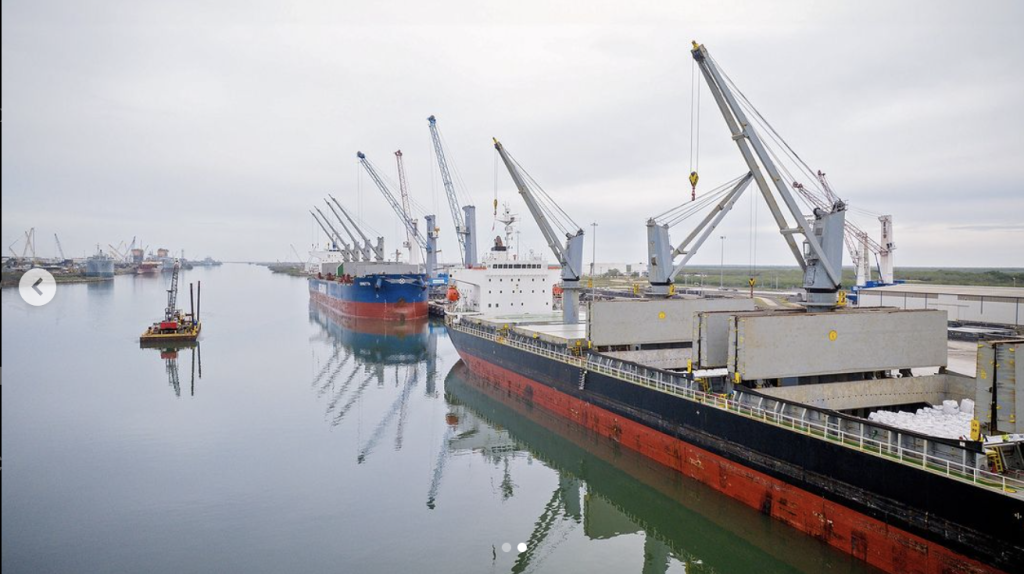
A cargo arriving at the Port of Brownsville. Image courtesy of the Port of Brownsville’s Instagram page

Editor’s note: The original version of this article failed to center the perspectives of indigenous and community groups. To better highlight these perspectives, we have edited and rewritten the article. We want to extend our apologies to our community members for this error and recommit to our mission of highlighting and uplifting the voices of the RGV.

It’s been almost 10 years since plans were proposed to construct Liquefied Natural Gas (LNG) export terminals in the Port of Brownsville. What followed has been a tumultuous journey of environmental impact reviews, loss of funding, controversies, and protests from countless community members and organizations denouncing the proposals. Thanks mainly to resistance from Indigenous groups and environmental advocates in the RGV, three LNG export terminal projects have been suspended, the most recent happening in March 2021. 


However, two major projects are still proposed for the Port of Brownsville: Rio Grande LNG and Texas LNG. In July of last year, Rio Grande LNG announced that it had secured $5 billion in financing; however, this remains years from completion. In January, the Biden administration announced a pause on LNG export approvals; however, this does not affect the facilities already approved at the Port of Brownsville.  


Despite this, the Carrizo Comecrudo Tribe of Texas and environmental activists, such as the South Texas Environmental Justice Network (STEJN), continue campaigning against the LNG terminals, hoping to thwart the irreversible ecological impacts they will have on our communities. 

“The whole thing is very destructive. It’s very polluting,” said Dr. Christopher Basaldú, member of the Carrizo Comecrudo Tribe and a founding member of STEJN. “There are a lot of ancient village sites out in the area that are just being destroyed or bulldozed.”

A person standing behind a microphone addressing a crowd of protesters.
Dr. Basaldu speaking out against a land exchange between the Texas Parks& Wildlife Commission and SpaceX. The land exchange would give away more of Boca Chica Beach to the tech giant. Photo courtesy of South Texas Environmental Justice Network’s Facebook page.

What Exactly is an LNG Export Terminal? 

Natural gas is obtained from fracking, turned into a liquid form, and stored in specialized containers. This liquid is shipped to destinations worldwide, reheated to return to its gas form, and then transported to distribution companies. If constructed, Rio Grande LNG will be one of the largest facilities in the country and a major global exporter, particularly to Europe and Asia. 


These two facilities for Brownsville, the fracked gas export terminals, 100 percent of that gas is for export; none of it’s for local consumption,” said Dr. Basaldú.


The Port of Brownsville is an area of interest to natural gas companies due to its location on the Gulf of Mexico, which makes transportation easier. The area is the last major location along the Gulf that remains untouched and free of the fossil fuel industry.


Who is trying to bring it to the RGV? 

The ones responsible for the construction of these terminals are both Houston-based companies. NextDecade owns Rio Grande LNG, and Glenfarne Group owns Texas LNG. 


The companies have experienced difficulties establishing these projects, struggling to secure funding just last year, and have been involved in controversies. NextDecade reportedly wrote ghost letters for RGV officials, expressing support for the Rio Grande LNG, had the RGV officials sign them with minimal to no edits, and sent them to the Federal Energy Regulatory Commission. 


Some of the delays and financial difficulties these companies have experienced are due to the tireless work of local activists. Members of the Carrizo Commecrudo Tribe, such as Tribal Chairman Juan B. Mancias, Dr. Basaldú, and prominent environmental organizer Bekah Hinojosa, have traveled to Europe to persuade banks and other financial backers to withdraw their support. Mancias and Hinojosa secured the international bank BNP Paribas’s withdrawal from Texas LNG in 2017 and the bank Societe Generale’s withdraw from Rio Grande LNG in 2023.


“Even bank executives that make decisions on where literally millions upon billions of dollars go to fund these projects, they don’t care about the environmental impact,” said Dr. Basaldú. “They only care about making money.”

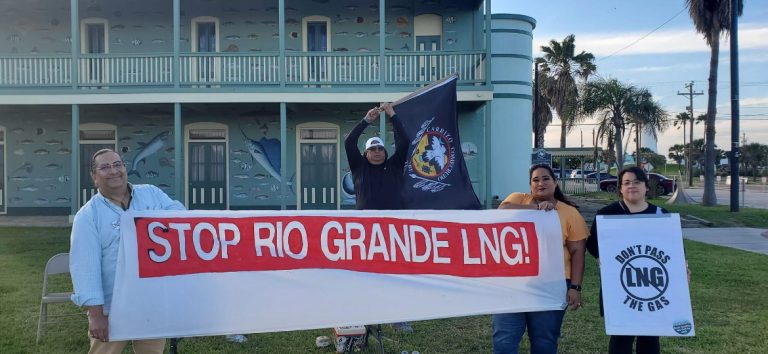
Protesters holding a banner that reads “Stop Rio Grande LNG”
Members of the Carrizo Comecrudo Tribe of Texas, including Dr. Basaldú and tribal leader Juan Mancias, along with other environmental activists, protesting LNG terminals in Port Isabel. Photo courtesy of South Texas Environmental Justice Network’s Facebook page.

Do the LNG projects have support? 

Several politicians have expressed support for the construction of the terminals. In previous years, through press releases, Sen. Ted Cruz has expressed his approval for the project, stating, “These projects will further economic growth, help employ thousands of hardworking men and women, lower energy costs, and increase America’s energy independence.”


Rep. Henry Cuellar has sponsored legislation advancing LNG export plans and speaks about the benefits of LNG exports. 


The support for these projects once again highlights elected officials’ refusal to listen to the concerns of the Carrizo Comecrudo Tribe and community members. 


“Our elected officials that green light these projects here in the local community, they themselves don’t know the history of the land. They don’t want to learn. They ignore us,” said Dr. Basaldú.


What impacts will the LNG projects have? 

“I’m not blaming our community down here for not knowing, you know, our media is complicit in 

being a booster for the militarization and dehumanization of people of color and poor people and queer people, and disabled people,” said Dr. Basaldú.


According to a report, here are some of the major impacts of these projects: 


  • Destroying sacred Indigenous land: Texas LNG was proposed to be constructed on a burial site of the Carrizo Comecrudo Tribe. The site is currently listed as endangered by the World Monuments Fund


  • Damage to our ecosystem: Construction of these projects will destroy habitats for endangered species such as the Ocelot. The wetlands and part of the wildlife corridor will need to be paved over once construction begins, severely impacting wildlife in the area. 


  • Irreversible Pollution: The terminals will release an immense amount of greenhouse gases that are terrible for climate change. According to the report, it will be as much as 40.4 million cars yearly! 


  • Health impacts: LNG terminals emit harmful pollutants into the air that can increase the chances of respiratory disease, heart disease, and cancer. This puts community members’ health at risk. Rio Grande LNG and Texas LNG would be the largest single-source polluters in the Valley. 


Show Up on June 4

On June 4th, at their regular meeting, the Cameron County Commissioners Court will vote on approving tax abatement/tax break agreements with both Texas LNG and Rio Grande LNG. As Cameron County raises property taxes for the general public, the multimillion-dollar gas industry is asking Cameron County to give them tax breaks. The gas industry will use our public resources like roads and water without paying their fair share to maintain or fix Cameron County infrastructure, just so they can grab higher profits. 


If community members want to voice their opinions about this issue, they can do so in person at the June 4 meeting, which begins at 9:30 a.m. at 1100 E. Monroe Street in Brownsville. 
 

Mira Más De Este Autor

A brown dog lying on a bed of grass next to their customized blue wheelchair.
Social Justice

How Small Sullivan Rescue Helped Take Down Fake Rescue in Arizona

Last summer, Yaqui Animal Rescue investigated a fake animal rescue in Arizona and hoarding over 50 dogs in deplorable conditions. Their findings sparked an outcry on social media and led to the arrest of the person responsible for horrific animal abuse. The case received media attention from all over the country. Here’s a deep dive into how the animal rights activists from the RGV made it all possible.

Support the Frontera

We rely on generous donations to publish original works each year and support artists in the Rio Grande Valley. Our community's voices are essential in shaping the history and narrative of the frontera!

Donate

Related Posts

Op-Ed: Democratic Socialism, A Political Alternative

December 15, 2025

New York City’s mayor-elect Zohran Mamdani brings to light the rapid expansion of democratic socialism in America.

Your Body Has Rights in Texas and in the RGV

December 12, 2025

In Texas and in the RGV, abortion access faces challenges, but reproductive justice organizations refuse to stand down, especially with…

How the RGV Weathered the SNAP Shutdown

December 11, 2025

A look at how SNAP disruptions during the federal shutdown left Rio Grande Valley families in confusion, and how local…

View more

newsletter

This field is hidden when viewing the form

Next Steps: Sync an Email Add-On

To get the most out of your form, we suggest that you sync this form with an email add-on. To learn more about your email add-on options, visit the following page (https://www.gravityforms.com/the-8-best-email-plugins-for-wordpress-in-2020/). Important: Delete this tip before you publish the form.
Name(Required)