July 30, 2024

Quién Es Tu Gente: The Sustainable Farms of the RGV

Words by Nina Alegre

Edited by Abigail Vela

¿Quién es Tu Gente?” is an article series highlighting people and organizations creating safe and inclusive spaces in the RGV. This series hopes to combat the all too common idea of “no hay nada aqui en el Valle ” and encourage our readers to go out and find their gente.

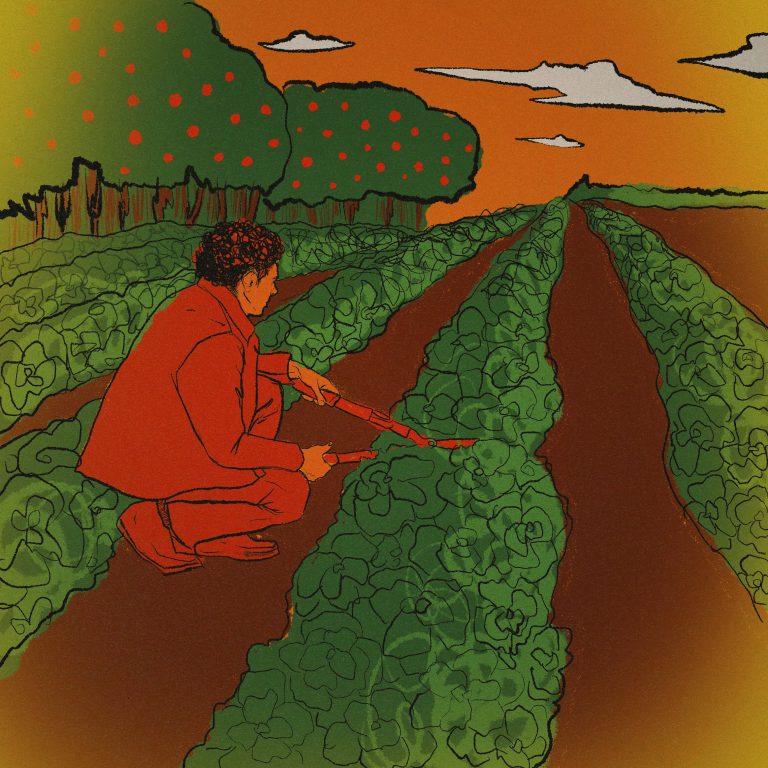
A farmer kneels as they tend to their crops, a red-orange sky overhead.
Illustration by Sara Barriera.

We can all attest to the lack of sustainably sourced food in the Rio Grande Valley, with half of the RGV considered a food desert and harmful chemicals reaching our food. These problems worsen when we think of the amount of food waste that occurs nationwide due to bad weather, processing problems, overproduction, overbuying, poor planning and date label confusion.


However, we should not despair. Various non-profit organizations and farms in the Valley work to tackle these and many other issues in their agricultural practices. Sentli Center for Regenerative Agriculture and The Hub of Prosperity are only a few of the many people that work hard to get fresh produce into the hands of RGV residents. 


By learning about what these organizations and farms are doing, we grow closer to our region and farmers. More than ever, it is crucial to have easy access to fruits and vegetables grown in our communities and backyards rather than giving our hard-earned money to all the fast food shops littered across our frontera.

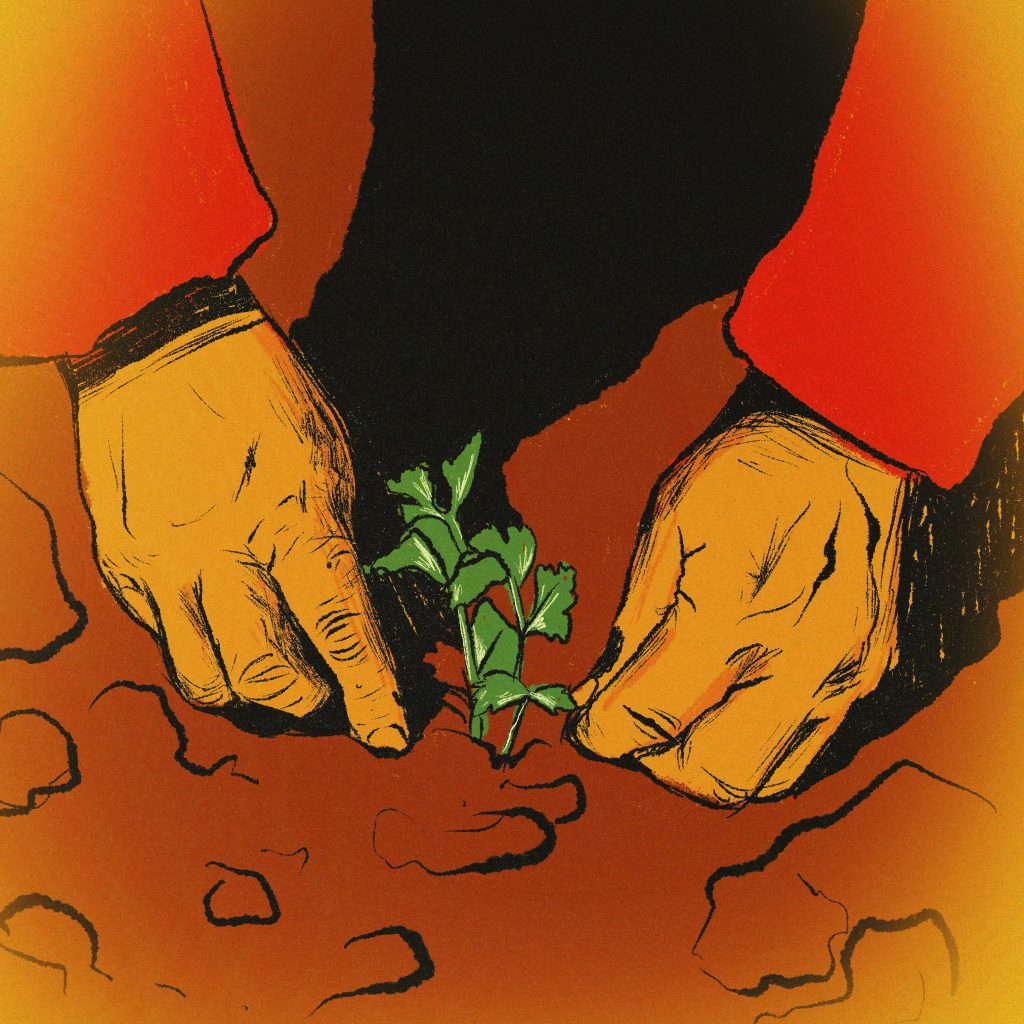
The hands of a farmer in the soil, taking care of a small growing crop.
Illustration by Sara Barriera.

A Community Driven and Supported Food System

There have been attempts to bridge the gap between RGV farmers and the community by getting sustainably sourced food into our kitchens. These attempts exist through the farmers’ markets that operate along the RGV, such as in Brownsville, where residents of this city can enjoy fruits and vegetables harvested by people who grow them straight from this specific part of the land. 


But sometimes, these attempts happen on a much bigger scale, such as in the case of the Sentli Center for Regenerative Agriculture. Sentli’s Executive Director, Shakera Raygoza (she/her), said that the non-profit organization recognizes a significant disconnect between people and the food they consume. Shakera said, “When we purchase food from the grocery store or roadside stand, we don’t know the farmers who grew it or the chemicals that were applied and their effect on the environment.” 

Shakera further mentioned that the center has a vision of having “a community-driven and supported food system” where food is grown without the use of harmful chemicals in a way that protects the environment and improves the soils while maintaining the dignity and quality of life of farmers and farmworkers. The use of harmful chemicals prevents sustainable food from reaching our plates, as proven by the Environmental Working Group (EWG), which states that 10,000 additives are allowed in U.S. food to make it more colorful or extend shelf life.


The vision for Sentli came from Raygoza’s need to increase access to local food during the pandemic. “When pandemic mandates shut down farmers markets and supermarket shelves were bare due to supply chain disruptions, lots of folks began to reach out to us to buy food directly from the farm,” she said. During COVID-19, the U.S. experienced an increase in food insecurity from 11% to 38% in just two years, which made it hard for people to access food.


Now, more than a year after the World Health Organization (WHO) declared an end to the global Public Health Emergency (PHE) for COVID-19, Raygoza continues to invite the community to Sentli to participate in the center’s free monthly workshops on sustainable farming and local food preparation. Sentli also offers farm tours for school field trips and hosts many community events

Sustainable Food Practices and Food Waste Records

According to the United Nations, a sustainable food system delivers food security and nutrition for everyone. This food system also encompasses everything from processing, packaging and transporting food to consumers. Whenever a non-efficient food system is in place, we risk chronic hunger, which affects the entire world population. It is estimated that at least 309 million people are facing chronic hunger in 72 countries.


Stephanie Kasper (she/her), manager of The Hub of Prosperity farm in Edinburg, says the farm aims to research, educate, and build community around sustainable agriculture and equitable food systems in the RGV. The Hub of Prosperity involves the community in sustainable urban farming practices through several workshops focusing on composting strategies for supporting soil health. By attending these workshops, people can become members of the community garden or the farmer incubator program. 


According to the EPA, food waste “is food not ultimately consumed by humans that is discarded or recycled, such as plate waste, spoiled food, or peels and rinds considered inedible.” To prevent food from reaching landfills, Kasper recommends composting or creating an organizational system such as labeling jars and food items. She also said, “If you end up with too much of something, don’t be afraid to cook an extra big batch and share with friends and neighbors.”

Farming for the Future

If you want to start farming for your future, you should know that many non-profits and farms would love to have you join in on their activities. If you ever doubt that farming is the right path for you, don’t be afraid to try your hand at it because we all start somewhere. 


Some places where you can start farming are Sentli, The Hub of Prosperity, or, if you have children, Semillitas Urban Farm, which hosts activities for children to connect with nature. You can start by attending any of these farms or signing up for an urban gardening class at La Posada Urban Farm in Brownsville. Many places would love to have you, your family and friends join.

Mira Más

Support the Frontera

We rely on generous donations to publish original works each year and support artists in the Rio Grande Valley. Our community's voices are essential in shaping the history and narrative of the frontera!

Donate

Related Posts

Yes, It’s Time to Vote Again: 2026 Primary Elections in the RGV

February 25, 2026

As the primary elections are coming to a close, Legislation and Policy Beat Writer Joel Morales gives us a refresher…

Op-Ed: The Quiet Crisis in RGV Elections: Uncontested Races Are Weakening Democracy in South Texas

February 2, 2026

Andrea Torres, a Valley native, organizer, and advocate for civic engagement in South Texas, wrote the following op-ed that addresses…

Op-Ed: Etienne Rosas: An Alternative Candidate for the 34th Congressional District

January 27, 2026

Learn more about Democrat Etienne Rosas, who is attempting to break into the Rio Grande Valley’s political scene against Vicente…

View more

newsletter

This field is hidden when viewing the form

Next Steps: Sync an Email Add-On

To get the most out of your form, we suggest that you sync this form with an email add-on. To learn more about your email add-on options, visit the following page (https://www.gravityforms.com/the-8-best-email-plugins-for-wordpress-in-2020/). Important: Delete this tip before you publish the form.
Name(Required)