The 3 Proposed Bills that Pose a Threat to Abortion Funds
Story by Melissa Cortes Santiago
Edited by Abigail Vela
Over the last four years, reproductive healthcare has been under constant attack. First, it was the infamous 6-week abortion ban here in Texas. Then, less than a year later, it was the overturning of Roe v Wade, the hallmark Supreme Court case that legalized abortion throughout the country. Shortly after, multiple states began implementing their own abortion bans, ranging from 6-week bans to total bans with extremely limited exceptions. Now, close to three years later, the Texas Legislature is once again targeting abortion care and anyone who helps facilitate it.
Under Senate Bill 2880, Senate Bill 31, and its counterpart, House Bill 44, abortion funds, online pill providers, and even individuals who support someone seeking care could face criminal charges, punishable by up to life in prison. Although framed by lawmakers as efforts to clarify Texas’s confusing abortion ban language, in reality, these bills are yet another attempt by the state to restrict reproductive rights.
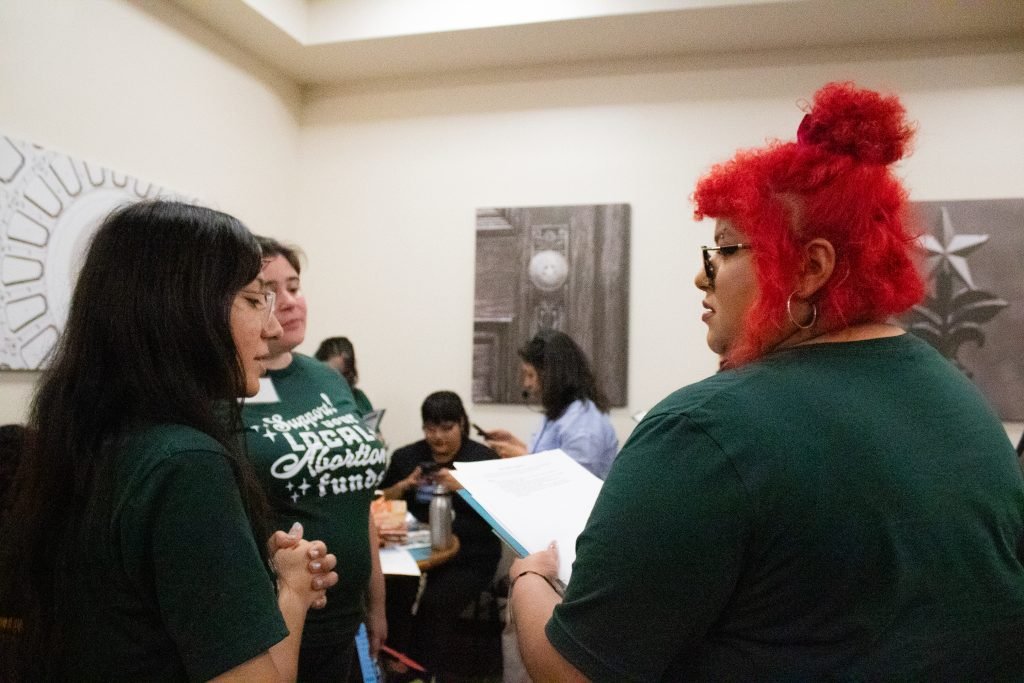
Texas Abortion Funds Under Attack
Texans face one of the most restrictive landscapes in the country when it comes to reproductive healthcare. Abortion is banned in nearly all cases, with exceptions for life-threatening cases, but those are so vague that many doctors are afraid to intervene, resulting in severe medical conditions and death for pregnant people.
This is exacerbated in our communities in the Rio Grande Valley (RGV). Our region has some of the nation’s highest levels of uninsured people, few healthcare providers, and long travel distances. These barriers make it difficult for people to access the care that they need; that’s where abortion funds like Frontera Fund come in.
“We are an abortion fund that helps people pay for their abortion care outside of Texas, including lodging and transportation,” said Cathy Torres (she/her), organizing manager at Frontera Fund. “Our service area is the entire border, from Brownsville to El Paso.”
But that work is under threat. Senate Bill 31 and House Bill 44 would revive a century-old law that criminalizes abortion funds.
“If this bill were to pass as written, we would have to cease funding once again because of the risk of criminalization,” said Torres.
She explained that the vague language could not only target abortion funds, but also potentially criminalize anyone who supports someone seeking care, even the pregnant person themselves. Despite the fear and frustration, Torres and her team continue to provide this valuable resource.
“We’re still funding abortion, and we’re still unapologetically doing so,” she said. “All we want to do is make sure our community is able to access abortion care with dignity and safety.”
Frontera Fund also engages in reproductive justice organizing in the RGV, efforts that, according to Torres, are essential for building trust and awareness in our region, which is often overlooked.
“We’ve been through this before. We are prepared to pivot. But for now, we’re continuing the work,” she said.
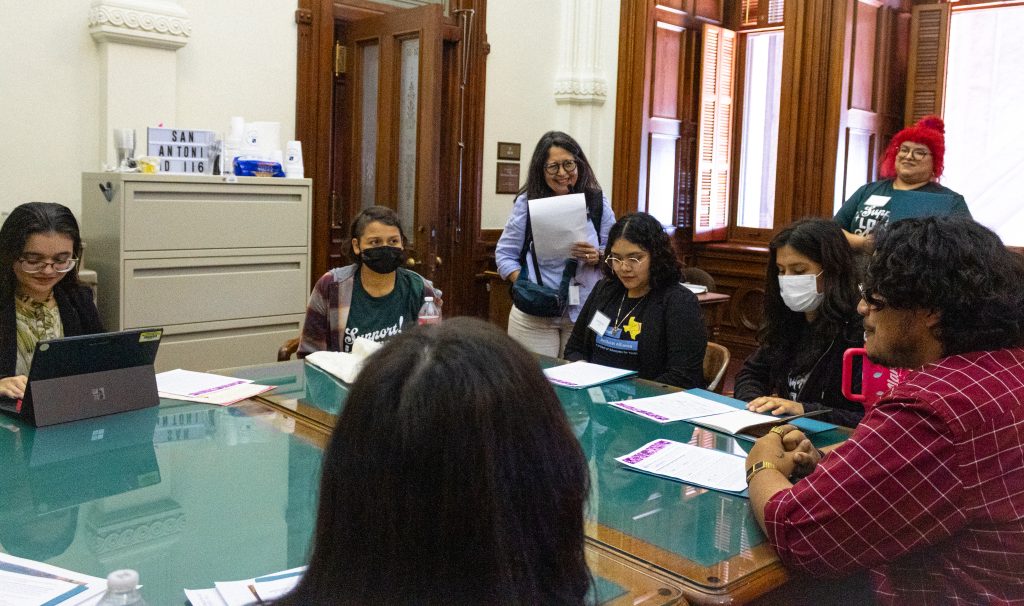
Building Grassroots Systems of Community and Collective Care
While abortion funds like Frontera operate within structured networks, some community members are stepping up on their own, building grassroots systems of care to meet the needs of the community.
One of those people is Maice Blohowiak (she/her), a freelance graphic designer who distributes pregnancy tests, Plan B, and condoms to people who need them.
“I feel like I’ve helped a handful of people who I’ve been close to and people I don’t know at all,” she said. “I don’t want people to feel scared to ask for help.”
For Blohowiak, this work is deeply personal. A pregnancy scare in high school forced her to imagine a life shaped by a decision she had no say in, which, according to her, radicalized her.
“It’s scary to think that your whole life is just stripped away to take care of something that you didn’t intend to give life to,” she said.
Though she isn’t tied to any organization, Maice has no intention of stopping, even as lawmakers introduce bills that could criminalize her work.
“Arrest me,” she said. “At this point, I’d rather die on the hill I believe in than watch my friends and close relatives suffer.”
Her approach reflects what many in our communities have long known: in a state that continues to strip away our rights, mutual aid and community care aren’t just alternatives, they’re a means to support each other and thrive.
The Path Forward for Reproductive Care in the RGV
Despite the fear and legal uncertainty right now, Torres and Blohowiak both emphasized that the most powerful tool they have is each other. In the RGV, where there have always been systemic barriers to healthcare, the strength of the community keeps care accessible, even when the law tries to make it impossible.
“We are powerful in our collectivity,” said Torres. “What’s so unique about organizing in the Valley is how community-centered and cross-movement it is. That’s what allows people to get the care they need, with dignity, with confidence, and with trust.”
Blohowiak agrees. “We don’t know where this could lead us. But I think sticking together and staying in community will be the best path forward.”
As the Texas Legislature continues to attack reproductive healthcare, here in the RGV, we must continue to band together. Whether through established organizations like Frontera Fund or smaller grassroots care, the fight for reproductive justice is still alive. And it’s being led by the very people these laws are trying to silence.
If you want to learn more about Reproductive Justice in the RGV or want to donate to Frontera Fund, check out their website or Instagram page.