House Bill 1280 went into effect just four years ago, just thirty days after Roe v. Wade was overturned in 2022. It is a trigger law passed specifically in Texas that fines doctors up to $100,000 with up to 99 years in prison if they perform an illegal abortion. There is no exception for incest or rape. There are only two exceptions for an abortion to be performed: 1) the pregnant person is at risk of death, or 2) to prevent the substantial impairment of the function of the body.
Kate Cox, after discovering her fetus could be born with major issues that would negatively impact her health, was denied an abortion. She filed a lawsuit that intended to fight for her to get the procedure done and legally protect her doctor. A lower Texas court gave her the OK, but once Texas Attorney General Ken Paxton caught wind of it, he threatened to sue any doctor who would give Cox an abortion. After the Supreme Court sided with Paxton, Cox inevitably fled Texas to obtain an abortion. This happened in 2023.
It is now 2026 and nearly all abortions are banned. I’ve known people who have gotten safe abortions done right here in the Valley before the overturning of Roe v. Wade and the introduction of House Bill 1280, as well as after. I took the time to interview them to get an understanding of how easy or difficult it was for them. The identities of these citizens are censored to protect their safety.
Sage’s Story
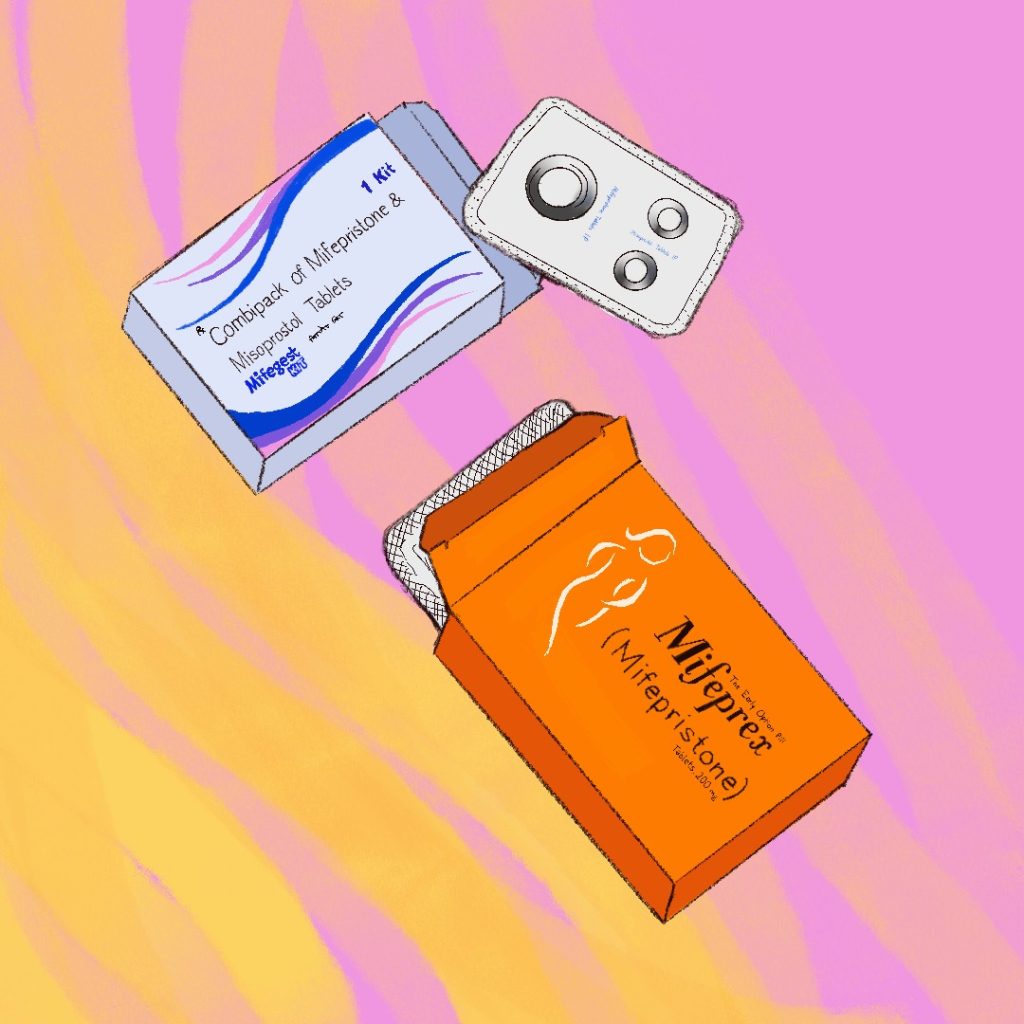
Sage had an oral abortion done over a year ago. Her partner at the time, a medical student, helped her to find abortion pills through a third-party website. She was lucky to not have to pay anything out of her pocket. Sage said access wasn’t difficult because she already knew local organizations like Frontera Fund and South Texas Reproductive Justice (STRJ) that would help her through it. Although there were avenues Sage could take to have an abortion at this time, she was still riddled with fear and anxiety.
Sage did not feel comfortable going to the doctor to get herself checked. She was so afraid of what would happen to her because of how hot the climate around abortion was at the time (and still is), especially with the news of state lawmakers trying to classify abortion as homicide in several states. She did not feel comfortable confiding in her family, as she believed she would have been disowned due to their strong belief in abortion bans, which were so firm they voted for Trump solely on that basis. Her partner at the time was all she had and if it weren’t for the financial access she had through him, she would have clung to Frontera Fund in desperate hope she’d make it through.
Just in case that wasn’t enough, the Texas Heartbeat Act had also been passed, which banned all abortions after the detection of a fetal heartbeat. Normally, this is at the six-week mark of a pregnancy, which should concern people given how rare it is to catch a pregnancy that early, the false negatives that can occur in pregnancy tests, lack of access, etc.
Getting a hold on abortion pills was Sage’s chance to choose what was best for herself and her fetus. By this, Sage meant that she did not want to bring a child into the particular life she was living.
“I’ve always been pro-choice, but I’ve never wanted to have an abortion myself,” Sage said.
Abortion is scary like surgery is scary. You’re putting your body in the hands of someone else. Imagine being all alone taking the pills for it. Sage was already dealing with the heaviness of cancer, which was plaguing her own mother, as well as working a job as a barista. So many people, out of pure love and respect for their unborn children, will choose to terminate their pregnancy so that their child is saved from an unfair shot at life, as Sage put it. Sage expressed that she was sad during this time because her first pregnancy was going in a direction she didn’t intend. She was disheartened; this was her first experience so close to motherhood, something she’d actually want to do later in life.
It’s not enough to get the pills, though. Really, it isn’t. One does not take these pills and go about their merry way, not all the time, and that was not the case for Sage. There is a level of care that must go into the person having the abortion. Sage said she was “writhing in pain” on her bathroom floor and did not understand how normal it should have been. The abortion was a success, but for months afterward she experienced painful menstrual cramps, which led her to believe maybe there was tissue stuck in her that did not make it out during the abortion.
It took six months for her to get over the fear and make an appointment with a reliable and safe doctor who agreed to see her “under the table” to give her a check. The day before this appointment, she had a “crazy fever,” went to the ER, and discovered she had a kidney stone blocking her bladder. Her bladder was infected, doubled in size, and she almost got sepsis. She then went over a month with a nephrostomy tube inside her and had two surgeries.
“Essentially, if I hadn’t been afraid, I could have caught this kidney stone earlier, but because I was mistaking it for something to do with my miscarriage, I literally almost died… I think it [the kidney stones] had to have been underlying because I did find out I have a vitamin D deficiency. But the whole reason I never went to get my cramps checked out, or anything, is because I was afraid of, like, what would happen if they found out I hadn’t recovered [from the abortion].”
None of this is Sage’s fault. Her fear is very real and very common, and it came from somewhere powerful. The Supreme Court’s decision to overturn Roe v. Wade.
“It’s Texas. If [another state] is considering a death penalty, then what the fuck is gonna happen here?” Sage questioned.
Teen Pregnancy & Poverty
6 out of 10 unplanned pregnancies end in abortions. Texans barely have any access, and if there is any they can find, the next concern would be money. In the 2020-2024 period, the RGV was in the worst 25% of Texas counties with families living below the poverty level. This is improving over time, but compared to the rest of the nation, we are in deep water. Additionally, as of 2024, the teen birth rate in Hidalgo county alone was 25.0 per 1,000 teens. Why do you think that is? We have a lack of sex education, which makes sense given Texas and the Valley are regionally religious. Sexual shame runs rampant in our communities, so of course sex education is not a priority. Pair that with poverty and little to no access to healthcare, much less reproductive care; these problems make sense. As much as this tracks, none of it should be normal.
Lilah’s Story
Lilah had her abortion when she was in college at age nineteen, way before the overturning of Roe v. Wade and the introduction of House Bill 1280. She took a pregnancy test in a bathroom at her university because she didn’t feel safe testing at her house or her ex-boyfriend’s, with whom she was in a very abusive relationship at the time. She didn’t feel okay with bringing a child into the world because of school and the abuse she was enduring. Her ex-boyfriend’s mother was a victim of abuse, he was abusing her, and she didn’t want the cycle to continue and touch their child.
“I knew I wanted to be a mom, but I knew it wasn’t time. And I knew if I wanted to be a good mom, like I wouldn’t do that to my child.” Lilah shared.
Lilah took advantage of an abortion clinic that used to be active in McAllen, Whole Woman’s Health. She showed up to her appointment and was harassed as she walked into the building. Protesters told her she was going to hell and shouted, asking her what she was doing to her baby.
Lilah was offered financial assistance when the workers of the clinic found out she was a student. From her perspective, she “didn’t have it as bad,” so she declined and used the only money she had, which was what was left of her financial aid reward from school. As she reflected on her testimony in hindsight, both Lilah and I agreed that she should have taken advantage of the aid offered by the clinic and that everyone in that position is deserving of aid regardless of “how bad it is.” She paid $600-$700.
Her abortion was surgical, and she was awake. There were no extraordinary difficulties. She said the clinic was very professional and well-established, and the people performing the abortion explained to her exactly what would happen. She was in good hands. However, she was very lonely at this time in her life and was out of ideas about who would pick her up and take her home. Her ex-boyfriend was against the abortion, and she was afraid “something malicious would come out of it,” so she called her mother.
“After the procedure itself … they monitor you [the patients] in a room with other women that had the procedure done … I remember just being like, wow, there were other teenage girls like me, and there were other older women that you could tell like, they already had kids,” Lilah recalled.
[There] were ladies that were dressed like super nice and like, business-y, like, they were very successful women and then you had like, the poor teenage girl who, you know, couldn’t afford it. So, it was just like all of us together in one room, and it was kind of, not empowering but [very] eye-opening… ”
Hoax Clinics & Contraception Cuts
These two women have another thing in common besides having had abortions; they are both very politically active and have big hearts for reproductive justice. Sage and I talked about the government-funded “crisis pregnancy centers” that pose as abortion clinics so that they can attempt to convince pregnant people to keep their pregnancies.
It’s important to note that Whole Woman’s Health used to be a clinic that didn’t only provide abortions. It was a healthcare clinic where even people who wanted to keep their pregnancies and have their babies would go to get low-cost or free services like ultrasounds. Imagine if Lilah was visibly pregnant, without health insurance, and went in for something non-abortion related. This was, of course, before the clinic was sold to McAllen Pregnancy Center a couple of years ago.
Texas has funded these centers through Texas Thriving Families, a program that promotes this behavior. Before, this program was called the Alternatives to Abortion Program, which gives a better understanding of where their heads are at. After the overturning of Roe v. Wade, funding towards these clinics through this program skyrocketed. Nobody knows if these programs work.
If that doesn’t get you upset enough, you should know that now, millions of people have lost access to birth control due to disruptions and freezes regarding the Title X Family Planning Program, which has served 2.8 million people, with 72% reporting they used contraception for family planning. This program doesn’t just provide birth control; it has ensured access to services that improve maternal and infant health, and lifelong reproductive health such as counseling, pregnancy testing, STI/HIV testing and treatments, etc. Title X health centers have assisted people living at or below the poverty level as well, having provided a sliding-scale pay option, something a place like the Valley would benefit from immensely. Programs such as this are needed as a general outlet to keep people healthy. The reproductive system is not gross or scary. It’s crucial that we give ours the attention it needs by receiving the care we deserve.

Get Angry, Go Vote
Fear brings us together, and it’s fear that drives us away from the things that should lift weight off our shoulders. These are just two stories with striking differences. Lilah’s story sounds like a pipe dream in the sense that she could walk in and out of a clinic and receive care. Sage’s story brings forth a horrifying and constricting experience that almost killed her. Both of these women’s stories are among many, and we should all get angrier, hunger harder for justice, and do what we can to make getting care easier.
Support your local organizations, such as Frontera Fund and South Texas Reproductive Justice, that aim to provide access, knowledge, and care for all people. You can register to vote for this year’s midterms with Bloom RGV and exercise your right to vote for candidates who are concerned about keeping autonomy and agency a priority.