Last year, the oldest film festival of the Rio Grande Valley, Cinesol, took place at Brownsville’s TSC campus. Among their many selections, “The Man Who Could Not Remain Silent” was one of the few with such prestige. Wondering why they would choose a Croatian film in such a small place, I took a leap of faith. Not only did it become one of my personal favorite films that I had the pleasure of presenting, but it also showed me the parallel realities people outside our region face when an authoritarian government chooses who gets to stay on their land and who gets to be let go, erased, eradicated.
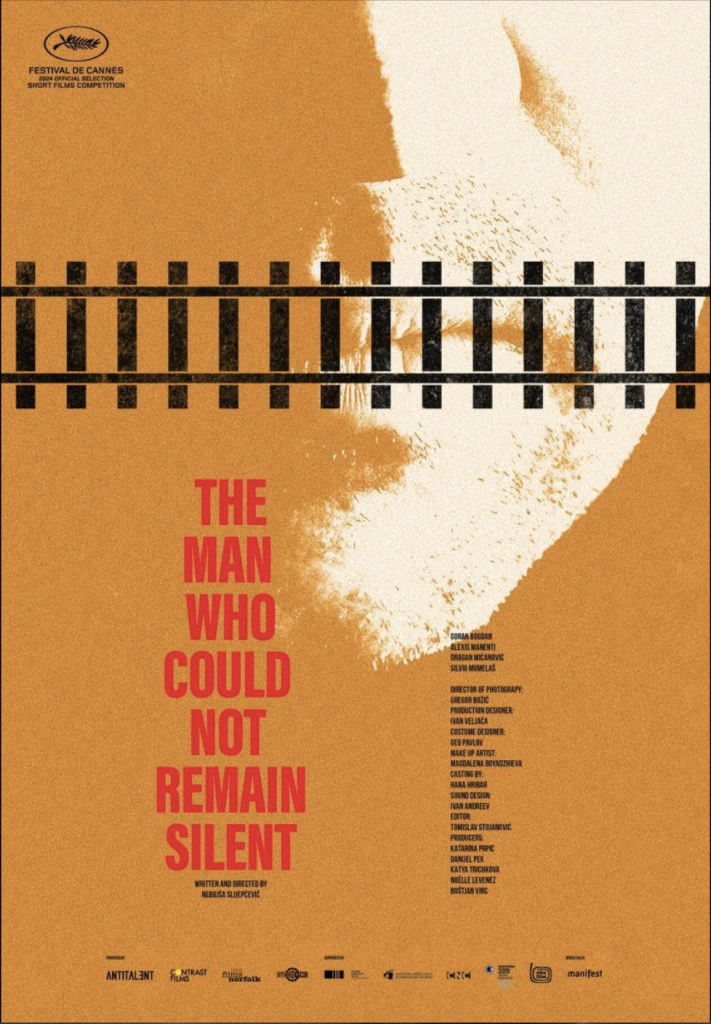
Directed by Nebojsa Slijepcevic, “The Man Who Could Not Remain Silent” is a 2024 short feature following a family traveling on a passenger train when a group of soldiers stops the train to inspect people for documentation. With orders from the government of the time, they try to find Muslims hidden amongst the train, with the reasoning of not having documents, getting them off the train, and sending them to ‘check their names on the computer,’ with a promise of the train waiting for them when done.
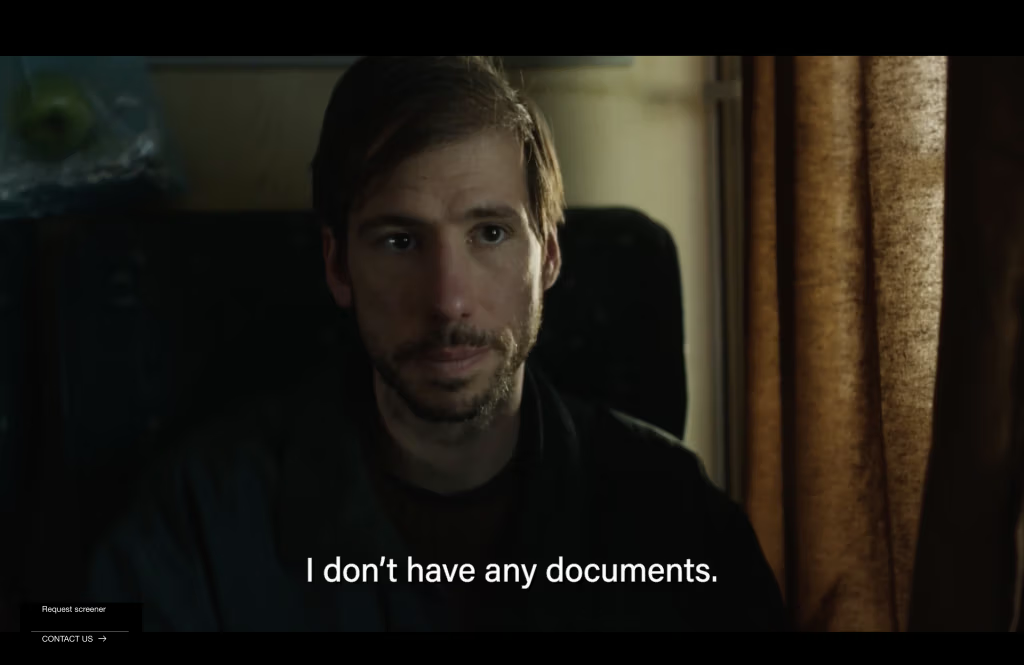
With tension in the air and people sitting still, the film becomes a claustrophobic nightmare, with the people in the scenes wanting it to end, seeing fellow passengers getting booted off, and hoping nothing happens to them. As this occurs, one of the passengers next to the father, our main protagonist, confesses that he carries no papers. The father states that he won’t let them take the young man away.
This scene reflects something sad and true: a government requesting documentation as a fear tactic to paralyze, dehumanize, and take advantage of people with no resources to defend themselves, due to ‘patriotic duty,’ sheer bigotry, or taking pleasure in cruelty.
I understood why this movie was chosen for us to see: it mirrored our circumstances with our Latine brethren. Taken away, put in black vans, sent to who knows where, families and lawyers taking weeks, even months, not knowing where they are or what happened to them. In fact, since January 2025, over 50 people have died in ICE custody, and those numbers are not stopping.
As the film continues, a soldier begins questioning the family on the train. The father says nothing as the young man is questioned about his name and his religion, pinpointing his possibility of Islamic faith as a negative. As the soldier tries to take him off the train, the father averts his eyes, and a retired captain of the Armed Forces of Croatia steps in and demands to contact the captain, asking why they are all being questioned. His demands anger the soldier, and instead, they take the captain himself. Finally, the train starts to leave the station, and everyone looks at each other, afraid of realizing what happened to the ones who didn’t make it.
That captain’s name was Tomo Buzov, an older white Croatian male, a hero to his nation, who stood up for those who could not and paid with his life for it. White allies understand the damage has been done by people who look like them and think like them, and realize the people who must march the most in the streets are not immigrants (for fear of deportation) or black individuals (for fear of police brutality), but fellow white allies.

That, however, can come at a cost: Renee Nicole Good and Alex Pretti, two outstanding American citizens, lost their lives protesting ICE in Minneapolis this year alone, and people seem to forget. “The Man Who Could Not Remain Silent” reflecting that 1993 incident on the other side of the world, the tragedy of Good and Pretti, and many others fighting for justice remind us of the harsh world we live in: sometimes, no matter how righteous one can be, one must be ready to fight to preserve our future, our nation, our brothers and sisters, and our democracy, at the possible cost of our own lives.
These parallel stories showcase the cruelty of an authoritarian government classifying everyone by skin color, by religion, by dogma, and by looks, to preserve what they prefer to be the norm, as well as shining a light on the people who try to fight and fear for their lives, and the ones who fight and may not get to see tomorrow. This movie is for them, as well as for us. At the end, we need to decide whether our lives are worth living in fear and despair, or whether they are worth losing to save the ones we love, the ones we don’t know, and the ones who will never know who we were, only through our actions. Who will you choose to be?
Rating: 4/5 Nopales