On a not-so-sunny day, Pansy Pachanga and the RGV Queer Run Club collaborated on a small tour of queer historical sights in McAllen. The tour was led by Gabriel Sanchez, a non-binary historian who started in their field because they felt kinship and comfort learning about people like themselves. Through that motivation, they learned that gender was never binary, modern queer-centered prejudice stems from colonization, and that while the people existed, the language we would use now did not. They started specializing in South Texas history after moving back down to the Rio Grande Valley (RGV), volunteering, and realizing no one who was not there had any answers or insight on queer history here in the RGV. Along the tour, they showed off flyers, photos, and other physical media collected mainly from community members who knew or were related to those people.
The Rio Grande Valley Has Always Been Queer
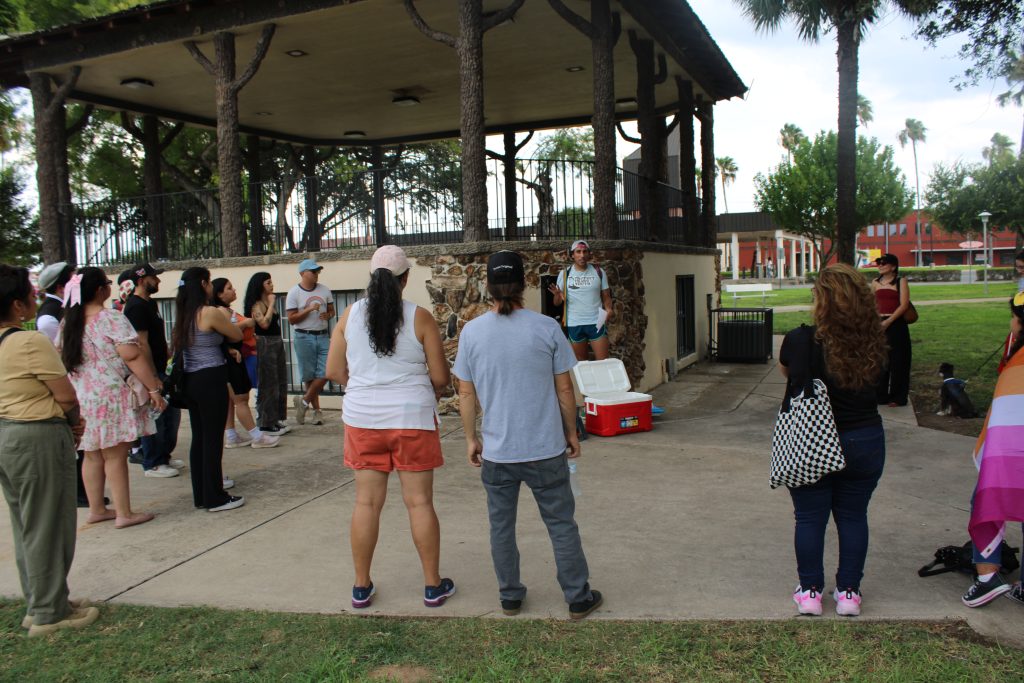
“We need to know queer history to know why queer joy is important.”
– Gabriel Sanchez at the start of the tour
Sanchez started the tour by emphasizing that the Valley is on indigenous land. The tour started at Archer Park due to its history as a spot to find companionship before cell phones emulated that experience. While sharing anecdotal history, they also talked about the various hate crimes that would happen at the park. They shared many firsts for the Valley, including the first documentation of queer relationship structures that did not fit a heterosexual lens. This was Alonso De Leon writing about native people and their social practices in an unkind way, judging their garb and gender expression.
Walking just one street over, we were led across the street from the Valley’s first recorded queer bar, Duffy’s Tavern. While the exact date of establishment is disputed, it being the first is not. It was popularized by word of mouth, at least in part because it boasted the coldest air conditioning available, which would still be an effective selling point in the present day. It also hosted what people remember as the beginning of modern-day drag down here, allegedly by a quintet of performers most drag queens are now in some way connected to. These are Shady Lady, Tina Flames, Vera Cruz, Miss Rhonda, and Sheri West. After an arson incident in 1982, Duffy’s remained closed, but a reunion celebration took place the following year.
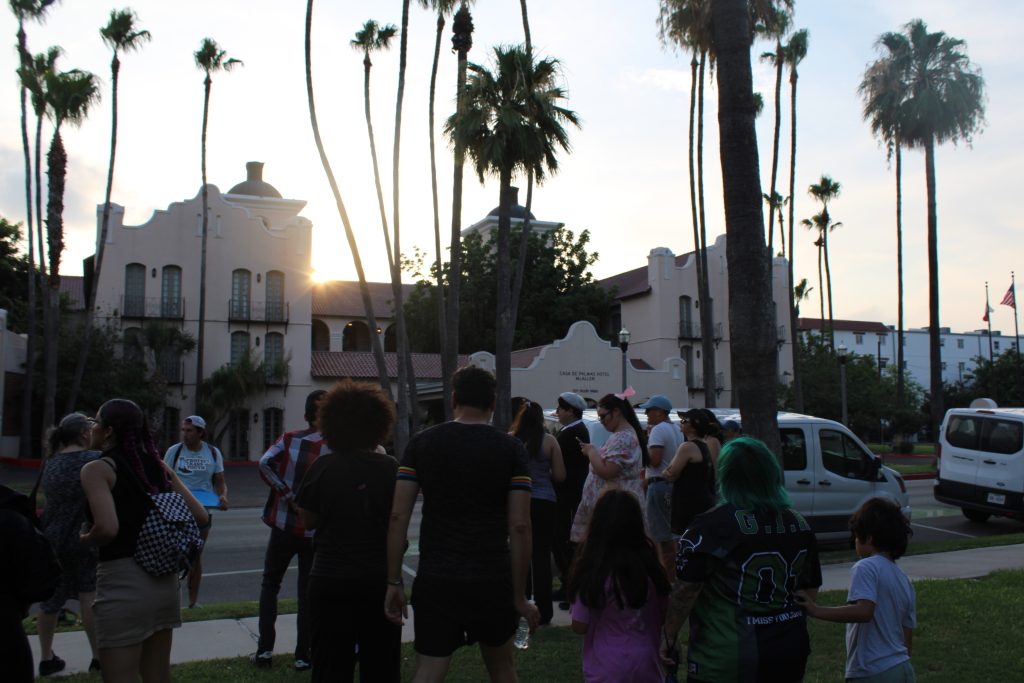
Back near the park, the tour was taken in front of Casa De Las Palmas, where an interview was given to the first openly gay man in the Valley, Isaac Benjamin Sanchez, the aforementioned Sheri West. He was said to be approached by a news crew after they were unable to find someone willing to publicly speak on the issue. This happened while Isaac was at work at Casa De Las Palmas, and while it was likely not an easy decision, it blazed a trail and confirmed the existence of queer people in town to those still ignorant.
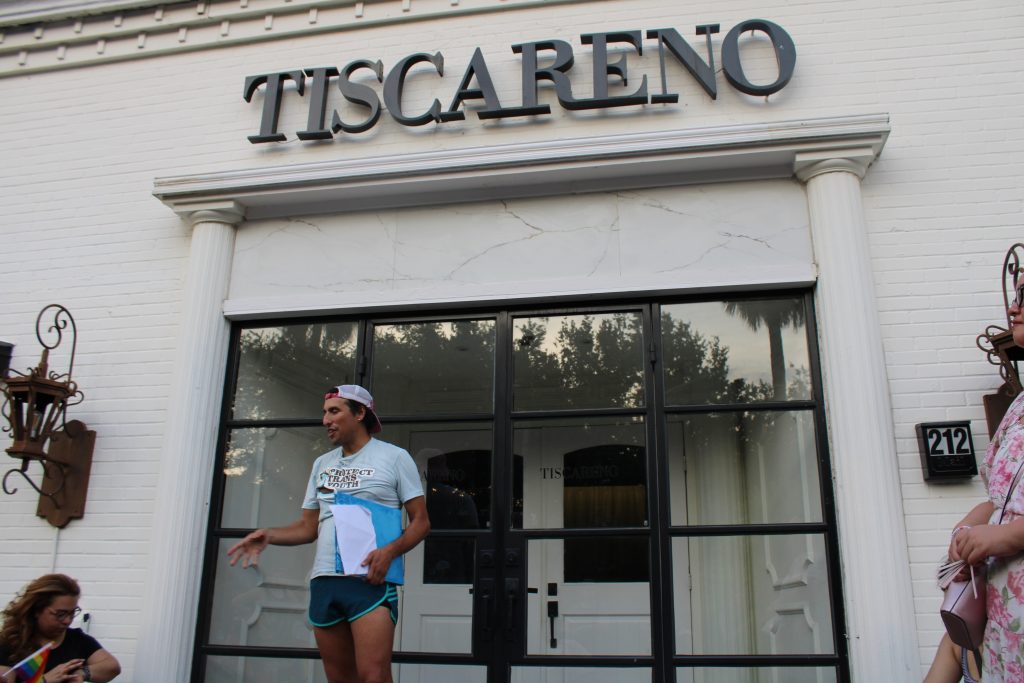
Further down the street, the group was taken to what is now the Tiscareno bridal salon, where the Hewitt-White Flower Shop operated from 1952 to 1977. Started and owned by a couple who were known but not explicitly proven to be so. They provided flowers for occasions like weddings for 25 years until Hewitt’s death in 1977.
Just a Part of the Story
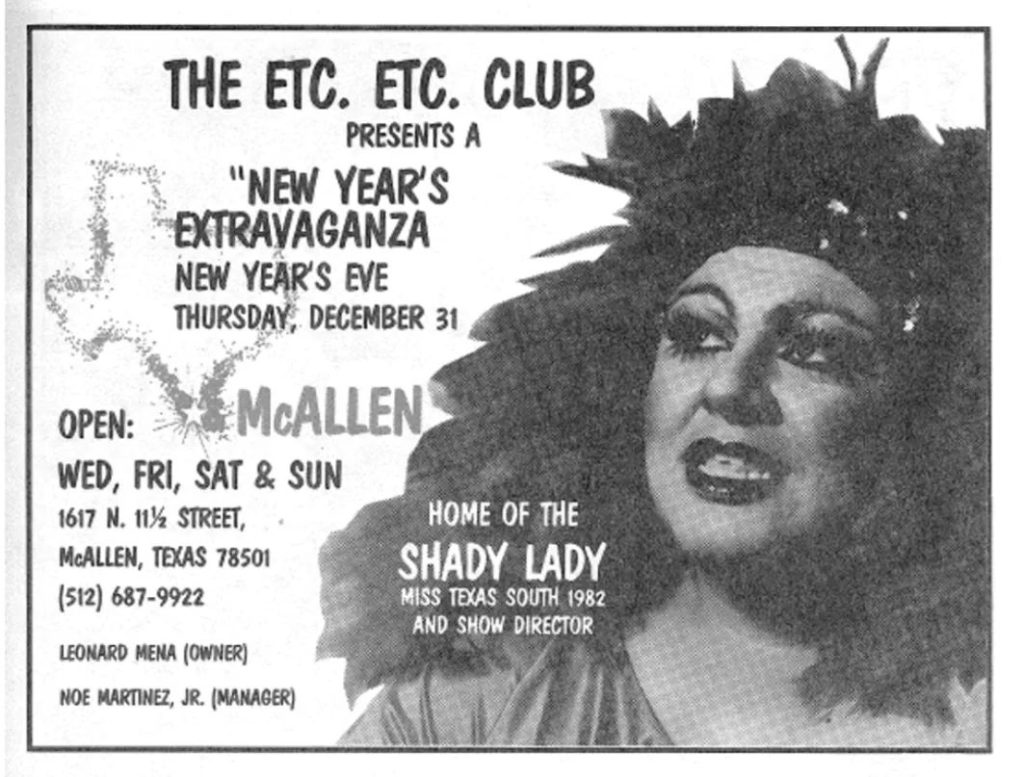
After a detour further away, Sanchez took the group north towards 11 1⁄2 Street, where The Etc. Etc. Club, later Bumpers, once was. What was once a hidden haven held many shows, as well as hosting several pageant winners like Miss Texas South, Shady Lady, and Miss Gay Texas USofA’s Misty Duvall and Sweet Savage.
They then took us to 10th and Redwood, near where 10th Avenue used to stand, one of the five bars across the Valley where the first Pride down here took place, along with others in Brownsville, Harlingen, & Reynosa.
There are several other places outside and in further parts of McAllen, like The Ocean in Donna. It held the distinction of being the second queer bar in the Valley, and the first owned by a queer person since Duffy’s was owned by an ally, Helen Bruton. Just Terry’s was mentioned as a space especially enjoyed by the sapphic community, and Poorboy’s Lounge, while not a gay bar, had a drag show for a while.
Sanchez also talked about publications that help spread safe spaces and businesses owned by or friendly towards queer people in Texas and beyond. They showed off a copy of This Week in Texas, a weekly publication that listed them, which ran from the 70’s until its end in 2012. There was also Bob Damron’s Address Book, which listed both, as well as queer cultural practices. This was a yearly publication that started in 1964 and still continues in an online format.
History is Always Being Made
“There was never one way to be queer.”
-Gabriel Sanchez during an interview
During an interview, I asked what queer history Sanchez believes is currently in the making down here, now with the context of the last year and a half. To paraphrase, they felt history is being made right now with how our community decides to adapt and survive, but also find joy and build community. As well as events that continue to fight and create safe spaces for the community, like GenTex and South Texas Equality Project.
As advice, they stated that generalizations cut us off from the community. For queer people finding their community, Sanchez suggested experiencing places for yourself and creating the spaces you need when they are missing. For allies, Gabriel advised always considering opinions and stances outside those with which allies are comfortable or familiar.
For more on queer history, including where to find the next space hosting the historical exhibit, follow Pansy Pachanga on Instagram. McAllen has the highest concentration of queer historical landmarks within walking distance, making more non-binary-led tours across different locations possible. They do, however, hope to take the tour to other cities as well.