The Rio Grande Valley (RGV), as many have seen, has been changing faster and faster over the past few decades. Not only in the number of car washes, but families and businesses have grown spectacularly as they begin to break new ground.
If you haven’t noticed, though, Texas is always growing. Since the 1970s, Hidalgo County alone has skyrocketed in population growth, going from 181,535 to 921,549 in 2025. From Nigeria all the way around to Brazil, different walks of life have all come to the Valley to settle down and become part of where they end up, a story a good number of readers are likely to be familiar with. That story is shared by 30-year-old Ohiozele “Ozzy” Daniel Eromosele.
Roots Like Mesquite

Ohiozele’s family brought him to the Rio Grande Valley from Nigeria when he was just eight months old, and he has lived here for 31 years. His mother, already knowing multiple languages, found Spanish was easy to pick up, albeit out of necessity, whereas his father knows only English. He described his experience as being spliced together with being raised in a Nigerian household while also growing up in the Valley. Some in-home experiences are the same as other RGV families, with his grandmother and parents living together, life lessons, and the occasional disagreement between his mother & grandmother.
His parents’ careers represent something the RGV is more than familiar with. His mother, a nurse, and his father, a physician assistant, are two paths in healthcare that rank among the highest in occupations in the South Texas region. Besides his father’s work as a PA, he also owns a pulga on Monte Cristo Road. It would be hard to argue that his family does not have the same reflection as a lot of the Valley has.
Occasionally, people do ask Ozzy where he’s from. To him, the RGV is where he and his family call home, and he stays adamant about his sense of belonging. He remarked on how some people react to him being in the Valley:
“I feel like I own it because, well, it’s my home, but also it’s like people will want to take it away from you. Like people will ask me, ‘Oh, where are you from?’ and I’m like, ‘Oh, I’m from here’ . . . it’s always a surprise (to them),” Ozzy explained.
“And they’re like, ‘Oh, you’re from here?’ and I’m like, ‘Yes . . . let me emphasize, I was eight months old when we moved here, and I’ve lived nowhere else,’ and something like their perception of me shifts and I can see it in their face.”
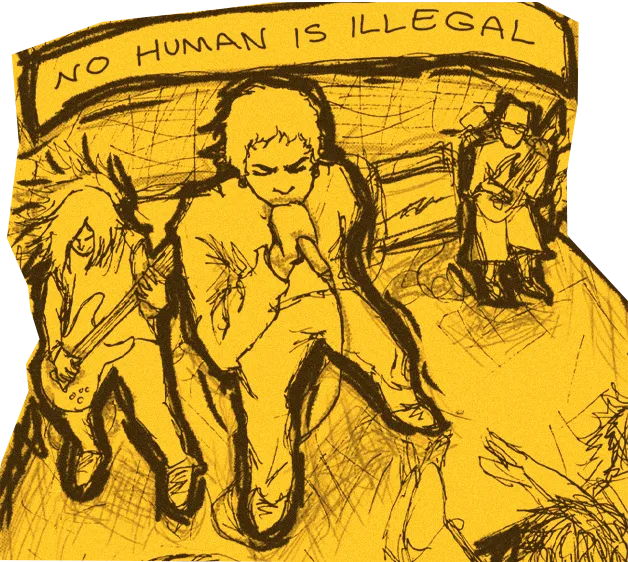
Ohiozele himself has had a full life here, where some of you might have met him already. In recent years, he’s already had experience as an organizer for BLM protests & has had an outspoken voice with his family in the social justice space in the RGV. He started school at Jessie L. Jensen Elementary School and made it into percussion in band during high school, where the band director gave him the nickname Ozzy.
When asked about a time in his life that had a major impact, he discussed his job in a repacking department on Military Hwy. He had been asked to join the work banda after one of his friends at work heard him sing so often. He recalled the work Christmas party he had and how the band played with a stacked catalog, including “Bail Esta Cumbria” by Selena, one of his favorite artists; describing her as a “South Texas girl who stuck to being a South Texas girl and proved you don’t have to be anybody else to be successful, glamorous, beautiful, or glamorous as she was.”
Ohiozele’s comments on his music interest parallel his outlook and lessons received in life and recalled something his mother told him:
“My mom would always tell me when she was giving … me or a sibling a stern talking to … she’ll say, ‘God will give you a gift; if you don’t use that gift, he will take it from you so fast. Don’t let that gift go to waste,’” discussing how, even if he wouldn’t make money from writing or music, it should not stop him from creating.
A Different Spice in The RGV
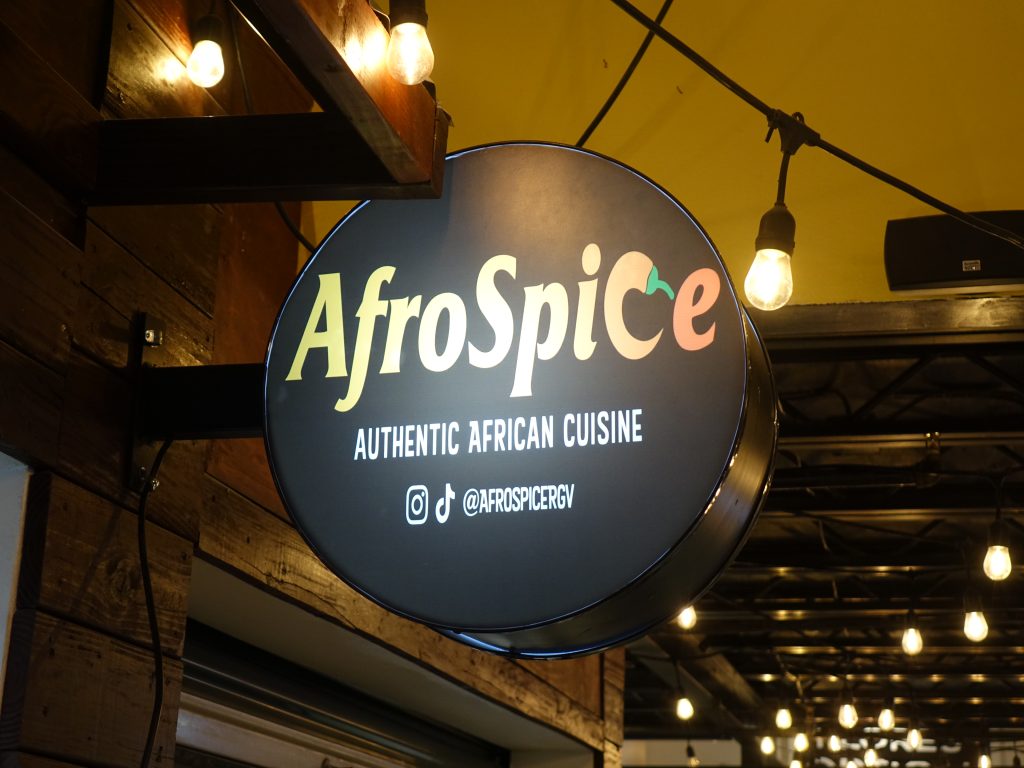


Beyond where Ohiozele has worked before, one of the places he currently works at brings a needed spark to the RGV’s pool of food options. In McAllen’s Mercado District is Afrospice, owned by his auntie and a friend of theirs. There, you can get fufu & egusi, meals with rice bases like waakye, and a sweet, crunchy snack called chin chin. It is a unique hot spot in being the only African restaurant in the RGV. From Ozzy’s perspective, it’s a way of sharing something from his family and what he grew up eating. He commented that growing up in the Valley has allowed him to experience and share so many different flavors, strengthening his bond within the RGV. As the population in the Valley grows more diverse, so does the number of impactful restaurants where people have the opportunity to try something completely new to them.
From the present to the world’s collective past, food has been a primary way to connect cultures. In an article from The University of British Columbia, Shirley Ting (she/her), Administrative Coordinator at Asian Canadian and Asian Migration Studies and Centre for Asian Canadian Research and Engagement, states:
“For many, food is often the first point of contact in experiencing and learning about the different food cultures that exist between and within communities. Communities aren’t monoliths, and that’s reflected in the diversity of food and eating practices that exist.”
With Afrospice, the RGV gets a perspective on a part of a culture they might not have the chance to realize is available to them; Ozzy expressed that he enjoys the opportunity to be able to share that part of his life and family.
Beauty in Identity
When asked what the Rio Grande Valley means to him, Ozzy also reflected on how much he’s come to appreciate where he lives and how safe it is. Ozzy has lived in the Valley in a nearly identical way to the rest of the people here, aside from his home being what he calls “Little Nigeria.” He expressed his love for the RGV as his neighborhood and his place in it despite the issues he’s had.
In the last year, he had spent some time in the county jails, having been moved around for drug possession, something that is common for the RGV. Ozzy had commented that the jail’s number of cellmates per block had him feeling cramped, though you could stay solano and still be able to make friends. With a 48-man “tank,” the state of the Hidalgo jail, he stated, was a “shithole,” and he lamented the number of inmates that rake in money for the jail just on commissary. Beyond that, the brutalist interiors and confinement to the human experience made him appreciate his life and beauty that much more.
While his time in jail was relatively brief for how long he’s been alive, Ozzy did not let it change him negatively. His views on what it takes to grow in the RGV showcase that. He stated that he does a lot of “ruminating” before making decisions and that “to thrive in the Valley, you have to be a doer.” Describing what that means to him, he expressed that the beauty he sees in his life is part of the future of opportunity and the ability to self-identify. When asked about his worldview and culture, he noted that they were mirrored in the stories he’s read and the people he’s met in the RGV.
As for what he felt about the Rio Grande Valley, Ozzy shared his ideas on how it needs that open heart and open mind in order to create and expand:
“Spread your arms open to the Valley, it will eventually embrace you back . . . Gotta participate, and you gotta have a little humility. A lot of the things here, at least for me as someone who was raised somewhere on the outside and on the inside . . . raised here, but first-gen Valley. Gotta engage; they put tripas down in front of you, eat it. They put on a wapango, go dance even if you don’t know the steps. Be brave and unafraid.”