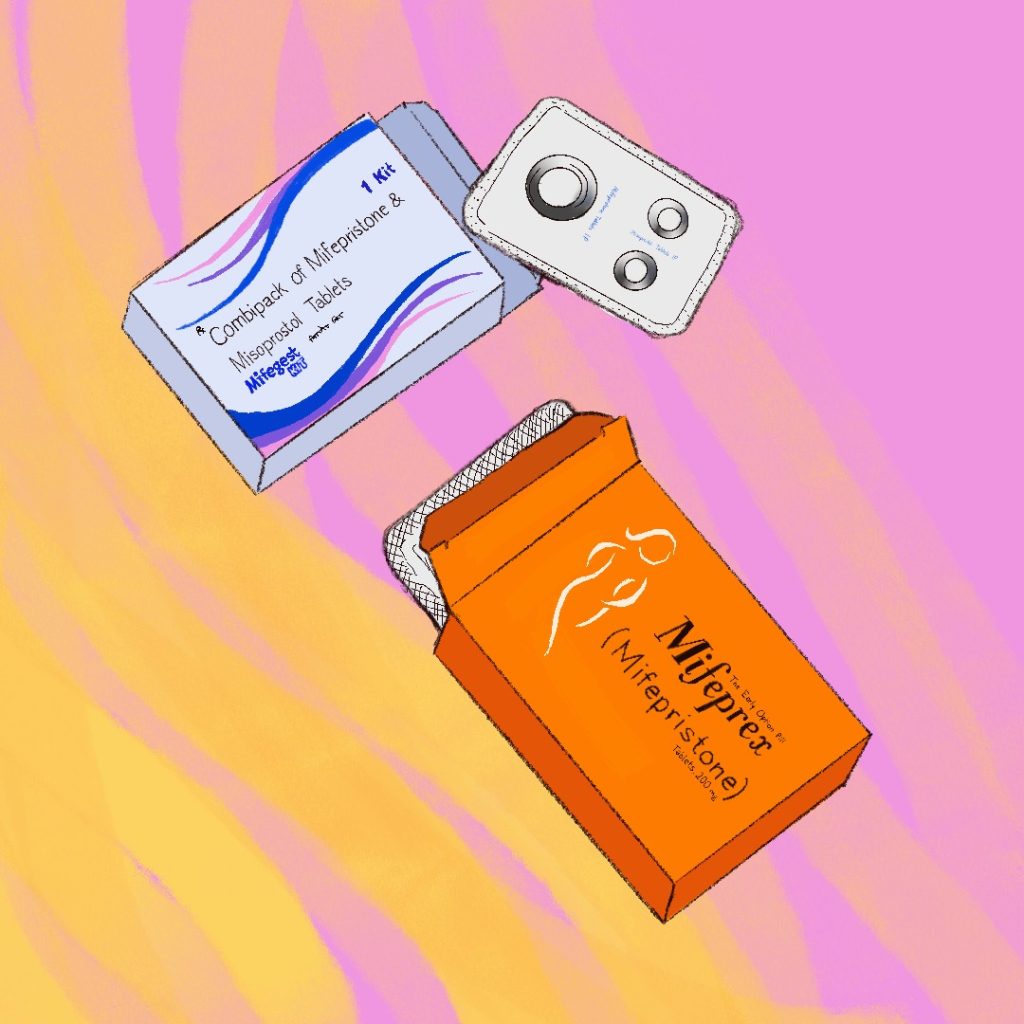
In September 2025, Texas legislators passed House Bill 7 (HB7), an anti abortion bill that severely restricts access to medication abortion by banning the manufacture, prescription, and distribution of mifepristone and misoprostol in the state. The law deputizes private citizens to file lawsuits against those who provide the medication to Texans, even if they operate out of state.
The law arrives against a backdrop of continuous aggressive anti-abortion policymaking in Texas since Senate Bill 8’s passage in 2021 and the end of Roe v. Wade in 2022. Texas already has one of the strictest abortion bans in the country. HB 7 takes a step to further cut off external channels for abortion. Legal experts and community advocates warn that it could lead to increased surveillance of private citizens and deepen inequities in rural and border communities, such as the Rio Grande Valley.
What HB7 Does
HB 7 prohibits the manufacture, mailing, and prescribing of abortion-inducing medications to Texans and allows private citizens to sue for at least $100,000 per violation. To clarify, the law does not specifically hold pregnant people liable; however, it permits lawsuits against providers, helpers, or shippers, including those located out of state.
“I know that one concern is that it also allows people to sue if there’s an intent to send medication abortion, so that’s a thought law,” said Gwynn Moratta, legal fellow at the Texas Civil Rights Project. “I think there are concerns of First Amendment issues there.” What this means is someone may be sued for planning to send medication even if it never arrives.
Moratta frames HB 7 not just as a health-care restriction but also as a potential expansion of policing over medical care. This has been seen with the enactment of Texas’s severe abortion ban, which has created confusion amongst healthcare professionals and caused life-threatening complications for pregnant people to rise.
“It’s just policing how people are getting their medical care,” said Moratta. “This should be a decision for people personally, and a medical doctor should be able to prescribe medication using their medical judgment.”
Bounty Hunter Model and Community Impact
HB 7 has a similar enforcement model to SB 8, which banned abortions after six weeks and empowered private citizens to sue those who “aid or abet” abortions. That “bounty-hunter” model created a chilling abortion provision even before Roe v. Wade’s reversal in 2022. The law leaves enforcement to individuals rather than the state and incentivizes “vigilante” monitoring, potentially pitting community members against one another for financial gain.
“These laws have the intent of cutting our state off from access, and that’s the goal of anti-abortion legislatures and activists to extend Texas’s abortion ban beyond our borders,” said Moratta.
Despite this, the number of abortions across the country has been on the rise, and according to data from the Guttmacher Institute, medication abortion accounts for 63 percent of all abortions. The process involves taking a combination of mifepristone and misoprostol pills (or in some cases only misoprostol) and has continuously been proven to be safe and effective. For communities where accessing an abortion clinic is logistically impossible, this is one of the best options.
Lucy Ceballos Félix, associate director of Latina Institute Texas, part of the National Latina Institute for Reproductive Justice, says that for undocumented residents, accessing care is made even more difficult given the harsh immigration policies that exist.
“Para las personas indocumentadas todavía es más difícil poder viajar. Es algo imposible. Está el miedo en arriesgar la separación de familias, la detención y la deportación. [For undocumented people, it’s even harder to travel. It’s something impossible. There is a fear of risking being separated from family, detained, and deported.],” she said.
It’s important to note that mifepristone and misoprostol are not only used for abortion but also for miscarriage management and stomach ulcers. Banning this medicine can put many people at risk.
“So anything that cuts down or makes people nervous about prescribing these pills has implications broader than just abortion,” said Moratta.
Grassroots Resistance: Communities Stand Together
Despite HB 7’s restrictions, abortion-rights advocates and local networks continue to step up. Organizations like Frontera Fund, South Texans for Reproductive Justice, Latina Institute Texas, and Lilith Fund have long provided essential financial, logistical, and educational support to individuals seeking reproductive care in Texas, and that will not stop anytime soon.
Even as lawmakers roll out new bans, these groups continue to offer referrals, financial assistance, telehealth support, and legal aid, often filling gaps that the official system overlooks. At the Latina Institute, Ceballos Félix says community members are learning to protect one another and stresses that the community will continue to fight against these new laws.
“La única opción no es parar, la opción no es cruzarnos de brazos. La opción es continuar en este movimiento que se ha hecho más fuerte. [The only option is not to stop; the option is not to cross our arms. The option is to continue in this movement, which has grown significantly stronger.”, she said.

HB 7 represents a stark escalation in the anti-abortion legal toolkit. It weaponizes civil litigation, targets out-of-state providers, and reaches into the medical decisions of Texans. For the Rio Grande Valley and other regions already bearing the brunt of health-care inequities, the law threatens to deepen gaps and amplify fear.
However, grassroots networks are mobilizing, and impacted communities are refusing to accept a future where threats and lawsuits overshadow the care they need. As HB 7 takes effect, those frontline efforts will be crucial in maintaining access to safe and dignified reproductive care for all.